


 Trusted by over 5,000 patients in more than 30 countries



What Is Gastric Sleeve Surgery (Sleeve Gastrectomy)?
Gastric sleeve surgery, medically known as sleeve gastrectomy and commonly referred to as a gastric sleeve procedure, is one of the most commonly preferred methods in bariatric surgery. This procedure involves surgically removing a large portion of the stomach, transforming it into a tube-like or banana-shaped structure.
The primary goal of the operation is to reduce the stomach’s capacity, enabling patients to feel full with much smaller portions. However, the process is not solely based on mechanical restriction; it also has direct effects on the hormonal system.
Hormonal and Mechanical Mechanisms of the Procedure
Reducing the stomach’s volume limits the amount of food that can be consumed. In addition, the production of ghrelin (the hunger hormone), which is secreted from the fundus—the dome-shaped portion of the stomach that sends hunger signals to the brain—is significantly reduced. This dual effect helps individuals feel satisfied with less food and experience reduced hunger sensations after surgery.
What Are the Types of Gastric Sleeve Surgery?
Bariatric surgery includes various techniques tailored to the patient’s overall health status, body mass index, and metabolic needs. The primary methods are:
- Sleeve Gastrectomy: Approximately 75–80% of the stomach is removed longitudinally. The natural digestive process remains intact, and malabsorption is minimal.
- Gastric Bypass (Roux-en-Y): A method that both reduces stomach volume and reroutes part of the small intestine directly to the stomach. This limits food intake while also reducing calorie absorption.
- Mini Gastric Bypass: A technically simplified variation of gastric bypass that similarly combines restrictive and malabsorptive effects.
Who Is a Suitable Candidate for Gastric Sleeve Surgery? (Criteria)
Bariatric surgery is not a cosmetic or aesthetic procedure. There are specific medical criteria established by the World Health Organization (WHO) and international bariatric surgery associations that determine eligibility.
Body Mass Index (BMI) Criteria
One of the most important factors in evaluating candidates is Body Mass Index (BMI). BMI is calculated by dividing a person’s weight by the square of their height ($kg/m²$). The generally accepted criteria are shown below:
| Body Mass Index (BMI) | Classification | Surgical Eligibility |
|---|---|---|
| 40 and above | Morbid Obesity | Directly meets the criteria for surgical intervention. |
| 35 – 39.9 | Severe Obesity | Eligible if accompanied by at least one obesity-related condition such as hypertension, type 2 diabetes, or sleep apnea. |
| 30 – 34.9 | Obesity (Class I) | Non-surgical treatments are generally preferred first; however, surgery may be considered in cases of uncontrolled severe metabolic syndrome. |
Additional Medical and Lifestyle Requirements
A high BMI alone is not sufficient for surgery. To ensure long-term success, the following conditions are also considered:
- Previous attempts at non-surgical weight loss methods such as diet, exercise, and medical treatment without achieving lasting results.
- No severe systemic illness that would prevent surgery or general anesthesia.
- No active alcohol or substance abuse.
- Psychological readiness and commitment to postoperative lifestyle and dietary changes.
Who Is Not Eligible for Gastric Sleeve Surgery? (Contraindications)
As with any surgical procedure, there are circumstances in which gastric sleeve surgery may not be suitable. Contraindications include:
- Untreated or uncontrolled serious psychiatric disorders (severe depression, eating disorders, schizophrenia, etc.).
- Advanced heart or respiratory failure that makes anesthesia unsafe.
- Plans for pregnancy in the near future (pregnancy is generally not recommended within the first 12–18 months after surgery).
- Portal hypertension or severe coagulation disorders that increase bleeding risk.
- Active gastric ulcers or advanced gastroesophageal reflux disease (GERD). In severe reflux cases, bypass procedures may be preferred over gastric sleeve surgery.
How Does the Preoperative Preparation Process Work?
At BNÖ Health, the preoperative phase is considered one of the most critical stages of the treatment journey. Patients approved for surgery undergo comprehensive multidisciplinary evaluations designed to maximize safety and comfort.
Required Tests and Specialist Evaluations
Before surgery, patients are generally assessed by the following specialists:
- Gastroenterology / General Surgery: An endoscopy is performed to evaluate the stomach and identify conditions such as gastritis, ulcers, or hiatal hernia.
- Endocrinology and Metabolism: Hormonal disorders that may contribute to weight gain, such as hypothyroidism or Cushing’s syndrome, are investigated.
- Cardiology: Heart health is assessed through ECG, echocardiography, and blood tests.
- Pulmonology: Pulmonary function tests evaluate sleep apnea and lung capacity.
- Dietitian and Psychological Assessment: The patient’s readiness for postoperative dietary and lifestyle changes is evaluated.
How Is Gastric Sleeve Surgery Performed?
Today, gastric sleeve procedures are predominantly performed using a laparoscopic (minimally invasive) approach. Thanks to advances in technology, large abdominal incisions are no longer necessary.
During laparoscopic surgery, specialized cameras and surgical instruments are inserted through four or five small incisions, typically measuring between 0.5 and 1.5 cm. The stomach is measured using calibration tubes and divided vertically with surgical stapling devices. The removed portion is extracted from the abdominal cavity, and leak tests are performed on the remaining stomach. The procedure is conducted under general anesthesia, and the duration may vary depending on the patient’s anatomy.
Postoperative Nutrition Phases
The reduction in stomach size requires the digestive system to undergo an adaptation period. To support healing, nutrition progresses through carefully structured phases that must be followed closely.
1. Liquid Phase (First 2 Weeks)
During the initial postoperative period, no solid foods should be consumed. Fluids should be clear, smooth, sugar-free, and non-carbonated. Broths, herbal teas, and specially formulated protein-enriched beverages form the basis of this stage. Fluids should be consumed slowly and in small sips.
2. Pureed Phase (Weeks 3 and 4)
As the stomach heals, patients transition to smooth pureed foods. Yogurt, pureed vegetables, blended chicken or fish, and soft eggs may gradually be introduced.
3. Transition to Solid Foods and a New Lifestyle
After the first month, patients can begin consuming regular foods, provided they are thoroughly chewed. Long-term rules include:
- Separating Liquids and Solids: Fluids should not be consumed during meals. They should be taken at least 30 minutes before or after eating. This helps prevent premature stomach expansion and optimizes digestion.
- Small Bites and Thorough Chewing: Every bite should be chewed until nearly liquid before swallowing. Rapid eating should be avoided.
- Protein-Focused Nutrition: Due to reduced stomach capacity, protein-rich foods such as eggs, meat, fish, and legumes should be prioritized to preserve muscle mass.
Advantages and Expected Outcomes of Gastric Sleeve Surgery
Bariatric surgery not only promotes weight loss but can also significantly improve or even resolve many obesity-related health conditions.
Metabolic and Systemic Benefits
- Weight Management: Patients who fully adhere to postoperative recommendations can lose a significant portion of their excess weight within the first year.
- Type 2 Diabetes Improvement: Blood sugar regulation often improves rapidly due to hormonal changes associated with the surgery.
- Cardiovascular Benefits: Weight loss can lower blood pressure, reduce cardiac workload, and improve cholesterol levels.
- Enhanced Quality of Life: Reduced joint pain, improved mobility, and relief from sleep apnea contribute to greater daily comfort and overall well-being.
Potential Risks and Important Considerations
Like all surgical procedures, gastric sleeve surgery carries certain risks. With modern medical techniques and careful follow-up, these risks can be minimized. Potential complications include:
- Leakage: Leakage from the staple line into the abdominal cavity. Early detection and intervention are crucial.
- Bleeding: Postoperative bleeding may occur along the staple line or surrounding tissues and requires close monitoring.
- Nutritional and Vitamin Deficiencies: Reduced food intake may lead to deficiencies in iron, vitamin B12, calcium, and vitamin D. Regular blood tests and supplementation under medical supervision are essential.
- Dumping Syndrome: A condition characterized by dizziness, palpitations, and sweating caused by the rapid passage of sugary or high-carbohydrate foods into the small intestine. Following dietary guidelines helps prevent this issue.
Frequently Asked Questions (FAQ)
Can the stomach expand again after surgery?
Yes. The stomach is an elastic organ. If portion control is not maintained, large-volume carbohydrate-rich foods are consumed regularly, or liquid-solid separation rules are ignored, the stomach may gradually stretch. This can slow weight loss or lead to weight regain.
How long does the operation take, and how many days is hospitalization required?
Laparoscopic gastric sleeve procedures generally take between 1 and 2 hours, depending on the patient’s anatomy. Hospital stays typically range from 2 to 3 days to allow for monitoring and leak testing.
Will there be visible scars?
Since the procedure is performed laparoscopically, large surgical scars are avoided. The small incision marks usually fade significantly over time.
When can I return to normal life and work?
Patients with desk jobs or occupations that do not require physical exertion can generally return to work within 7 to 10 days. More demanding physical activities and intensive exercise should be postponed for 1–2 months and only resumed with physician approval.
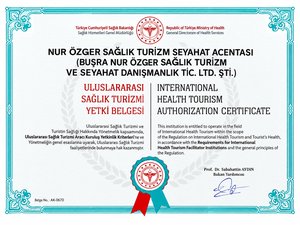
NUR ÖZGER HEALTH TOURISM AND TRAVEL CONSULTANCY (BNÖ Health) is not a healthcare facility; it is an international health tourism intermediary authorised by the Turkish Ministry of Health (Authorization Certificate No. AK-0670) and a TURSAB member (14693). Medical services are provided by physicians at contracted facilities licensed by the Turkish Ministry of Health. Information on this website is for general information only and does not replace a medical examination, diagnosis or treatment.