 Trusted by over 5,000 patients in more than 30 countries


Who Can Be Considered for a Tummy Tuck Operation?
The answer to who can be considered for a tummy tuck operation can be given as follows: individuals who have excess skin and muscle looseness on the front abdominal wall — formed as a result of pregnancy journeys, significant weight loss, or structural tissue weaknesses, and which cannot be corrected with diet and exercise programs — and who carry the health criteria suitable for receiving general anesthesia, are reasonable candidates for this aesthetic repair process. The human body tries to stretch and adapt to the physical changes life brings. However, when the elasticity limits of skin tissue are exceeded, the collagen and elastin fibers within it undergo structural fatigue. Particularly the abdominal area, being located at the center of the body, is the area most intensely affected by weight fluctuations and pregnancy. Even if individuals adopt a regular lifestyle and reach their target weight, they can find themselves insufficient to correct, through exercise alone, the downward sagging of hollowed-out skin caused by the effect of gravity. This sagging leads to difficulties in clothing choices, physical problems such as rashes or irritation between skin folds, and a tired expression in the person’s posture in front of the mirror. Tummy tuck operations, called abdominoplasty in medical literature, are a structuring approach aimed at bringing out the body’s own natural contours again and removing this excess tissue that has lost its form from the body. This process is a step to crown the weight achieved with an aesthetic body contour, rather than being a weight-loss method itself.
The candidate-assessment stage is the most sensitive stage that determines compliance and satisfaction in the later stages of the operation. In metropolises with a broad medical vision, such as Istanbul, not only individuals’ physical complaints but also their lifestyle habits and expectations are analyzed in depth. In line with Buşra Nur Özger Özel informational principles, how suitable the person’s body is for the operation is conveyed in empathetic, transparent language. While explaining to the patient the possibilities of the bodily capacity they have, unrealistic promises are avoided, and rational goals are set. This compassionate communication model creates mental calm by helping the person grasp the extent of the surgical touch to be applied to their body. During assessment, the person’s skin quality, the degree of separation (diastasis) in the abdominal muscles, and the distribution of fat tissue are examined to create a personalized surgical map. When an ideal candidate’s expectations align with the aesthetic forms medical science can offer, the organic appearance that emerges after a months-long recovery timeline carries the person’s life energy and social self-confidence to a high level.
Why Does Sagging Occur in the Abdominal Area, and in Which Situations Is a Surgical Process Considered?
The question of why sagging occurs in the abdominal area and in which situations a surgical process is considered is explained as follows: it arises when collagen fibers, the building blocks of the skin, cannot return to their former tautness due to excessive stretching or aging, and the muscle fascia supporting the internal organs weakens; and surgical contouring is put on the table as a repair need in situations where this physical loss of form lowers the person’s quality of life and organic correction becomes impossible. Skin can stretch up to a certain capacity, like an elastic band.
When limits are pushed, cellular tears manifest as cracks (striae) on the skin. No matter how healthy the individual eats or how many abdominal exercises they do, it becomes biologically difficult for the damaged skin layer to fully contract inward. Folds that form in the lower abdominal area and are noticeable even through clothing can affect the body’s center of gravity, leading to posture problems. Individuals are told that this deformation is not their fault or a lack of willpower, but a normal consequence of the physical changes the body has undergone. At this point, tummy tuck planning is considered a step that lets the body breathe again by surgically and meticulously removing worn-out tissue.
What Kinds of Changes Are Observed in Abdominal Tissue After Pregnancy?
The answer to what kinds of changes are observed in abdominal tissue after pregnancy is given as follows: as the baby develops within the womb, the skin on the front abdominal wall continuously stretches for nine months; the “rectus abdominis” muscles located in the middle, running vertically, move apart from each other, creating the gap called “rectus diastasis”; and a buildup of skin in the lower abdomen that cannot correct itself is experienced even months after childbirth. A woman’s body displays tremendous adaptive power during the journey of motherhood.
However, particularly in multiple pregnancies, cases of carrying a large baby, or consecutive pregnancies, tissues experience intense fatigue. Even if the pregnancy weight is lost, the gap that forms in the middle of the separated muscles creates a constant bulging and swelling around the woman’s belly button. Standard abdominal exercises, such as sit-ups, cannot bring these separated muscles back together at the midline without surgical repair. For this reason, in processes also called “mommy makeovers,” not only is skin removed, but this internal muscle separation is also repaired with sutures, creating an internal corset effect. This structural repair is quite valuable for women to make a renewed aesthetic peace with their own bodies.
| Observed Deformation | Anatomical Effect on the Body | Surgical Repair Approach |
|---|---|---|
| Rectus Diastasis (Muscle Separation) | Looseness in the abdominal wall, a forward-projecting, bulging posture. | Bringing the midline muscles closer together and tightening them with sutures. |
| Skin Stretch Marks (Striae) | Colored lines from the tearing of the subcutaneous connective tissue. | Complete removal of the stretch-marked skin below the belly button. |
| Skin Sagging and Folding | Loss of skin elasticity, buildup and irritation in the lower abdomen. | Removing excess tissue and bringing the skin into a taut downward form. |
How Can Individuals Who Have Experienced Significant Weight Loss Benefit from This Operation?
The question of how individuals who have experienced significant weight loss can benefit from this operation is explained as follows: for individuals who have lost figures like forty or fifty kilograms as a result of obesity surgery or intensive diet processes, this procedure is a key step in body contouring, allowing them to get rid of skin that has become loose and sagging like a deflated balloon due to reduced fat tissue underneath, so that bodily lightness integrates with an aesthetic outer appearance. Extreme weight loss fundamentally changes the map of the body.
Although losing weight is a great achievement for health, the massive excess skin left behind restricts the patient’s mobility and psychologically overshadows their enjoyment of the success of weight loss. Sometimes these skin folds extend to the waist area, even toward the back. In such cases, the scope of standard procedures is expanded, and circumferential (360-degree) corrections are planned. Individuals are told that, in order to fully reap the reward of their efforts, meticulously removing the sagging tissue from the body is the most organic complement to their new form.
How Do Patient Selection and Assessment Processes Proceed at Istanbul Clinics?
The answer to how patient selection and assessment processes proceed at Istanbul clinics is given as follows: it is a transparent medical analysis process in which individuals, whether visiting the city or living locally, are addressed holistically with detailed blood tests, physical examinations, and skin-elasticity measurements; aesthetic expectations are aligned with the anatomical realities the body offers; and the person’s mental comfort is also kept central during pre-operative preparation. Istanbul’s broad medical vision supports personalized, boutique approaches.
During the consultation, the physician examines how the patient’s abdominal tissue behaves while standing and bending. The thickness of the skin, fat ratio, and belly button position are measured. The patient is shown the location of the incision to be made (generally staying within the underwear line) with digital or physical drawings. Rational statements like “This operation will not bring you down to a size zero, but it will bring your abdomen into a flat, proportional form” allow the patient to sit down in the operating chair consciously and at peace.
Why Does Body Mass Index Play a Determining Role in the Operation Decision?
The question of why body mass index plays a determining role in the operation decision is answered as follows: the person’s height-to-weight ratio being close to ideal limits (generally BMI 30 and below) directly affects the circulation pattern during surgery, anesthesia comfort, and the permanence of the taut profile to be achieved after the operation; in overweight patients, wound repair and suture load can become more difficult. This surgery is not an obesity treatment or a weight-loss operation.
If the patient’s overall body fat percentage is still very high and internal organ fattening is significant, intra-abdominal pressure can reach dangerous levels when the abdominal muscles are tightened and sutured. In addition, sutures under a thick fat layer require extra time for blood supply and healing during the recovery stage. Specialists approach candidates with a high BMI value with empathy, advising them to first get support from a dietitian and reach a certain target weight in order to increase the efficiency of the operation. This guidance is quite a compassionate step taken to protect the patient’s bodily wellbeing.
How Does Separation (Diastasis) in the Abdominal Muscles Affect Surgical Planning?
The answer to how separation in the abdominal muscles affects surgical planning is explained as follows: when it is determined during the examination that the connective tissue between the rectus muscles has weakened and separated, the plan is not limited to removing skin from the outside; it also centers on suturing these muscles from within, bringing them closer together at the midline with strong sutures, thereby giving the abdominal wall its own natural internal corset. The actual cause of the sagging on the outside is generally this looseness inside.
- Mechanical Disorder: When the muscles separate, the weight of the internal organs presses forward, and the person presents an appearance like being full or pregnant, even while standing.
- Back Pain: Since the abdominal muscles can no longer support the spine, the load on the lower back increases, triggering posture problems.
- Surgical Repair: The muscle fascia is sutured together, narrowing the abdominal wall, defining the waist curve, and giving the abdomen a flat wall form again.
This internal repair shows that the process is both an aesthetic and functional correction. After the operation, patients notice not only that their abdomen has flattened, but that they have also regained that firm, tight posture at their abdominal center that they hadn’t felt for a long time.
What Determines the Choice Between a Mini Tummy Tuck and a Comprehensive Operation?
The question of what determines the choice between a mini tummy tuck and a comprehensive operation is answered as follows: in cases where the deformation is limited only to the area below the belly button, the procedure done with a shorter incision, without moving the belly button’s position, is called a mini repair, while in cases where the sagging and muscle looseness extend up to the areas above the belly button, a comprehensive repair, in which the entire abdominal wall is corrected, comes into play. A tailored plan suited to the body’s needs is essential.
For an individual with mild excess skin and no history of pregnancy, a mini plan is generally sufficient, and the recovery timeline proceeds more gently. However, for a patient with muscle separation along the midline and skin folds also present above the belly button, performing a mini procedure would not resolve the problem in the upper area, creating an aesthetic mismatch. Individuals are honestly told, during the examination, which method will be sufficient for their own anatomical map. This rational guidance prevents the person from feeling the need for a second operation later on.
| Type of Operation | Area of Deformation | Intervention to the Belly Button |
|---|---|---|
| Mini Tuck | Mild sagging only below the belly button. | The belly button’s position is not changed or released. |
| Comprehensive (Full) Tuck | General excess skin above and below the belly button, significant muscle looseness. | The belly button is released and placed into its original position in the newly stretched skin. |
In Which Direction Does the Age Factor Affect the Tummy Tuck Decision?
The answer to in which direction the age factor affects the tummy tuck decision is explained as follows: since advancing age slows the skin’s own collagen structure and elasticity, the need for this operation increases; any mature-aged individual without a chronic systemic condition that would prevent receiving general anesthesia and getting through a surgical recovery period can be a suitable candidate for this procedure. Older age is not a strict obstacle to aesthetic repair.
Individuals in their fifties or sixties, if their bodily health is good, can apply to the clinic to correct the deformations years and gravity have created in the abdominal area. In patients in this age group, detailed tests of blood circulation and heart health are kept a priority. Since skin elasticity has decreased, the focus is more on stretching the skin rather than removing excess internal fat (liposuction). Patients are compassionately told that their age is not a disadvantage; on the contrary, a design done during this period, when the sagging pattern has settled, will preserve its form for many years.
Can Men Also Be Considered for Tummy Tuck Surgery?
The question of whether men can also be considered for tummy tuck surgery is answered as follows: male individuals who have experienced significant weight loss, undergone gastric sleeve operations, or have hollowed-out skin folds in the lower abdomen due to structural reasons are also frequently and quite reasonable candidates for this surgical contouring process, with planning suited to their anatomical structure, muscle lines, and fat distribution. The need for aesthetic correction is related to the body’s loss of form, not to gender.
In male patients, fattening in the abdominal tissue is generally more concentrated around the internal organs (visceral fat). For this reason, in men, it is first expected that internal fattening be reduced through diet and exercise. The sagging portion under the skin is then removed through surgical repair. In men, rather than creating a thin waist curve like in women, a straighter, more masculine abdominal line is created. The outward bulge created by sagging skin when wearing a T-shirt or shirt transforms into a flat silhouette after the procedure, renewing the man’s social self-confidence.
How Does Planning a New Pregnancy After the Operation Affect the Process?
The answer to how planning a new pregnancy after the operation affects the process is given as follows: since the sutured, repaired muscle structure of the abdomen and the downward-stretched skin will be exposed to stretching again with the development of a new baby, which could loosen the achieved aesthetic form and abdominal wall tightness over time, it is recommended, for long-term efficiency, that individuals have this procedure after largely completing their family planning.
Of course, there is no surgical obstacle to a woman who has had the operation medically becoming pregnant, the uterus growing, or carrying her baby. The skin and muscles can stretch enough to open up the space the baby needs. However, although this stretching does not completely reset the procedure, it can lead to mild stretch marks and sagging again in the abdominal area. Individuals are honestly informed of this bodily cycle. If the patient plans a pregnancy in the near future, postponing the procedure is an example of compassionate medical guidance.
What Are the Recovery Expectations and Stages of Returning to Daily Life?
The question of what the recovery expectations and stages of returning to daily life are is answered as follows: feeling tightness and edema in the abdominal area is normal for the first few days following the operation; the patient is encouraged to walk slightly bent forward so as not to strain the sutures; a return to daily desk work and social life is generally possible within two weeks; and for activities requiring heavy exertion, a six-week tissue-healing period must be expected.
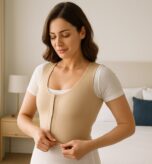
The body expends intense effort at the cellular level to repair itself following a major tissue change. The medical compression garments patients will use during this stage both speed up the elimination of edema and increase movement comfort by giving the body external skeletal support. The recovery period should not be rushed. The patient observes, day by day, that the feeling of heaviness in their abdomen decreases and the taut profile emerges. Respecting this natural rhythm of the body ensures the process is gotten through calmly, both psychologically and physically.
How Are Patient Expectations Managed in Buşra Nur Özger’s Approaches?
The answer to how patient expectations are managed in Buşra Nur Özger’s approaches is explained as follows: it is a transparent counseling vision that, rather than imposing a standard, factory-made mold on the individual’s body, empathetically analyzes their skin structure and lifestyle, gives honest information about the limits of the operation and the location of the scar to present a rational aesthetic map, and compassionately supports the patient in organic harmony with medical processes throughout the recovery timeline.
The fear of scarring or concern about pain that individuals carry in their minds before aesthetic operations is addressed with understanding during clinical consultations. The patient is shown, through drawings, how the scars will be hidden within the underwear line. Honest communication such as “Your body will not miraculously heal in one day; repair will take months, but the result will reflect what best suits your natural form” plays a key role in managing expectations. This bond of trust preserves the patient’s inner peace from the very start of the process to the moment of discharge.
Why Are a Tummy Tuck and Liposuction (Fat Removal) Frequently Considered Together?
The question of why a tummy tuck and liposuction are frequently considered together is answered as follows: while removing sagging skin and repairing the muscles flattens the front abdominal wall, removing stubborn fat deposits around the waist (the “love handle” area) and the sides with liposuction gives the body a much more proportional, slim, hourglass-shaped curve; these two procedures form a complementary, organic body-contouring combination.
Stretching only the front skin, while fat at the sides remains, can create an aesthetically incomplete silhouette. For this reason, in comprehensive tummy tuck plans in Istanbul, the patient’s overall fat distribution is analyzed, and if needed, contouring touches to the waist and back area are added under the same anesthesia. Individuals experience the functional relief of achieving a fully harmonious, slim, and proportional line on their body, going through just a single recovery process.
Frequently Asked Questions
1. Is a tummy tuck operation done to lose weight?
This procedure is not an obesity or weight-loss treatment; it is planned to remove sagging skin left on the body after weight loss and shape the body contour aesthetically.
2. How long before the operation should I stop smoking?
Since smoking dramatically reduces the amount of oxygen reaching tissues and disrupts wound repair, it is important to stop it completely at least three to four weeks before the operation.
3. Would a mini tummy tuck be enough for me?
If the looseness in your skin remains only below the belly button and there is no sagging in the upper area, a mini plan may be sufficient for your anatomical structure.
4. Are the scars formed after a tummy tuck visible from the outside?
Since the applied incision is planned to remain entirely within the bikini bottom or underwear, quite low and as a thin line, it is not noticeable from the outside with everyday clothing.
5. Will my movement be restricted if my abdominal muscles are sutured?
Suturing the muscles at the midline supports the internal organs and flattens the abdomen; after the recovery stage in the first weeks, it does not restrict your movement — on the contrary, it adds strength to your core area.
6. Will I need to wear a compression garment after the operation?
To ensure the tissues heal together smoothly, edema is eliminated, and the new form is supported, wearing the special medical compression garment for generally four to six weeks is requested.
7. Why is the belly button’s position changed during the operation?
In comprehensive tuck procedures, since the upper skin is pulled downward, the belly button cannot remain in its current location; a new window is opened in the stretched skin, and it is placed in its organic position.
8. I am significantly overweight — can I have this operation right away?
If your body mass index is high, it is recommended to first lose some weight and get closer to your target, for the sake of the operation’s efficiency and easing the circulatory load.
9. When can I return to my desk job after the operation?
If you have a work environment that does not require physical exertion, you can generally return to your job within ten to fifteen days, depending on your body’s recovery speed.
10. When can I start doing sports?
Light walks around the house can be started immediately, but for weightlifting and abdominal exercises that would strain the sutures, an average of six weeks of healing time should be expected.
11. I am breastfeeding — can I get a tummy tuck?
Since anesthesia medications and the operation process could affect your breastfeeding routine, it is more suitable for your body to wait for this period to fully end and your hormones to settle.
12. Is it normal to feel numbness in my abdomen after the operation?
Since a wide tissue separation is performed, temporary numbness or a lack of sensation in the abdominal skin in the first weeks and months is normal during the repair of the nerve endings.
13. Can I take a bath during the recovery process?
Once the fluid-drainage tubes called drains are removed and your suture areas become suitable for water contact (generally the third-to-fourth day), you are given approval to shower with warm water.
14. Can a tummy tuck and breast aesthetics be done at the same time?
To the extent your general health condition and blood tests allow, these two procedures can be planned combined under the same anesthesia, under the “mommy makeover” concept.
15. What does Buşra Nur Özger recommend to those making the decision for surgery?
She recommends that they accept the limits of their body and set rational goals, and that they manage the recovery process with patience and calm by adhering to post-procedure care routines.