
 Trusted by over 5,000 patients in more than 30 countries


How Long Can Swelling Last After a Tummy Tuck Surgery?
Edema, formed by the accumulation of protective fluids directed by the body between tissues from the moment it enters the repair process, experiences its most intense phase in the first few weeks, and as the circulatory system gradually rids itself of this load via the kidneys, subsides over a schedule spread across months, allowing the true body contour to emerge. Surgical shaping processes bring about a structural change at the center of the body. The removal of sagging skin and the repair of midline muscles direct the body into intensive labor at the cellular level. Following this change it is exposed to, the human body sends fluid to the region in order to carry repair cells. This biological reaction is the fundamental source of that taut and full feeling patients see in front of the mirror. This process experienced after Tummy Tuck operations is not an illness state that fatigues the body, but rather a natural companion indicating that healing has begun. When individuals encounter this temporary fluid accumulation while expecting a new silhouette in their lightened bodies, they can sometimes experience impatience. However, healing is a journey through time where every day feels better than the previous one, edemas subside, and tissues become smooth. It is quite normal for this swelling to increase slightly later in the day or when standing for a long time.
In the visionary medical centers of Istanbul, compassionate guidance is offered to enable patients to spend this period comfortably. Medical corsets protecting the body’s fluid balance, nutrition routines, and light walks are the externally supported building blocks of this process. With Buşra Nur Özger’s special information principles, why the body retains this fluid and how it will expel it over time are conveyed to the patient in a rational language. This empathetic communication provides spiritual serenity by eliminating question marks in the person’s mind regarding the process. Following weeks spent with patience and care, when the sixth month is reached, those hardnesses under the skin soften to a large extent. At the end of this compassionate break they grant their bodies, individuals fully feel the vital peace of attaining a flat and proportional form where clothes fit impeccably. The body reveals its own fine contours within a time frame appropriate to its nature.
With Which Reflex of the Body Do Edema and Fluid Accumulation Arise?
Processed tissues tend to create a protective cushion by increasing fluid flow in that area in order to transport repair cells to the region more quickly and support the establishment of new connections. This situation is a compassionate biological defense developed by the body against an external change. Capillary vessels in the surgical area transport intense amounts of protein and repairing substances for the wound edges to fuse. Fluids seeping into intercellular spaces during this transport are perceived from the outside as swelling.
When individuals experience this feeling of fullness, they may fall into the misconception that the procedure has not reached the targeted thinness. Yet, this fluid is a source of life that prevents tissues there from drying out and ensures they cling to each other smoothly. As time passes and connections between tissues strengthen, the body evacuates this excess fluid by quietly introducing it into circulation via lymphatic channels. The process working in this manner is the greatest guarantee of the wound closing healthily from the inside out.
What is the Swelling Level in the First Weeks of Healing?
In this early period when the body spends the most energy on cellular repair, the abdominal region experiences the highest fluid retention, appearing taut, full, and slightly wider than the person’s expectation. The first fourteen-day process starting right after the operation is an active time period when the body tries to adapt to its new form.
Patients generally use medical corsets these days, and their movements are somewhat restricted. That heaviness felt while getting out of bed or walking slightly bent forward stems entirely from the fluid gathered in the region. In this phase, it is quite normal for the swelling to fluctuate during the day. Encountering a flatter abdomen when waking up in the morning, the individual may feel slightly more fullness in their abdomen towards evening hours due to the effect of gravity. These fluctuations show that the lymphatic system has just recently started its shift and harbor nothing to worry about.
How Does the Abdominal Contour Change in the Second and Third Months?
When the lymphatic system begins to gradually introduce the accumulated fluid into circulation and expel it, tissues soften noticeably, hardnesses under the skin disperse, and the actually targeted thin, flat body lines slowly come to light. When the fatigue of the first month is left behind, the body tends to expel fluids rather than retain them.
In these months, patients observe that their clothes fit much more proportionally around their waists. Those slight lumpiness or hard tissues (scar healing) felt under the skin when touched begin to dissolve. The individual comprehends the true constructive effect of the Tummy Tuck operation very clearly in these months. As the body finds its center of gravity and its fluid load decreases, the person’s mobility in social life also increases, which significantly raises their morale level.
| Recovery Time | Swelling (Edema) Status | Expected Bodily Sensation |
|---|---|---|
| First 1 – 4 Weeks | Fluid retention is at its highest level. | Tension, fullness, and a feeling of tightness in clothes. |
| Between 1 – 3 Months | The major part of the fluid is introduced into circulation and expelled. | Softening in the abdominal wall, prominence of lines. |
| 6 Months and Beyond | Microscopic fluid accumulations disperse. | Smooth, thin, and completely natural body contour. |
How Long Should One Wait for Swelling to Pass Completely?
The disappearance of those final fine millimetric hardnesses under the skin, the skin sitting flawlessly on its new foundation, and the abdominal wall gaining its completely flexible form mostly spread over a time between six months and one year. Even though a wonderful profile has emerged even by the third month when viewed from the outside, the final touches at the cellular level progress in nature’s own slow rhythm.
The body’s long-term repair schedule is important so that the aesthetic result obtained can be preserved for years. Especially that subtle thickness difference between morning and evening almost completely disappears after the sixth month. The best support patients can do in this phase is to embrace their bodies with healthy foods and maintain the balance cells need by avoiding heavy diets. The value of patience at this point coincides with that high feeling of satisfaction received in front of the mirror.
How Does Using a Medical Corset Help Reduce Swelling?
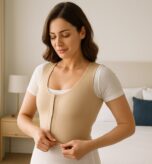
Homogeneous and continuous pressure applied from the outside restricts the pooling of fluid between cells, supports its direction toward lymph channels, and opens up space for tissues to fuse with each other on a smoother foundation. The corset acts as a supportive skeleton worn by the body from the outside during these repair days.
When the abdominal skin is freed from the underlying fascia and stretched, the tendency for fluid to fill the microscopic gaps remaining in between is high. With its sweet pressure, the corset closes these gaps by pushing the skin toward the underlying tissue. When individuals remove their corsets for a short duration (for example, for a shower), they feel that their abdomens immediately become slightly fuller. This situation is a clear indicator of how well the corset manages fluid accumulation. Regular use of the corset throughout the specified weeks is the key to obtaining a thin waist curve.
In What Ways Does the Nutrition Routine Support Edema Elimination?
Restricting the consumption of sodium (salt), adding proteins nourishing cell repair to meals, and drinking plenty of water relieve circulation by breaking the body’s tendency to trap water, ensuring that swellings subside on the targeted schedule. Many individuals fall into the fallacy that drinking water when edematous will swell them more.
Yet, the sole way to expel that trapped stagnant fluid in the body is for fresh and clean water to enter the system. Processed foods, ready-made sauces, and packaged snacks increase the body’s fluid retention due to the hidden salt they contain, prolonging that taut feeling in the abdominal region. Patients turning to olive oil-based vegetables, fresh fruits, and plenty of water during recovery days significantly accelerates bodily lightening by putting their metabolism into a purification camp.
How Do Daily Mobility and Walking Contribute to Fluid Elimination?
The functioning of leg muscles and the acceleration of blood flow increase the pumping power of the lymphatic system, facilitating the filtration of stagnant fluid between cells through the kidneys and its expulsion from the body. The lymphatic system does not have a heart of its own; its pump is man’s own movements.
Resting by lying down constantly at home post-operation will slow down blood circulation, causing fluids to pool in the lower abdominal region due to the effect of gravity. Therefore, patients are advised to take frequent short and slow walks inside the home without tiring themselves. Every step rids the body a little more of that excess fluid load. Mobility also lowers intra-abdominal pressure by stimulating the intestinal flora and alleviates tension on the stitches.
How is Edema Tracking Organized in Istanbul Clinics?
The patient’s post-discharge processes, fluid drainage levels, and tissue hardnesses are monitored by expert teams through communication networks, and tracked with a quite holistic and compassionate approach by making special massage directions when necessary. Well-equipped health centers of Istanbul do not leave the patient alone with that exhausting edema period at the end of the operation.
While resting at home or spending their convalescence period in their hotel, the patient can rapidly convey information to the medical team about the change in swelling on their abdomen during the day. This communication bridge prevents unnecessary anxieties the individual might experience. That the body’s thick and full sensation will transform into a thin form over time is presented to the patient with rational data at each check-up. This environment of trust carries the psychological comfort of healing to very high levels.
How Does Drain Use Alleviate the Fluid Load in the First Days?
Thin, vacuumed tubes placed under the skin instantly evacuate excess blood cells and serum trying to accumulate between tissues, preventing early-stage swelling and opening space for the skin to adhere much more smoothly to the underlying tissue. Drains are the silent cleaners of the surgical area.
When the body sends an intense fluid to the operation area, if these tubes are not present, that fluid forms large pockets under the skin, delaying wound fusion. When patients spend a few days with drains, they easily get used to these tubes. When the incoming fluid amount drops to a reasonable level and drains are detached from the skin, the patient feels a great relief in their abdomen. This evacuation process greatly comforts the body by taking the largest load of the edema elimination schedule, which will last for months, right from the first days.
How Do Massage Applications Relieve Tissue Hardnesses?
Light lymphatic touches started with physician approval and applied with fingertips cause fluids to be driven out from intercellular spaces and advance towards lymph nodes, ensuring the rapid softening of regional hardnesses and the return of skin elasticity. These massages applied after the Tummy Tuck procedure are different from classical muscle massages.
Sweeping movements made only on the upper surface of the skin towards the flow direction of fluids activate the stagnant waters accumulated there. Patients add these gentle touches, which they can apply themselves usually in the third or fourth week of the operation, to their daily routines. The relief and softening felt in that region post-massage is the finest proof of how much tissue repair can be supported from the outside.
| Edema Reducing Action | Bodily Mechanism | Application Time |
|---|---|---|
| Increasing Water Consumption | Accelerates kidney filtration and expels stagnant fluid. | Continuously from the day of the operation. |
| Eliminating Salt from Life | Breaks the resistance of cells to trap (retain) water. | With strict discipline in the first months of healing. |
| Lymphatic Touches | Disperses subcutaneous hardnesses and introduces them into circulation. | After physician approval, usually starting from the 3rd week. |
How Do Temperature and Climate Conditions Change the Swelling Level?
Since high air temperatures can cause capillary vessels in the body to dilate for cooling purposes, increasing fluid retention between tissues, being in cool and well-ventilated environments comforts tissues and contributes to the subsiding of edema. The body has a mechanism highly sensitive to heat.
In summer months or after very hot showers, patients may notice that their abdomens are slightly more swollen or taut when they remove the corset. This situation stems entirely from vessel dilation (vasodilation). Resting in a cool environment or resting by slightly elevating the feet gathers vessels together and rapidly pacifies that feeling of fullness. When this effect of environmental factors on the body is known, patients do not fall into unnecessary anxieties during momentary fluctuations.
How is Healing Psychology Managed in Buşra Nur Özger Approaches?
By transparently sharing that this temporary feeling of fullness in the body is a normal cell repair process, the feeling of impatience the patient may experience in front of the mirror is pacified with empathetic guidance, and the individual is directed to view healing as a serene break they set aside for themselves.
In Buşra Nur Özger special consultancy processes, it is explained to individuals that their bodies are not a machine, and they heal over time and with care. Honest communication in the form of, “It may look swollen today, but that thin form underneath will emerge within months,” ensures that the patient gets through those exhausting first weeks with great inner peace. This strong bond of trust established opens up a great space for the aesthetic transformation to be embraced comfortably not only bodily, but also spiritually.
Frequently Asked Questions
1. Why does my abdomen look fuller in the first days after the operation?
Since your body sends an intense fluid and repair cell to that region to perform surgical repair, your abdominal region stands more swollen and taut than targeted in the first days.
2. How long will I need to wear my corset?
It is usually requested that you use your medical corset regularly for four to six weeks for tissues to fuse smoothly and these accumulated fluids to be expelled from the body.
3. Does drinking water increase or decrease edema?
Contrary to popular belief, drinking plenty of water accelerates circulation by breaking the body’s reflex to trap water, ensuring that edema is expelled much faster via the kidneys.
4. Does walking accelerate fluid elimination?
Yes, since the working of your leg muscles increases the pumping power of your lymphatic system, taking short indoor walks greatly helps the dispersion of edema.
5. How do salty foods affect my recovery process?
Since the sodium mineral retains water in your cells, consuming salty foods causes the swelling in your abdominal region to remain for a long time and you to feel tension in your stitches.
6. Do drains work in reducing swelling?
Drains instantly evacuate excess blood cells and serum trying to accumulate under the skin, keeping the most intense fluid load of those first days away from your body.
7. Is it normal to feel hardnesses in my abdomen during the recovery period?
Yes, scar bonds and tiny fluid collections formed by the wound tissue under the skin while healing can be felt as slight hardnesses when touched, and they soften within months.
8. Why is my abdomen flat in the mornings but swollen in the evenings?
Due to the effect of gravity throughout the day and increased circulation while moving, it is a biological cycle for fluids to descend towards your lower abdomen towards evening hours and create a slight swelling.
9. Does taking a shower with hot water affect edema?
High heat can dilate your vessels and increase blood flow to the region, leading to momentary swellings; therefore, it is generally recommended to take short showers with lukewarm water.
10. Does sitting for a long time when I return to work swell my abdomen?
Sitting in the same position for long hours will slow down lymphatic circulation, which can create a minor tension in your abdomen; frequently standing up and taking short office walks comforts your body.
11. When can massage applications be started?
Following the closure of superficial wounds and the slight settling of tissues, gentle lymphatic touches can usually be started with your physician’s approval, starting from the third or fourth week.
12. Do menstrual periods increase swelling in the abdominal region?
The normal water retention created by hormonal changes in the body (period edema) can cause you to feel more tension and fullness in your operated region for a few days.
13. Does the corset being very tight expel edema faster?
No, an excessively tight corset can constrict your capillary vessels and clog the channels ensuring the expulsion of fluids; a sweet pressure level where your hand can enter with slight resistance is the most ideal.
14. Can I drink herbal teas during the recovery process?
You can consume soothing teas such as chamomile, linden, or fennel, but consulting your physician for blood-thinning or diuretic teas like green tea is more appropriate for your body.
15. How long does it take to see the final thin form of my body?
Although the vast majority of swellings pass in the first months, the complete expulsion of microscopic edemas under the skin and the flawless settling of tissue generally spread over six months to one year.