

 Trusted by over 5,000 patients in more than 30 countries




When Can One Return to Daily Life After a Tummy Tuck Surgery?
Although it varies depending on the body’s repair speed, the scope of the procedure performed, and the individual’s personal endurance, the transition to physically non-strenuous desk jobs and usual social activities typically takes place between the tenth and fifteenth days after the operation; during this period when the body adapts to its new contour and tissues begin to fuse, the person attains a vigor to walk comfortably on their own, stand upright, and meet their basic personal needs without difficulty. Following this surgical process where excess skin on the abdominal wall is removed and midline muscles are repaired to reshape the center of the body, when patients will participate in their social lives is one of the most curious topics. Following this major change it has been exposed to, the body expends intense energy at the cellular level to recover. This energy expenditure may give the person a slight feeling of fatigue in the first days. However, this situation is not a disease state that imprisons the patient to bed. Recovery is a gradual adaptation phase where every day feels better than the previous one, and new body contours emerge as edemas subside.
Especially Tummy Tuck procedures require patients to maintain their in-home mobility within the framework of certain rules from the moment they are discharged. The psychological and physical management of the process are directly connected. In centers with a broad medical infrastructure like Istanbul, recovery days are planned not as an exhausting wait for the individual, but as a renewal break where aesthetic goals are approached step by step. In line with Buşra Nur Özger’s special information principles, each step of the recovery process is conveyed to the patient in a rational language. When individuals pay attention to the sleeping positions, nutrition routines, and corset use recommended by physicians, the schedule for returning to daily life proceeds with great comfort. Every step taken by respecting the bodily rhythm supports the person’s participation in their social life with much higher self-confidence and life energy in the following weeks.
How Should In-Home Mobility Be in the First Days?
Moving to the home environment right after the operation, instead of remaining motionless in bed all day, patients taking slow-paced, short walks around the house to support blood circulation and reduce the risk of clot formation in the legs is an important step accelerating bodily repair. In the first weeks, in order to ease the load on the stitches in the abdominal region, it is recommended that patients walk slightly bent forward (in a V position) without being forced to stand upright. This posture allows the skin and the muscle fascia repaired inside to fuse peacefully.
During resting hours at home, sudden turns, lifting heavy objects, and movements such as straining that will increase intra-abdominal pressure must be carefully avoided. Without pushing their limits, patients should give their bodies the necessary time by moving to rest when they feel tired. The greatest support the body needs during this period is to find that balanced middle ground that does not tire it out yet does not leave it completely motionless.
During Which Period Does the Return to Desk Jobs Take Place?
Individuals working in office and desk jobs that do not require heavy physical effort and do not tire the body reach the conditioning to return to their professional lives usually between the tenth and fifteenth days after the operation, depending on their own pain thresholds and tissue healing rates. Returning to business life ensures that the person also feels mentally vigorous. However, even when working in the office environment, avoiding remaining motionless in the same position for long hours and frequently getting up to take short office walks is crucial for the health of blood circulation.
When the person goes to work with their medical corset hidden under their clothes, it is not noticed from the outside that they have undergone any operation. In this process, staying away from situations that will strain the body, such as carrying heavy files or requiring sudden reflexes, supports the preservation of the obtained organic form. These small steps taken into working life increase the patient’s confidence in their body.
| Activity Type | Expected Timeline | Things to Consider During Application |
|---|---|---|
| Light In-Home Walk | The day after the operation | With a forward-bent posture, taking short-term breaks. |
| Desk Work | Days 10 – 15 | Avoiding sitting for long periods, with corset support. |
| Jobs Requiring Heavy Effort | Week 6 and after | With a gradual transition after taking physician approval. |
When Is Corset Use Discontinued During the Recovery Process?
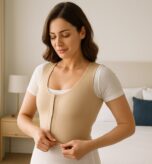
It is planned that special medical corsets—which apply a homogeneous external pressure to the abdominal wall to ensure tissues cling to each other smoothly, accelerate the elimination of edema, and support the abdominal muscles—be used generally for four to six weeks following the operation, and then gradually phased out of the daily routine with physician approval. The corset acts almost like the person’s second skin, forming the external skeleton of the surgical area during the recovery phase.
Although a slight adaptation period is experienced in the first days due to the tightness of the corset, the enveloping support it provides when standing up or coughing gives the patient great comfort. By the end of the fourth week, tissues have largely fused and edemas have subsided. At this stage, with the physician’s evaluation, corset use can be reduced to daytime hours only or left off entirely, allowing the body to move with its own natural muscle support.
How Long Should One Wait for Heavy Physical Activities?
For sports that increase intra-abdominal pressure such as pilates, fitness, weightlifting, or intense cardio, it is essential to wait for the completion of the sixth or eighth week after surgery, awaiting the internal stitches to become completely solid. In comprehensive Tummy Tuck procedures, in addition to the recovery of the skin, the midline abdominal muscles are brought together with stitches. The healthy fusion of this muscle repair (internal corset procedure) takes time.
A demanding abdominal exercise performed in the early period can lead to the stretching or opening of the repaired fascia. Therefore, patients must be content with only in-home and flat-road walks until the sixth week. When returning to sports with physician approval after two months, individuals notice a tightness and resistance in their core region that they have not felt before, achieving much higher efficiency from physical activities.
How Should the Postoperative Sleep Routine Be Organized?
To prevent tension on the stitches in the abdominal wall, resting the body in a slightly folded manner (V position) by placing supportive pillows under the head, shoulders, and knees while lying on the back in the first weeks is extremely valuable for tissue repair. Lying flat on the back or turning face down increases tension on the abdominal skin, both lowering sleep quality and complicating the repair of the wound tissue.
Since the body may make involuntary movements throughout the night, these barriers created with pillows help the person stay in a safe position. Although patients find this new sleeping routine a bit unusual on the first night, they grasp the importance of the practice when they wake up in the morning and notice that loose and relaxed feeling in their abdominal region. As the body regains its flexibility after the tenth day, the person becomes able to fall asleep in flatter positions.
At What Stage Does Participation in Social Life Ease?
Individuals’ participation in daily social activities such as meeting friends, eating out, or going to the cinema comfortably takes place usually starting from the second week of the operation, within the scope of planning that does not tire the body and does not require standing for a long time. Following the first days spent at home, individuals feel the morale-boosting effect of going out, getting fresh air, and meeting with their social circle.
When going out with the medical corset hidden under the clothes, the flattening in the abdominal region and the thinning in the waist curve meet with positive reactions from the surroundings. The main issue to be considered in this process is listening to the body’s limits and making time for rest when fatigue is felt. These small steps taken into social life turn the recovery period into an enjoyable adaptation adventure.
What Criteria Are Considered to Start Driving?
In order to prevent abdominal muscles from suddenly contracting and damaging the stitches during sudden braking or maneuver reflexes that may occur while at the wheel, it is generally expected that two to three weeks pass since the operation and the person has completely stopped using painkiller medication. Driving is an action that requires the body to focus and muscles to work in coordination.
Getting behind the wheel in the early period can both weaken reflexes due to drowsiness that medications may create and cause discomfort due to the pressure the seatbelt will create on the operation area. Entering the third week, the body’s mobility increases, and the intra-abdominal pressure during reflexes reaches a tolerable level. With the physician’s approval, the person can gradually return to short-distance driving.
When Is the Transition to Bathing Routines Made?
Following the removal of tubes (drains) that evacuate fluids that may accumulate under the skin, with the evaluation by the physician of the water resistance condition of the medical tapes on the incision areas, approval is mostly given to take a standing, lukewarm shower on the third or fourth day after the operation. The first bathing experience is an important step that relaxes the body and gives the patient great freshness.
Ensuring that the water is not too hot prevents the sudden acceleration of blood circulation in the body from increasing edema. It is recommended that pressurized water is not sprayed directly onto the incision areas, and the area is cleaned gently only with the flow of water itself. Instead of drying harshly with a towel after getting out of the shower, taking the moisture away by making light tampon movements with a clean cloth is a subtle detail protecting wound health.
How is Recovery Tracking Conducted in Istanbul Clinics?
A holistic tracking network is organized for guests of the city or locally living patients where regular wound checks are performed during post-discharge hotel or home rests, the medical team can be reached quickly through communication networks in case of any question mark, and the patient’s psychological state is kept at the forefront. Istanbul’s health vision offers a strong support mechanism surrounding the patient even during the recovery period of aesthetic processes.
While resting at home or in the hotel, the patient is in constant contact with physician teams for dressing changes or the evaluation of the general course. Thanks to this system, the person solves minor issues they may experience during the recovery period by transmitting them instantly to authorized hands. This communication bridge established opens a great space for the body to recover rapidly not only physically but also psychologically.
How Does the Nutrition Routine Affect the Return to Social Life?
Consuming fresh foods that do not tire the intestinal flora and have a high fiber ratio, creating protein-weighted menus supporting cell repair, and consuming plenty of fluids facilitating edema elimination help the body undergo a healthy repair from inside out, enabling the person to return to social life in a much more energetic manner. In the early postoperative period, constipation or gas problems that may occur due to the slowing of the digestive system lead to the stretching of the repaired muscles by increasing intra-abdominal pressure.
This tension lowers the patient’s mobility. A clean and light diet both keeps the metabolism in balance and directly contributes to the wound healing schedule. A body where edema is eliminated faster looks much more in shape inside clothes, and this situation is one of the keys for the individual to feel good in social environments.
When Is Scar Care Included in the Daily Routine?
In the process starting after the tapes on the surgical incision scar—skillfully hidden in the underwear line—are completely removed and the wounds are closed, using silicone-containing restorative gels for the scar to soften and harmonize with skin color, and light massage techniques relaxing the tissue become a part of the daily personal care routine. The management of scars formed in Tummy Tuck surgeries is a stage requiring the patient’s active participation in the process.
The creams recommended by the physician are massaged into the suture line with light circular pressures made using the flesh of the fingers. This massage regulates the collagen arrangement in that area, preventing the scar from becoming raised (hypertrophic). Protecting scars from direct sunlight or solarium for the first year is very valuable to prevent dark-colored pigmentation from forming. Individuals embrace this fine line, which fades within months, as a natural part of aesthetic repair.
How Do Buşra Nur Özger’s Special Approaches Facilitate the Process?
Centering the fact that the individual adapts to their new body not only physically but also spiritually; thanks to this special communication model where rational goals are shared transparently instead of exaggerated expectations before surgery, techniques respectful of the body are applied during the operation, and every question of the patient is answered with an empathetic language during the recovery period, the process is surmounted with great comfort.
Buşra Nur Özger’s approaches offer the patient a compassionate companionship during the process of getting used to the body, rather than an environment where interest is cut off upon the completion of the surgery. When time-consuming biological realities such as the healing of a surgical incision, the body retaining edema, or the scar fading are explained to the patient from the beginning, the person does not experience panic when returning to daily life. Thanks to this honest and visionary guidance, the organic and proportional body contour encountered in the mirror months later permanently refreshes the love the patient feels for their own body.
Frequently Asked Questions
1. How many days after surgery can I do housework?
You can gradually start light house chores that do not tire the body and do not require heavy lifting, usually from the second week of the operation, by listening to your own limits.
2. Is there any harm in getting on a plane or bus?
After your drains are removed and your first wound checks are performed, traveling is usually possible at the end of the first week, following your physician’s flight approval.
3. Will the corset show from under my clothes?
Since the medical corsets given to you have a thin and ergonomic structure that wraps the body, they are not noticed from under your daily clothes, except for very tight and thin fabrics.
4. Are the swellings on my abdomen permanent after surgery?
Swelling (edema) experienced in the first weeks is a natural part of tissue healing; it subsides largely at the end of the first month, and it takes six months for the body to take its final shape.
5. When can I swim in the sea or pool?
For the wounds to close completely and the risk of infection to disappear, the completion of the sixth week is generally awaited; afterwards, water can be entered with physician approval.
6. How should I protect my surgical scar from the sun?
To prevent the scar from darkening permanently (hyperpigmentation), it is recommended that you apply high-factor sunscreen to the scar area or keep the area covered for the first year.
7. Why should I walk bent forward during the recovery period?
It is necessary to bend the body slightly forward in the first days to ease the load on the stitches and tight skin on the abdominal wall and ensure healthy healing of the wound.
8. Does alcohol consumption affect my recovery process?
Since alcohol can increase edema retention in the body and interact with the medical medications used, it is important to stay away until the recovery period is completed.
9. Will the stitching of my abdominal muscles restrict my daily movements?
It does not restrict your movements after the recovery phase in the first weeks; on the contrary, muscles joining at the midline add strength and solidity to your core region in the long run.
10. Will I feel pain when my stitches are removed?
Since aesthetic internal stitches that the body can melt on its own over time are generally used in modern surgical techniques, a separate stitch removal procedure is usually not required afterwards.
11. What should I do when I need to wash my corset?
You can remove and wash your corset at short intervals specified by your physician (for example, while taking a shower) or provide a spare corset to ensure uninterrupted hygiene.
12. How long should be waited for sexual intercourse after surgery?
In order not to tire the stitches in the abdominal region and avoid sudden heart rate increases, a slow transition can be made usually after the fourth week, depending on the body’s repair speed.
13. Is it normal to have numbness in my abdomen during the recovery period?
Since a wide tissue procedure is performed, experiencing temporary loss of sensation or numbness in the abdominal skin in the first months is quite normal during the repair of nerve endings.
14. What should I do if my abdomen hurts while cooking or standing?
This situation is a natural signal showing that your body is tired; you should immediately take a break from your work and rest in a V position with your supportive pillows.
15. What does Buşra Nur Özger advise patients for returning to daily life?
She advises them to respect their body’s repair rhythm, follow medical advice without acting hastily, and see recovery as a serene renewal break they set aside for themselves.