 Trusted by over 5,000 patients in more than 30 countries


When Can a Postpartum Tummy Tuck Surgery Be Evaluated?
Following the extraordinary nine-month journey of pregnancy, the female body needs time to restore its tissues—which stretched to make room for the baby—its changing hormone balance, and the weight gained; planning an aesthetic surgery before this biological recovery process is fully completed can negatively affect the quality of the result to be obtained and the mother’s general health, which is why a period of at least six months to one year after birth is accepted as a medical necessity. Respecting the body’s own natural rhythm is the first and most fundamental rule of aesthetic repair. Throughout pregnancy, the abdominal skin is exposed to great tension, tears (stretch marks) occur in the subcutaneous connective tissue, and the rectus muscles located in the center open towards the sides, experiencing an anatomical separation. The postpartum period right after birth is a highly dynamic phase where the body sheds edema, the uterus shrinks, and tissues try to retract on their own. If a surgical intervention is performed before this natural retraction phase ends and the final sagging margin of the tissues becomes clear, incompatibilities or new loosenings in the aesthetic form may arise because the tissues will continue to shrink within themselves months after the surgery. Therefore, physicians offer mothers compassionate guidance to listen to their bodies and not act hastily. The second important factor is the breastfeeding period; while the mother’s milk production continues with the intensive secretion of hormones such as prolactin and oxytocin, the body’s energy focal point is feeding the baby. Taking general anesthesia or entering a surgical recovery period while breastfeeding is actively ongoing can both affect the quality of the mother’s milk and divide the cellular energy required for wound healing. After the breastfeeding process is completely over and hormones retreat to their pre-pregnancy stable levels, the body’s fluid retention capacity also returns to normal. The third parameter is weight balance; a large part of the weight gained during pregnancy is organically lost in the first months after birth. Having a Tummy Tuck operation while the weight loss process is still ongoing carries the risk of the patient encountering skin sagging again on her abdomen after dropping down to her target weight. Mothers reaching their target weights and remaining stable at this weight for at least a few months guarantees the permanence of the taut profile to be obtained.
In well-equipped health metropolises like Istanbul, these processes, evaluated within the framework of mommy makeover, are planned by blending the psychological and physical needs of the woman. In line with Buşra Nur Özger’s special information principles, mothers are told that this waiting period is not a loss, but a compassionate investment they make in their bodies. In the postpartum period, mothers are in an intensive pace with the care of their babies; sleeplessness, fatigue, and the necessity of carrying the baby in arms can challenge the recovery schedule after a surgical operation. Following an operation where the abdominal wall is repaired, the mother needs not to lift heavy objects and to rest. In this context, the one-year mark, where the baby grows a bit more and can move on its own, and the mother’s dependency decreases relatively, is a much more suitable ground for post-operative comfort. During these waiting months, mothers can prepare their bodies for surgery from the inside out by paying attention to healthy nutrition, consuming plenty of fluids, and moisturizing their skin. When the time comes, this constructive surgery—where sagging skin is removed and separated muscles are stitched from the inside and joined at the midline—ensures that the mother returns to her pre-pregnancy form, and even attains a flatter abdominal profile than before. Individuals who allow their body to find its own nature, follow medical advice, and act patiently regain their life energy and self-confidence in the mirror with that proportional body contour they encounter at the end of the recovery period.
How Much Time Does the Body Need to Recover Itself After Birth?
The return of the uterus to its pre-pregnancy dimensions, the retraction of the skin’s collagen structure to its limits, and the calming of hormonal fluctuations for the body to reach a stable metabolic rate generally spread over a period of six to twelve months following the act of birth. The female body, which is nature’s flawless mechanism, engages in a repair activity lasting for months even without any outside intervention. The abdominal skin tightens a little more each day during this period.
The elasticity margin of the skin tissue varies from person to person. While tissues take their final form at the end of the sixth month in some mothers, this process can find up to a year in others. Making a surgical design and tissue removal before this natural retraction phase ends endangers the permanence of the procedure. Therefore, experts wait for the body to completely complete the recovery it can do on its own, and aim to repair permanent sagging and muscle looseness that cannot be eliminated by natural ways using surgical methods.
Can a Surgical Intervention Be Performed on the Abdominal Region During the Breastfeeding Period?
In order to prevent the possibility of drugs administered under general anesthesia passing to the baby through breast milk, the incompatibility of antibiotics and pain relievers the mother must use post-operation with the breastfeeding period, and to prevent the energy the body will allocate for wound healing from being divided by milk production, surgical interventions for aesthetic purposes are not applied before the active breastfeeding process is completely over.
Motherhood is a sacred phase where the body focuses on feeding the baby. In this phase, the oxytocin hormone, which helps the contraction of the uterus and the secretion of milk, is active. This fluid retention (edema) and tissue looseness created by hormones hide the true form of the abdominal region. After the breastfeeding process ends, the prolactin level drops, the body’s tendency to retain water decreases, and the abdominal tissue finds its original form. Patients are offered a suitable planning calendar where they can make time for themselves after weaning their babies healthily.
After How Much of the Weight Gained During Pregnancy Is Lost Should the Operation Be Planned?
Reaching the ideal weight suitable for the individual’s height (or the level closest to this weight) and succeeding in maintaining that weight for at least two to three months before lying on the operating table holds great importance for the taut and flat abdominal profile to be obtained to be preserved without deterioration for years. A surgical recovery should not be seen as a weight loss tool.
If the mother undergoes this operation while she is still in an intensive weight loss process, every kilo she loses after the surgery can create a new tissue looseness and sagging in the abdominal region. Reaching the target weight clarifies the map of the body. The surgical team separates the remaining skin excess from the body in a much more proportional manner over this clarified map. This stability guarantees the patient’s satisfaction after the operation.
| Body Status | Suitability for Operation | Expected Result |
|---|---|---|
| Still in Weight Loss Process | Not medically recommended, waiting is requested. | New skin sagging may be seen after surgery. |
| Birth Weight Has Become Permanent (Overweight) | A certain amount of weight loss with a dietitian is requested. | Anesthesia comfort increases, load on stitches lightens. |
| Target Weight Reached and Stabilized | Has turned into an ideal surgical candidate, planning is made. | Permanent, flat, taut, and body-proportional body contour. |
How is Postpartum Abdominal Muscle Separation (Diastasis) Repaired?
The repair of the midline abdominal muscles (rectus fascia) that have drifted apart to make room for the baby during the pregnancy process is brought to life by simultaneously stitching these muscles to each other along their length with medical threads and bringing them back closer to the midline while removing excess skin, and granting the abdominal wall its own natural internal corset. The real source of the external sagging is this widening inside.
As long as this separation is not repaired, no matter how much the woman slims down, her abdomen continues to stand outwardly bulging when standing or after eating. In fact, this situation also leads to back pains and posture disorders. These internal stitches made in a comprehensive Tummy Tuck operation rebuild the woman’s core strength (core region). Following the operation, patients not only achieve a flat abdomen, but also regain their upright posture.
How Do Multiple Pregnancies Affect Deformation on the Abdominal Wall?
In mothers carrying multiple pregnancies such as twins or triplets, since the uterus grows far above normal, the abdominal skin and muscle tissue stretch intensely, exceeding their elasticity capacity; since this leads to much more pronounced skin sagging, deep stretch marks, and wide muscle separations compared to single pregnancies, surgical repair mostly turns into a requirement for the body to return to its old form.
The collagen fibers in the abdominal skin of women with a history of multiple pregnancies structurally fatigue because they are exposed to high pressure. Sports or exercise remain biologically insufficient to repair a torn tissue. When such cases are evaluated in Istanbul clinics, full repair processes—where excess tissue will be completely removed and the belly button will be organically restructured—are planned for the patient, re-establishing bodily proportion.
How Are the C-Section Birth Incision Scar and the New Surgical Incision Line Combined?
The new horizontal incision applied during the aesthetic operation is provided by planning it to include the existing C-section scar and completely removing the old scar (wound) tissue in that region; thus, instead of two different scars on the mother’s abdomen, a single and fine aesthetic line that can be skillfully hidden under the bikini or underwear line and will fade to skin tone over time is left behind.
C-section scars can sometimes heal in an indented, thick, or folding form. While the abdominal skin is stretched downwards, this old scar region is removed from the body along with the excess skin. The surgeon closes the new suture line under the skin in layers with aesthetic meticulousness. When the patient completes the recovery process, her abdomen is both cleansed of crude scars belonging to the previous birth and attains a smooth, taut skin surface.
Is It Possible to Get Pregnant Again After the Operation?
The fact that the abdomen has been repaired surgically creates no negative medical effect on the growth of the uterus, the healthy development of the baby, or experiencing a normal pregnancy process; skin and muscles have the ability to stretch again, but a new pregnancy period can affect the permanence of this flat and taut aesthetic form obtained, leading to minor deformations.
For this reason, physicians advise mothers to enter this constructive aesthetic operation after largely completing their family planning. Of course, when an unplanned pregnancy occurs after the operation, no health problem arises for the mother or the baby. However, since the abdominal wall will expand again, slight loosenesses can be observed in that flawless flatness obtained after birth. This bodily cycle is honestly conveyed to individuals, providing guidance on correct timing.
Can Stretch Marks (Striae) in the Abdominal Region Be Eliminated with This Procedure?
Since the skin in the region remaining below the belly button and where stretch marks are most intense is completely removed, you will be cleansed of stretch marks in that area, while the ones above will slide down and stretch, creating a smooth foundation.
- Lower Abdominal Region: This area where 80%-90% of stretch marks are located is completely discarded along with excess skin.
- Upper Abdominal Region: The skin in this region is pulled down; if there are stretch marks in this part, they only move down a bit further.
- Skin Tightness: Since the skin is stretched, remaining minor stretch marks also appear in a much less noticeable, faint form from the outside.
Since stretch marks are tears in the lower layers of the skin, repairing them with cream is close to impossible. Surgically removing this worn-out region meets mothers’ expectations of skin smoothness at a very high rate.
How Does the Postpartum Evaluation Process Progress in Clinics in Istanbul?
Analyzing in detail with a clinical examination the birth histories, skin elasticity margins, breastfeeding statuses, and levels of relaxation in the abdominal muscles of mothers applying to the city, a rational surgical map is created that adapts to the individual’s bodily possibilities and respects the post-motherhood lifestyle. Well-equipped health centers of Istanbul see the mother not just as a medical case, but as a special individual wanting to rebuild her body.
During the consultation, the physician examines how the mother’s abdominal tissue behaves while standing and bending. With Buşra Nur Özger’s special information principles, it is transparently explained to the patient how suitable the body is for this operation. If the mother has just finished breastfeeding or her weight is high, it is honestly told to her by approaching her with empathy that her body needs a bit more time for this operation. This stage, where expectations are grounded on a realistic basis, reinforces the patient’s belief in the process.
Which Procedures Can Be Performed Together Within the Scope of Mommy Makeover?
Repairing volume losses or sagging in breasts intensely affected by birth and breastfeeding processes (breast lift, augmentation), removing resistant pregnancy fats accumulated in the waist and back region (liposuction), and recovering the abdominal region are combined under the same anesthesia under conditions permitting the mother’s general health state, granting the body a three-dimensional harmony.
Solving multiple problems in a single operation session and a single recovery period (mommy makeover) creates great comfort for mothers. The upper and middle parts of the body are shaped in a proportional manner to each other. However, performing multiple procedures at the same time means the body expends more energy during the recovery period. Expert teams evaluate the mother’s blood tests and physiological endurance to decide on the size of these combined procedures.
| Procedure That Can Be Combined | Intervention Area and Purpose | Effect It Creates on the Mother |
|---|---|---|
| Breast Lift / Augmentation | Gaining form to breasts emptied after breastfeeding. | Feeling of recovery and rejuvenation in the upper body. |
| Liposuction (Fat Removal) | Expulsion of stubborn fats on the sides of the waist (love handles) and back. | The waist taking a thin and curved line while the abdomen flattens. |
| Abdominal Shaping | Removal of sagging skin and tightening of muscles. | A flat, organic, and aesthetic profile in the central region. |
How Should Postoperative Baby Care and In-Home Mobility Be Organized?
In order not to damage the abdominal stitches and repaired muscles, it is important for wound healing to progress serenely that the mother carefully avoids lifting heavy objects for the first six weeks, asks for her baby to be brought to her laps while in a sitting position instead of taking them into her arms, and definitely receives support from a family member or assistant during care processes inside the home.
By nature, mothers want to deal with their babies actively right after the operation. However, picking up a child by standing up or bending over suddenly increases intra-abdominal pressure, placing a large load on the stitches. During recovery days, the mother needs to focus solely on her own bodily repair. Walking slightly bent forward, lying with pillow supports during resting hours, and taking short, non-tiring walks form the basic movement principles inside the home.
Why Is Corset Use Important for Mothers During the Recovery Period?
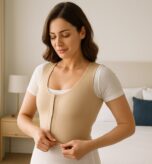
Following the tissue separation performed in a wide area, for the skin to cling smoothly to its new foundation, edema (swelling) to be expelled from the body, and the abdominal muscles stitched inside to be supported from the outside so they are not damaged during sudden movements, mothers regularly using their medical corsets for an average of four to six weeks is an external skeletal support guaranteeing the permanence of the process.
Especially in reflexes such as sneezing, coughing, or rising from the edge of the bed, the corset creates an enveloping effect, preventing stinging in the stitches. Although mothers experience a slight adjustment period to the tightness of the corset in the first days, they comprehend how necessary this medical garment is due to that emptiness feeling they feel without it. Regular corset use is the hidden architect ensuring the flattening of the abdomen and the flawless settlement of the waist curve.
How Is Scar Management Provided in Postpartum Operations?
The new surgical incision scar combined with the C-section scar and hidden in the underwear line fading, softening, and harmonizing with skin tone within the months following the removal of tapes is ensured to transform into an organic line by following steps such as using silicone-containing restorative gels, performing regular tissue massages, and carefully protecting the scar from UV rays.
Wound repair progresses at a different speed in each individual. This fine line, which is in red or pink tones in the first weeks, is in the active repair phase. Cream-assisted massages started in the weeks approved by the physician regulate the collagen arrangement in that area, preventing the scar from becoming raised. In the following months, this line gradually fades and becomes an organic part of the body. Rather than carrying skin that sags and folds, this fine line that can be hidden under a bikini is a high aesthetic comfort for mothers.
Why Should the Nutrition Routine Be Carefully Monitored During the Recovery Phase?
In order to reduce swellings in the abdominal region, not to tire the intestinal flora so as not to create gas pressure on the stitches, and to accelerate cellular repair; staying away from sodium (salt), choosing foods with a high fiber ratio, consuming proteins that ensure tissue fusion, and adding abundant fluid intake to the daily routine make it possible to support recovery internally.
Following a surgical intervention, it takes time for the body to shed edema; consuming processed and salty foods causes the body to retain water, causing the abdomen to look swollen. In addition, experiencing constipation or gas problems tires the fresh stitches since it will trigger a straining reflex during toilet use. Therefore, oats, green leafy vegetables, and olive oil dishes are mothers’ greatest saviors during this period. Clean and healthy nutrition keeps metabolism in balance, keeping the mother’s energy level high.
How Do Buşra Nur Özger’s Approaches Support Mothers’ Psychology?
An environment of trust is established with a transparent consultancy model that listens to the aesthetic concerns of mothers who feel tired due to the traces left by pregnancy on their bodies with an empathetic language, conveys the operation’s processes on an honest and rational basis far from exaggerated promises, and compassionately guides the mother in the recovery schedule not just as a patient, but as an individual making peace with her body again.
Mothers’ fear of scars carried before surgery, anxiety about not being able to cope with their children during the convalescence period, or anesthesia worries are pacified with this open communication. The person is told how this operation rebuilds the body and that recovery is an organic matter of time requiring patience. This strong bond of trust established keeps the mother’s motivation high during the convalescence period, ensuring that the result is embraced psychologically with peace and high life energy.
Frequently Asked Questions
1. Can I have this operation right after birth?
It is generally recommended to wait between six to twelve months after birth for your body to find its hormonal balance and complete the self-retraction of tissues.
2. Do I need to wean my baby for the operation?
In order for anesthesia drugs not to affect your milk and to prevent the energy your body will spend for wound repair from being divided, you are expected to have completely completed the active breastfeeding period.
3. What happens if I have surgery while I have pregnancy weights?
If you undergo this operation while you are still in an intensive weight loss process, the kilos you will give after the surgery can lead to new tissue looseness and sagging on your abdomen.
4. I am a mother of twins, can the intense sagging on my abdomen be corrected?
Advanced level skin sags and muscle separations forming due to multiple pregnancies can be restored to the body’s old taut and proportional form with full-scale repair methods.
5. Where will the surgical scar remain and will it be visible from the outside?
Since the surgical incision is planned quite low so as to remain entirely inside the underwear or bikini bottom, it is not noticed from the outside with daily clothes or beachwear.
6. How long does the numbness in my abdomen last after surgery?
Since a wide tissue procedure is performed, experiencing temporary loss of sensation or numbness in the abdominal skin in the first months is normal during the repair of nerve endings; sensation returns over time.
7. Can I take my baby into my arms during the recovery period?
In order not to tire your abdominal stitches, it is important that you do not lift heavy objects for the first six weeks, and instead of hugging your baby while standing, take them into your lap while sitting or ask for support from someone.
8. Is using a corset really mandatory?
It is requested that the special medical corset be used regularly, generally for four to six weeks, in order for tissues to fuse smoothly, edema to be expelled, and the new form to be supported.
9. Does the stitching of my abdominal muscles make it difficult for me to return to sports?
It does not restrict your movements after the recovery phase in the first weeks; on the contrary, muscles joining at the midline add strength to your core region, allowing you to get more efficiency from sports in the future.
10. When can I return to my desk job?
If you have a working environment where you do not exert physical effort, you can generally return to your office within ten to fifteen days depending on your body’s repair speed.
11. Will all the stretch marks on my abdomen go away?
Since the skin in the region remaining below the belly button and where stretch marks are most intense is completely removed, you will be cleansed of stretch marks in that area, while the ones above will slide down and stretch.
12. Will my C-section scar disappear with this surgery?
The aesthetic incision line is generally planned to include your existing C-section scar, thus leaving only a new, fine, and aesthetic suture line on your abdomen instead of two scars.
13. When can a bath be taken after surgery?
Following the removal of drains, depending on the condition of your stitch tapes and with your physician’s approval, a standing lukewarm shower can usually be taken a few days after the operation.
14. Can my waist also be thinned along with a tummy tuck?
While skin sagging on your abdomen is recovered, stubborn pregnancy fats in your waist and love handle regions can also be simultaneously removed with liposuction (fat removal), imparting a thin curve to your body.
15. What does Buşra Nur Özger suggest to mothers for this process?
She suggests that they respect the change their bodies were exposed to during pregnancy, wait for the right time for aesthetic repair, and see the recovery process as a serene break they set aside for themselves.