
 Trusted by over 5,000 patients in more than 30 countries



Things Wondered About Body Changes After a Mommy Makeover
The subjects examined under the heading of things wondered about body changes after a mommy makeover offer a comprehensive field of study for individuals who want to understand how the structural transformations occurring in the female organism following pregnancy, childbirth, and breastfeeding stages are shaped from a medical and aesthetic perspective. The female body undergoes a major adaptation process both hormonally and mechanically throughout the adventure of bringing a baby into the world. In this process, the ligaments in the abdominal wall stretch to make room for the fetus, the mammary glands expand for milk production, and fluid retention and fat deposits increase in different parts of the body. With the realization of birth and the termination of the breastfeeding period, tissues may not always spontaneously return to their former elasticity. Combined approaches called a mommy makeover in the field of plastic, reconstructive, and aesthetic surgery are applied to balance these physiological differences and support the anatomical integrity of the body. In this context, as stated in the content analyses prepared by Buşra Nur Özger, individuals recognizing their own anatomical limits and aligning their expectations with medical realities are among the fundamental elements facilitating the psychological and physiological adaptation of the process.
Changes in body contours after aesthetic operations are not limited to surgical steps performed on the operating table alone, but encompass a cycle of biological repair and restructuring lasting months. Elements such as repairing looseness in the abdominal area, the breast tissue gaining volume and form, and establishing regional fat balance directly affect the overall silhouette of the body. In qualified informational studies conducted in the field of health communication, the importance of the patient approaching their bodily change processes with an objective perspective is frequently touched upon. Progressing by respecting the body’s own natural repair rate supports the long-term anatomical harmony of surgical results. In the following sections, the change dynamics observed in the body after mommy makeover operations are discussed in detail accompanied by frequently asked questions.
How Do Body Changes After a Mommy Makeover Begin and Which Biological Stages Do They Include?
The answer to the question of how body changes after a mommy makeover begin and which biological stages they include refers to a planned process progressing in such a way that tissues pass through sequential cellular repair stages called inflammation, proliferation, and remodeling following surgical intervention, with the body eliminating edema and adapting to its new contours. Seeing edema (fluid accumulation) and slight bruising around the incision lines and wide treated areas in the first days immediately following the operation is a usual defense mechanism exhibited by the body against trauma. In this first phase, the body dispatches repair cells and white blood cells to the area, initiating cellular cleansing. From the second week onwards, fibroblast cells accelerate collagen production; this situation can cause temporary hardness to be felt in the tissues. As time progresses, in the remodeling phase averaging between six months and one year, collagen fibers are rearranged, capillary networks regress, and subcutaneous tissues soften to regain their new form.
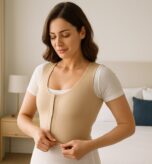
This cellular transformation journey of the body may show differences according to the individual’s general health profile and the applied surgical scope. In mommy makeover processes where multiple procedures are performed together, the body’s energy consumption and fluid balance are subject to a specific adaptation calendar. In this process, the patient following doctor instructions, using medical corsets regularly, and organizing nutritional habits to support cellular renewal directly increases the quality of the change. While it takes months for the externally visible form of the body to settle, microscopic healing in internal tissues continues as a long-term cycle.
How Do Changes in the Abdominal Area and Muscle Repair Affect the Body Silhouette?
The answer to the question of how changes in the abdominal area and muscle repair affect the body silhouette can be explained as repairing the gap (diastasis recti) formed by the right and left abdominal muscles moving away from each other due to pregnancy from the inside with medical stitches to create an internal corset, removing excess skin, and bringing the abdominal profile to a taut, flat anatomy. The pregnancy process stretches the connective tissues and muscle fascia on the anterior abdominal wall to the maximum level; after birth, in many women, these muscles cannot return to their former anatomical position, and a weak abdominal wall picture emerges. During the tummy tuck (abdominoplasty) operation, these separated muscles are brought together and stitched at the midline. This repair not only provides a visual flattening, but also supports the waist curve and helps internal organs preserve their anatomical position.
This structural change performed in the abdominal area positively affects many areas from the person’s clothing choices to their posture. In individuals who have experienced lower back and back pain for a long time, this new support system provided by the abdominal wall reduces the mechanical stress placed on the spine. The feeling of tightness felt in the first weeks following the procedure leaves its place to a more comfortable mobility capability as the edema subsides and muscles get used to their new position. The basic structural differences observed in the abdominal area before and after the operation are summarized in the table below:
| Anatomical Parameter | Post-Pregnancy (Pre-Operation) Condition | Post-Operation Body Change |
|---|---|---|
| Abdominal Muscles (Rectus) | Separated from the midline to the right and left (Diastasis Recti). | Brought together at the anatomical midline by internal stitching and tightened. |
| Skin Tissue | Stretched, sagging structure containing stretch marks. | Excess and sagging skin is removed, remaining skin is stretched. |
| Waist Profile | Bulging due to laxity in the abdominal wall. | A flatter, more proportional abdominal contour with distinct lines is achieved. |
How Do Form Changes and Volume Adaptation Observed in Breast Tissue Take Place?
The answer to the question of how form changes and volume adaptation observed in breast tissue take place is answered as the mammary glands, which empty and sag following milk production, being moved upwards with lift (mastopexy) procedures according to the patient’s anatomical structure and made compatible with the torso ratio by being supported with silicone implants or fat transfers when necessary. When the lactation period is completed, the glandular structure inside the breast shrinks, and the ligaments supporting the breast lose their elasticity. This situation leads to the emptying of the upper pole of the breast and the nipple looking downwards. Aesthetic interventions performed ensure that the breast gains a more upright, conical, and fuller silhouette by reshaping its own tissue.
This change in the breast area balances the individual’s body proportion while also supporting clothing fit. The placement of the medical prostheses used (submuscular or subfascial) and the selected form (anatomical or round) determine the posture of the tissue on the rib cage. The fact that the breasts look higher or tighter in the first months following the operation is a result of tissue edema and the placement phase of the prosthesis. As months progress, edema disperses, and with the effect of gravity, the breasts take a slight natural curve towards the lower crease line, reaching their final softness and form.
How is Regional Fat Distribution and the Restructuring Process in Body Contours?
The answer to the question of how regional fat distribution and the restructuring process in body contours are can be explained as stubborn fat deposits that do not go away with diet and exercise, such as the waist, back, hips, or love handle area, being removed with liposuction technologies, bringing body lines to softer transitions and a proportional silhouette. During pregnancy, with hormonal directions, the body tends to store fat in certain areas; after birth, these fats can exhibit a resistant character. Liposuction, which is a part of the body shaping approach, permanently reduces the numerical density of these excess fat cells, contributing to the prominence of the waist curve.
This change experienced in body contours following fat removal procedures settles as the spaces under the skin tighten with the help of a corset. It is usual for tissue sensitivity and hardness to be seen in areas where liposuction is performed in the first weeks; this situation regresses over time with the acceleration of lymphatic drainage. The body gaining symmetrical lines depends on the fine and balanced work performed by the surgeon with cannulas. Reshaped contours carry the person’s general physical posture to a more athletic and balanced appearance.
How Do Edema and Swelling Direct Body Perception During the Healing Period?
The answer to the question of how edema and swelling direct body perception during the healing period is answered as lymphatic fluid accumulating between tissues in response to surgical trauma creating a temporary fullness and volume increase in the body in the first weeks, which can be mistakenly perceived by patients as “permanent fatness”, but this situation is a temporary phase that improves with the elimination of edema. One of the most common psychological adaptation problems encountered after a mommy makeover is the swelling seen when looking in the mirror immediately following the operation. The body dispatches intense fluid to the area to repair the large incisions opened and heal the ligaments.
This fluid accumulation creates a temporary feeling of thickness in areas where a tummy tuck or liposuction was performed. It is of great importance in terms of mental comfort for patients to be patient during this phase and to know that edema is a biological repair tool. Drinking plenty of water in accordance with physician recommendations, eating a low-salt diet, taking light walks, and regular use of medical corsets increase the rate of eliminating edema. As months progress, these swellings completely regress, and the clear body lines targeted in surgery planning begin to emerge.
What Are the Anatomical Differences Observed in Skin Quality and Stretch Mark Structure?
The answer to the question of what the anatomical differences observed in skin quality and stretch mark structure are can be explained as the deformations in this region being eliminated by removing the stretch-marked and stretched skin remaining below the belly button from the body during the tummy tuck operation, but stretch marks remaining above the belly button or on the breast skin taking on a less noticeable form thanks to the skin becoming taut, while preserving their structures. Although striae (stretch marks) formed by the tearing of collagen fibers under the skin during pregnancy cannot be completely erased with surgical interventions, they are largely reduced by shedding excess skin.
The overall quality of the skin is supported by moisturizing creams, scar care gels, and healthy nutritional habits applied after the operation. The stretching of the skin paves the way for stretch marks to approach each other and take place on a flatter surface, visually lightening them. Support can also be obtained from medical aesthetics disciplines (with physician approval when deemed necessary) to increase skin quality. The skin gaining flexibility ensures that body changes are completed with a smooth surface.
How Do Physical Activity Capacity and Posture Adjustments Progress?
The answer to the question of how physical activity capacity and posture adjustments progress is answered as a process where a slightly forward-bent posture is preferred in the first weeks to protect the abdominal muscles, and physical activity capacity is gradually increased over months by attaining an upright and balanced posture with the strengthening of repaired muscles and healing tissues. During pregnancy, the center of gravity shifting forward and the weakening of abdominal muscles frequently lead to an increase in waist curvature and posture disorders in women.
Supporting the abdominal wall from the inside after a mommy makeover re-establishes the biomechanical balance of the skeletal system. The slightly forward-bent walking habit in the first weeks leaves its place to an upright and confident posture as stitches fuse and tissues gain flexibility. Starting with light walks during the return to physical activities stage and continuing with physician-approved exercises is the most important element supporting muscles in maintaining their flexibility and body firmness being permanent.
1. Are permanent changes observed in the body after a mommy makeover?
The answer to the question of whether permanent changes are observed in the body after a mommy makeover is that excess skin removed through surgical methods, repaired abdominal muscles, and placed permanent implants create a long-term form change in the body, but advancing age, gravity, and major weight fluctuations can affect the body’s natural aging process.
2. When does the feeling of tightness in the abdominal wall decrease after a tummy tuck procedure?
The question of when the feeling of tightness in the abdominal wall decreases after a tummy tuck procedure is answered as the process of repaired abdominal muscles and stretched skin getting used to the new position taking a few weeks, and with the subsiding of edema and stretching of tissues, this tightness noticeably decreases at the end of the first month on average.
3. Is tissue sensation affected after breast shaping operations?
The answer to the question of whether tissue sensation is affected after breast shaping operations is that temporary numbness or changes in sensitivity in the nipple and surrounding tissues due to surgical incisions are usual, and depending on the healing process of nerve endings, these sensory losses largely return to normal within months.
4. How should weight control be maintained after body shaping?
The question of how weight control should be maintained after body shaping is explained by taking into account that the operation is not a weight loss method, and balanced nutrition and regular lifestyle habits must be sustained to preserve the achieved contours.
5. How do edema and fluid retention affect body change processes?
The answer to the question of how edema and fluid retention affect body change processes is that edema, which emerges with the intensive work of the lymphatic system post-operation, creates temporary swellings in the body in the first weeks, delaying the visibility of the clear form, but it is eliminated over time.
6. How long does the maturation process of surgical incision scars take?
The question of how long the maturation process of surgical incision scars takes finds its answer in the fact that scars, which are red and prominent in the first months, take 12 to 18 months to gradually fade and approach skin color thanks to the body’s collagen remodeling cycle.
7. Do posture disorders improve after a mommy makeover?
The answer to the question of whether posture disorders improve after a mommy makeover is that chronic lower back pain and posture disorders are largely alleviated thanks to weakened abdominal muscles being stitched from the inside to provide support to the spine and the load of the anterior torso being balanced.
8. What is the body’s need for rest after combined surgical procedures?
The question of what the body’s need for rest is after combined surgical procedures is explained as the body expending intense energy at the cellular level due to multiple regions being repaired simultaneously, therefore high rest and effort restriction are mandatory in the first weeks.
9. How does the aging process affect the forms achieved with a mommy makeover?
The answer to the question of how the aging process affects the forms achieved with a mommy makeover is that gravity and losses in skin elasticity due to aging can show minor effects over the years as in all human tissues, but a much more formed base structure is preserved compared to a condition where surgical repair was not performed.
10. What is the contribution of the diet regimen to body change during the healing period?
The question of what the contribution of the diet regimen to body change during the healing period is, is answered as nutrition heavy in proteins and vitamins accelerating collagen synthesis, while low sodium intake facilitates the elimination of edema and supports tissue healing.
11. Do hormonal fluctuations change the post-operative body form?
The question of whether hormonal fluctuations change the post-operative body form is answered by stating that excessive hormonal changes or weight gains that may be experienced in later periods can affect the remaining tissues and fat cells, which is why a stable lifestyle is recommended.
12. What role does corset use undertake in the settling of body contours?
The answer to the question of what role corset use undertakes in the settling of body contours is that medical corsets have great importance because they prevent fluid accumulation by suppressing spaces under the skin and support tissues in adhering properly in their new position.
13. How does the return to physical activities support body firmness?
The question of how the return to physical activities supports body firmness is explained as physician-approved light walks and exercises performed in ensuing weeks increasing muscle tone and helping to make the achieved body contours permanent.
14. How are anatomical asymmetries balanced with a mommy makeover?
The answer to the question of how anatomical asymmetries are balanced with a mommy makeover is that differences between the two breasts or torso sides are attempted to be balanced with different techniques or volumes by making separate measurements for each structure during surgical planning.
15. How does the process of mentally updating the body image work?
The question of how the process of mentally updating the body image works finds its answer as a psychological adaptation phase where the mind, which has gotten used to the body changed after pregnancy, refreshes its self-confidence by accepting its new silhouette along with the subsiding of edema and the settling of the form over months.