
 Trusted by over 5,000 patients in more than 30 countries

What Is a Mommy Makeover? Which Cosmetic Procedures Does It Include?
As BNÖ Health, we explore the natural anatomical changes that occur in the body after motherhood—one of life’s most meaningful journeys—and the scientific approaches developed to address these changes. Pregnancy and breastfeeding can leave significant hormonal, metabolic, and physical effects on a woman’s body. Known in medical literature as combined body contouring surgery and more popularly as a Mommy Makeover, this surgical concept aims to simultaneously correct areas affected by these processes.
In this comprehensive guide, we examine this holistic approach—which allows multiple areas to be treated during a single anesthesia session—along with the procedures it may include, candidacy criteria, and postoperative planning, using an objective and regulation-compliant medical perspective.
What Is the Mommy Makeover Concept?
Mommy Makeover is a combination of cosmetic surgical procedures designed to correct structural changes that occur in areas such as the breasts, abdomen, waist, and thighs as a result of pregnancy, breastfeeding, and significant weight fluctuations. Rather than being a single fixed surgical technique, it is a highly customized and modular treatment plan tailored to the individual’s anatomy, tissue quality, and degree of skin laxity.
The primary goal of this approach is to help women regain body contours closer to their pre-pregnancy appearance, strengthen weakened muscle structures, and remove excess skin tissue. Procedures that would normally require multiple anesthesia sessions and recovery periods when performed separately can be combined into a single recovery timeline through this method.
Which Cosmetic Procedures Are Included in a Mommy Makeover?
Although the content of a Mommy Makeover is customized for each patient, it generally focuses on the two areas most commonly affected by pregnancy and breastfeeding: the breasts and abdomen. The primary procedures that may be included are:
1. Breast Surgery (Breast Aesthetic Procedures)
Following the end of breastfeeding and the stabilization of hormonal fluctuations, breast tissue may lose volume and begin to sag due to gravity. Depending on the patient’s needs, one or more of the following procedures may be selected:
- Breast Lift (Mastopexy): Performed when breast volume remains adequate but sagging is present. Excess skin is removed, and the nipple-areola complex is repositioned to a more anatomically appropriate location.
- Breast Augmentation (Silicone Implants): Used when the breasts have lost volume and appear deflated. Silicone implants of appropriate size and shape are placed to restore fullness and projection.
- Breast Reduction: A procedure designed to reduce excessively enlarged breast tissue that may cause strain on the back and shoulders, providing both functional relief and aesthetic improvement.
- Combined Approaches (Breast Lift + Implants): In cases where both significant volume loss and advanced sagging are present, implants may be combined with a breast lift to restore shape and fullness simultaneously.
2. Abdominal Contouring (Abdominoplasty)
During pregnancy, the expanding uterus places significant strain on the abdominal muscles and skin. When these tissues fail to return to their previous condition after childbirth, tummy tuck procedures may be considered:
- Full Tummy Tuck: A comprehensive procedure involving the removal of excess skin and fat above and below the navel, surgical tightening of separated abdominal muscles (diastasis recti repair), and repositioning of the belly button.
- Mini Tummy Tuck: A less extensive procedure performed when skin laxity and deformity are limited to the area below the navel. The belly button is not repositioned.
3. Liposuction (Localized Fat Reduction)
Liposuction is frequently included to remove stubborn fat deposits in areas such as the waist, flanks, abdomen, or back that persist despite diet and exercise. This procedure is not intended as a weight-loss method but rather as a body contouring technique designed to improve proportions and smooth transitions between body areas.
Advantages and Evaluation Criteria of Combined Procedures
Treating multiple areas during a single surgical session has specific clinical and practical advantages. These benefits can be summarized as follows:
| Criterion / Feature | Impact and Details of Combined Surgery |
|---|---|
| Anesthesia Management | Instead of undergoing multiple anesthesia sessions for separate procedures, treatment is completed under a single general anesthesia session. |
| Recovery Timeline | The total recovery time required for multiple individual procedures is consolidated into a single recovery period, saving valuable time. |
| Comprehensive Transformation | Since the breasts and abdomen are addressed simultaneously, overall body symmetry and contour transitions can be planned more harmoniously. |
| Cost and Logistics Planning | Hospital accommodation, operating room use, and caregiver arrangements are managed through a single treatment process. |
Who Is a Suitable Candidate for a Mommy Makeover?
Because combined surgeries place greater demands on the body compared to individual procedures, patient selection is based on careful medical evaluation:
- At least 6 months should have passed since childbirth, and at least 3–6 months should have passed since breastfeeding ended. These periods are necessary for the breasts to regain their stable volume and for the uterus to return to its normal size.
- The patient’s Body Mass Index (BMI) should be close to the ideal range. In general, a BMI of 30 or below contributes to greater surgical safety.
- No plans for future pregnancy in the near future, as another pregnancy may negatively affect the longevity of surgical results.
- Chronic conditions such as diabetes or hypertension should be well-controlled, and there should be no contraindications to general anesthesia.
Who Is Not a Suitable Candidate? (Contraindications)
To remain within safe surgical boundaries, the procedure should be postponed or avoided in the following situations:
- Individuals who actively use tobacco products and are unwilling to stop before and after surgery, as smoking significantly impairs circulation and wound healing.
- Patients who are still actively losing postpartum weight and have not yet reached a stable weight.
- The presence of an active infection or severe diseases that compromise the immune system.
- Individuals who do not have adequate assistance at home to help care for their baby during the early recovery period, as lifting heavy objects—including children—is strictly prohibited during the first weeks after surgery.
Preoperative Preparation and Planning
At BNÖ Health, the preoperative period is considered a critical preparation phase that directly influences surgical success. During this stage, patients undergo standard evaluations such as laboratory testing, mammography or breast ultrasound, chest imaging, and electrocardiography (ECG).
Since combined procedures may involve extended operating times, hemoglobin levels and coagulation parameters are carefully assessed to ensure they fall within optimal ranges. Herbal supplements, vitamins, and medications with blood-thinning effects are discontinued under physician supervision for a specified period before surgery.
Postoperative Recovery and Lifestyle Adjustments
Recovery after a Mommy Makeover requires patience and strict adherence to postoperative instructions due to the number of treated areas. Patients are typically kept under medical observation in the hospital for one to two nights.
Compression Garments and Supportive Wear
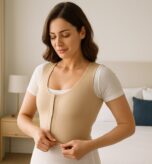
A medical abdominal compression garment is used to support abdominal tissues and protect surgical repairs, while specialized surgical bras help preserve breast shape and reduce swelling. These garments should generally be worn continuously for 4–6 weeks or as directed by the surgeon.
Weekly Recovery Milestones
- Week 1: Mild swelling, tightness around incision sites, and fatigue are normal. Short indoor walks with a slightly forward-leaning posture are encouraged to promote circulation. Lifting babies or children and making sudden movements should be avoided.
- Week 2: Patients gradually return to a more upright posture. Returning to light desk-based work may be considered toward the end of this period. Warm showers are generally permitted while maintaining proper wound hygiene.
- Weeks 4–6: Most swelling subsides, and body contours begin to become more visible. Compression garment use may be reduced or discontinued with physician approval. Exercise beyond light walking is generally not recommended yet.
- Month 3 and Beyond: More strenuous physical activities, abdominal exercises, and heavy lifting may gradually be resumed. Complete tissue settling and scar maturation typically continue for 6 to 12 months.
Frequently Asked Questions (FAQ)
How long does Mommy Makeover surgery take?
The duration of the procedure depends on the combination of surgeries performed and the interventions required by the patient’s anatomy. In most cases, a combination involving breast surgery and abdominoplasty takes approximately 4 to 6 hours.
How long after surgery can I become pregnant again?
There is no medical restriction preventing pregnancy after this procedure. However, because pregnancy will stretch the abdominal muscles and skin again, it is generally recommended to undergo surgery after completing family planning. If an unplanned pregnancy occurs, the body can be reassessed after childbirth.
Will the scars be visible, and do they fade over time?
Scarring is an unavoidable biological consequence of any procedure involving surgical incisions. However, scars associated with a Mommy Makeover are strategically placed in concealed areas. Abdominal scars are generally positioned below the underwear line, while breast scars are typically located around the areola or within the breast crease. Although they may initially appear pink and noticeable, they usually fade significantly over the first year and become less conspicuous.
Will weight gain affect the results after surgery?
Significant weight gain or unhealthy eating habits after surgery can cause remaining fat cells to enlarge and skin tissues to stretch again, potentially compromising the surgical outcome. Maintaining a balanced diet and regular physical activity is essential for preserving long-term results.
NUR ÖZGER HEALTH TOURISM AND TRAVEL CONSULTANCY (BNÖ Health) is not a healthcare facility; it is an international health tourism intermediary authorised by the Turkish Ministry of Health (Authorization Certificate No. AK-0670) and a TURSAB member (14693). Medical services are provided by physicians at contracted facilities licensed by the Turkish Ministry of Health. Information on this website is for general information only and does not replace a medical examination, diagnosis or treatment.