
 Trusted by over 5,000 patients in more than 30 countries

What Needs to Be Considered After a Mommy Makeover?
The answer to the question of what needs to be considered after a mommy makeover can be explained as a set of medical guidelines that the patient must follow in order to protect the surgical repairs performed on the body after pregnancy, childbirth, and breastfeeding stages at the cellular level, support the wound healing process, and ensure that tissues adapt to their new form. The female body goes through a major cycle of change throughout the adventure of motherhood. At the end of this cycle, the looseness formed in the abdominal skin, volume losses in the mammary glands, and resistant fat accumulations are restructured with combinations called a mommy makeover in the field of plastic and reconstructive surgery. Settling of body contours into the desired form and the integration of tissues with the structural foundation beneath them following the operation require the meticulous application of certain attention criteria. As expressed in qualified examinations conducted in the field of health communication, especially in content analyses prepared by Buşra Nur Özger, patients staying loyal to physician guidelines in the postoperative period directly increases the comfort of the recovery period.
The issues that need to be considered after aesthetic operations are professional approaches recommended by surgeons within the framework of medical standards, rather than a random preference. Following procedures such as a tummy tuck and regional fat removal, a wide surgical area is formed between the skin and muscle tissue. Going into certain restrictions in daily routines is necessary to protect this area, balance the lymphatic fluids produced by the body, and not strain the suture lines. This protective approach, located within the cellular renewal cycle of the body, allows patients to transition more controlledly into their daily lives. In the following sections, the fundamental dynamics that need to be considered after a mommy makeover and frequently wondered details are comprehensively discussed.
What Should Be Done to Protect the Body in the First Days After a Mommy Makeover?
The answer to the question of what should be done to protect the body in the first days after a mommy makeover can be explained as the application of protective precautions centered on rest in order to protect the internal dynamics of the body, avoid sudden movements, and ensure the stabilization of repaired tissues in areas where tissue integrity temporarily changes due to surgical incisions. Reducing the mechanical load placed on the abdominal wall and surrounding tissues following the operation allows the muscle fascia over internal organs to rest. Short, slow-paced walks to be taken in bed or in the home environment in the first days support blood circulation, while adopting a slightly bent posture by avoiding keeping the torso upright reduces the tension on the suture lines.
Furthermore, in this period, the patient is expected to avoid sudden lying down and getting up movements without support, move accompanied by a companion, and use prescribed medical corsets uninterruptedly. Paying attention to these protective precautions is of great value for tissue repair to gain a healthy momentum, blood circulation to proceed in a balanced manner, and unwanted strains not to form on the skin surface.
How Should the Nutrition Regimen Be Organized After Surgery?
The question of how the nutrition regimen should be organized after surgery is answered as consuming high-quality protein sources to support cellular repair, adding vitamins and minerals that accelerate wound healing to the diet, limiting salt consumption to facilitate the elimination of edema, and ensuring adequate fluid intake. In a body that has undergone a surgical operation, extra energy is needed for tissue repair due to trauma. Macro and micronutrients taken through food form the building blocks of the surgical area.
While insufficient fluid consumption paves the way for tissues to lose their elasticity and a dry healing environment, a high-sodium diet can cause internal pressure to be applied to the suture lines by making it difficult to eliminate regional edema. A diet model based on fresh vegetables, quality protein, and antioxidants, away from processed foods, increases the capacity of the body’s natural repair mechanisms and offers strong support for the surgical scar tissue to heal in its normal course.
| Nutritional Element | Main Function in the Body | Contribution to the Healing Process |
|---|---|---|
| Quality Proteins | Muscle and skin repair, collagen synthesis | Ensures rapid integration of tissues at the cellular level. |
| Low Sodium (Salt) | Restricting intra-body fluid retention | Helps operation edema and swelling subside more quickly. |
| Fibrous Foods and Water | Regulating the digestive system | Prevents the slowing of bowel movements after anesthesia. |
How Should Medical Corsets and Supportive Garments Be Used?
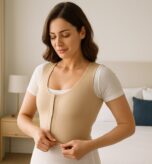
The answer to the question of how medical corsets and supportive garments should be used is explained as ensuring they are worn uninterruptedly day and night for the weeks determined under physician control in order for tissues to cling to their new position, suppress edema, and prevent fluid accumulation. Following a mommy makeover, the body goes through a major repair process. While the abdominal skin is trying to adhere to its new place, the breast tissue is in the phase of adapting to its new form.
Medical corsets and medical bras produced from special fabrics provide external support to the body. This equal compression applied under the skin restricts the body from collecting fluid by closing gaps between tissues. At the same time, by preventing tissues from shaking during daily movements, it offers the patient physical movement comfort. Regular use of these garments throughout the periods specified by the physician holds great importance in terms of the aesthetic lines settling smoothly.
How Should the Return to Physical Activities and Daily Routines Be Planned?
The question of how the return to physical activities and daily routines should be planned is answered as contenting oneself with short indoor walks in the first weeks, avoiding actions that will strain arms and abdominal muscles, and transitioning to professional and social life with gradual steps according to the tissue healing rate. Returning to daily life after the operation is an adaptation process that should not be rushed.
While individuals working in desk jobs can return to their office routine after a certain rest period, long weeks must be awaited for activities requiring physical strength. Exercise, heavy lifting, and gym activities must be postponed until internal fusion of tissues is complete. This gradual transition plan is the most fundamental protection shield preventing repaired muscles and suture lines from being damaged.
How Should Wound Scar Care and Scar Management Be Conducted?
The question of how wound scar care and scar management should be conducted is explained as using silicone-based gels with physician approval after suture lines close, protecting the scar from direct sunlight, and supporting the fading of scar tissue over time by observing the skin’s moisture balance. It is possible to improve the appearance of scars after cellular repair is completed in areas where surgical incisions are located.
Scar management is a long-term process sustained with silicone sheets, sunscreen creams, and medical supports deemed appropriate by the physician. Surgical lines that are red in the early period tend to approach skin tone as the collagen remodeling cycle progresses. In case of itching at the wound sites during this process, not intervening with nails and relaxing the skin with doctor-recommended creams positively affects scar quality.
1. How long does bed rest last after a mommy makeover?
The answer to the question of how long bed rest lasts after a mommy makeover is that instead of complete bed rest, short walks indoors are encouraged, the first one or two weeks are reserved for rest, and then a gradual transition to daily light movements is made.
2. When can one start taking a bath after the operation?
The question of when one can start taking a bath after the operation is answered as short-term showers with warm water can generally be taken a few days after the operation, depending on the condition of the surgical tapes and the physician’s approval.
3. Why is walking upright unfavorable after a tummy tuck?
The answer to the question of why walking upright is unfavorable after a tummy tuck is that standing upright in the first days can create excessive tension on the suture lines due to abdominal muscles being stitched from the inside and the skin being stretched, which is why a slightly bent posture is preferred.
4. What should be paid attention to in the nutrition regimen?
The question of what should be paid attention to in the nutrition regimen is explained as supporting cell repair with protein-heavy foods, reducing edema with salt restriction, and relaxing the digestive system with fibrous foods.
5. Should the medical corset be removed while sleeping at night?
The answer to the question of whether the medical corset should be removed while sleeping at night is that it is essential for the corset to continue to be worn uninterruptedly at night in the first weeks of the healing period for the stabilization of tissues and the control of edema.
6. How does smoking affect the healing process?
The question of how smoking affects the healing process is answered that tobacco products restrict oxygen flow by narrowing capillaries, which delays wound healing and negatively affects the quality of scars.
7. How long should one wait to hug children?
The answer to the question of how long one should wait to hug children is that in order for intra-abdominal pressure not to increase and strain internal stitches, hugging children should be avoided for approximately four to six weeks.
8. When can driving be started?
The question of when driving can be started is explained as being able to be started with physician approval at the end of the second or third week when drug effects have ended, reflexes have returned, and steering movements do not cause aching.
9. Can sunscreen be applied over wound scars?
The answer to the question of whether sunscreen can be applied over wound scars is that in order to prevent immature scar tissue from darkening with UV rays, using high-protection sunscreens after the wound has closed is recommended.
10. When does edema subside after combined surgeries?
The question of when edema subsides after combined surgeries is answered as swellings peaking in the first weeks gradually decreasing with the work of the lymphatic system, the major part subsiding within weeks and reaching its final form within months.
11. Why should control appointments not be neglected?
The answer to the question of why control appointments should not be neglected is that these appointments are mandatory for the physician to observe tissue healing, organize dressings, and direct the activity calendar according to personal data.
12. How should the stage of returning to exercises be?
The question of how the stage of returning to exercises should be is explained as being a gradual plan starting with light walks, with heavy fitness and muscle workouts being left until after the sixth to eighth weeks with physician approval.
13. How should drug use be managed?
The answer to the question of how drug use should be managed is that the hours of antibiotics and painkillers prescribed by the physician must be adhered to, and blood-thinning supplements should be avoided.
14. What should be paid attention to during the psychological adaptation process?
The question of what should be paid attention to during the psychological adaptation process is answered as knowing that the edematous appearance in the early period is temporary, patiently adhering to the healing calendar, and keeping expectations rational.
15. What is the calendar for returning to social life and work life?
The answer to the question of what the calendar for returning to social life and work life is is that a few weeks of rest can be sufficient for desk jobs, while longer resting periods are planned in situations requiring physical effort.