

 Trusted by over 5,000 patients in more than 30 countries



What Should Be Known About the Edema Process After Bariatric Surgery?
The answer to what should be known about the edema process after bariatric surgery can be summarized as follows: fluid accumulating in the body as tissue-repair mechanisms are activated due to surgical trauma, this fluid retention being eliminated over time via the lymphatic system, and the patient managing this physiological stage through nutrition, hydration, and a movement routine. This stage, during which the body adapts to structural changes, is followed in light of medical guidance. Bariatric interventions applied for obesity treatment are operations that create a volumetric restriction or an absorption change in the anatomy of the digestive system. Following such major surgical interventions, the organism expends great effort at the cellular level to reconstruct tissue integrity. Blood flow to the areas where surgical incisions are located increases, and vascular permeability changes, so that healing cells and repair substances can be transported to these areas. This causes fluid to leak into the intercellular spaces outside the vessels, giving rise to the clinical picture of edema.
In the discipline of health communication, explaining medical processes with an objective approach makes it easier for patients to approach the physiological changes they will encounter in the post-operative period with a rational perspective. As particularly emphasized in content analyses prepared by Buşra Nur Özger, placing post-operative recovery expectations on a footing aligned with biological realities lowers the patient’s anxiety level and increases their quality of life. This medical adaptation, addressed in the context of Buşra Nur Özger Özel approaches, contributes to the patient understanding the normal workings of the process. These protective fluids accumulating in the body can delay the reflection of expected weight loss on the scale in the first weeks after the operation. Patients are expected to see this situation not as a failure, but as a concrete sign of the body’s effort to heal itself. In the sections below, the anatomical causes of fluid retention after a bariatric operation, its relationship with nutrition, and its reflections on daily life are examined in depth, accompanied by frequently asked questions.
What Is Edema After Bariatric Surgery and Why Does It Occur?
The answer to what edema after bariatric surgery is and why it occurs can be explained as follows: it is the state in which the body, as a defense mechanism against tissue incisions and surgical stress during the operation, directs repair fluid into cellular spaces, creating swelling in the area until the lymphatic channels join this fluid to circulation and expel it. The laparoscopic instruments used during the operation and the gas applied to inflate the abdomen create a need for a microscopic-level reaction in the tissues.
The body increases the permeability of the capillaries in the area in order to transport oxygen, amino acids, and white blood cells to the damaged areas. This increased permeability causes serum inside the vessels to leak into the tissue spaces. At the same time, the fluid support given intravenously during anesthesia also temporarily raises the body’s total fluid volume. The combination of surgical trauma, anesthesia fluids, and tissue repair forms the basic physiological grounds for why the patient feels swollen and full in the first days after the operation.
| Cause of Fluid Retention | Function and Effect in the Body | Expected Course |
|---|---|---|
| Surgical Trauma (Inflammation) | Transporting healing cells to the area for tissue repair. | Peaks in the first weeks, decreases as the wound closes. |
| Anesthesia and Intravenous Fluids | Balancing blood pressure during the operation. | Eliminated from circulation within the first few days as the kidneys work. |
| Immobility | Fluid accumulation due to the slowing of the lymphatic system. | Disperses quickly once walking begins. |
What Are the Signs of Fluid Retention After Surgical Intervention?
The answer to what the signs of fluid retention after surgical intervention are is: they are the combination of clinical signs such as tightness in the abdominal area, an appearance of higher-than-expected weight on the scale, a feeling of fullness in the hands, feet, or face, temporary pitting when pressure is applied to the skin, and clothing feeling tight in the first days. Although these signs can lead patients to think they are not losing weight, they are actually part of cellular repair.
A patient who steps on the scale the first morning after surgery may find that they are heavier than the weight they had going into the operation. This is entirely a reflection of the fluid that has leaked between tissues and the IV fluids given during surgery. In addition, rings feeling tight on the fingers, sock marks becoming more noticeable on the ankles, and fullness appearing in the face area upon waking in the mornings are among the other observable signs of this physiological process. As the body’s lymphatic drainage system falls into order, these clinical signs lighten and disappear day by day.
How Long Does It Take for Swelling to Decrease After a Bariatric Operation?
The question of how long it takes for swelling to decrease after a bariatric operation is answered as follows: although it depends on the patient’s rate of cellular renewal, the scope of the surgical procedure applied, and post-operative fluid-consumption habits, this is a medical process in which fluid retention, which peaks in the first week of the operation, generally decreases starting from the first month and reaches its normal form within an average of three months.
Each individual’s metabolism, kidney filtration rate, and lymphatic flow rhythm are different from one another. The first ten days following the operation are the period when swelling is felt most intensely, since this is the inflammation stage of the tissues. From the second week onward, the body begins to expel excess water through urine; this stage is called the diuresis stage, and the patient observes a rapid drop on the scale. Fine details fully settling and tissue softening point to a timeline that spans months, during which the body finds its own balance.
How Should the Nutrition Routine Be to Support the Elimination of Edema?
The answer to how the nutrition routine should be to support the elimination of edema is explained as follows: it is supporting the functioning of the lymphatic system by adopting a nutrition model in which sodium (salt) intake is restricted, high-quality protein for cell repair is included, processed foods are avoided, and, with the physician’s approval, potassium-rich vegetables are consumed.
Nutrition habits directly affect the quality of tissue healing. Sodium is one of the main minerals that retain water in the body; for this reason, keeping the salt ratio of consumed fluids or purees low prevents water from becoming trapped between cells. Protein consumption, on the other hand, limits water leaking out of the vessels by preserving intravascular oncotic pressure. If sufficient protein is not taken in, fluid accumulation between tissues can increase. A menu made up of fresh, additive-free foods eases the function of the liver and kidneys in eliminating toxins.
In What Way Does Fluid Consumption Affect Bodily Swelling?
The question of in what way fluid consumption affects bodily swelling is answered as follows: although it may seem counterintuitive, drinking enough water makes it easier for excess fluid trapped in the body and metabolic waste to be expelled through urine by keeping the kidneys working, and it eases circulation by providing intracellular hydration. Since the stomach volume of individuals who have undergone bariatric surgery is reduced, fluid intake should be done in small sips, spread throughout the day.
In the case of water deficiency (dehydration), the body develops a defense mechanism and focuses on holding onto the available water. This physiological response paradoxically increases swelling even further. Reaching the target of drinking an average of two liters of water per day supports the lymph channels working like a sweeper. Particularly in the first weeks after the operation, drinking water slowly avoids straining the stomach wall and prevents spasm formation, offering a comfortable healing environment.
How Does the Role of Physical Activity in Fluid Elimination Work?
The answer to how the role of physical activity in fluid elimination works can be explained as follows: through the contraction and relaxation of the leg and arm muscles, a mechanical pumping effect is created on the lymph vessels, allowing fluid accumulated in tissue spaces to join the main circulation, thereby removing edema from the system in an early period.
Patients remaining continuously motionless in bed after discharge slows circulation. Although the heart is successful at pumping blood, the lymphatic system does not have its own pump; lymph fluid can only move through the movement of skeletal muscles. Light-paced, frequent walks taken around the house help carry fluid, particularly accumulated in the lower legs due to the effect of gravity, upward. Light exercises to be done in the following weeks with physician approval carry great value in preserving circulatory health and the pace of fluid elimination.
How Do Sleep Patterns and Positions Contribute to Edema Management?
The question of how sleep patterns and positions contribute to edema management is answered as follows: sufficient sleep supports cellular repair by balancing the cortisol hormone, and supporting the head and under the knees with pillows to keep them slightly elevated while lying down allows lymphatic fluids to drain toward the torso with the effect of gravity.
Fluid that descends to the legs and feet due to standing during daytime hours rejoins circulation once a lying position is assumed at night. Positioning the legs slightly higher than heart level speeds up this return. Similarly, keeping the head slightly elevated allows the fullness around the face and neck area to lighten toward morning. The body withdrawing into complete rest during sleep allows tissue repair to continue in the most efficient way.
Does Psychological Stress Affect Fluid Retention in the Body?
The answer to whether psychological stress affects fluid retention in the body is that high stress levels increase the secretion of the cortisol hormone from the adrenal glands, and increased cortisol can promote water and sodium retention in the body, raising the amount of edema; for this reason, mental relaxation carries great importance during the recovery period.
After a bariatric operation, patients can experience intense disappointment and stress when they do not see the expected drop on the scale in the early period. This psychological pressure, paradoxically, causes the body to retain fluid. It is recommended that patients know that this physiological process is temporary and manage the process with a calmer, more accepting attitude. Mental adjustment is an invisible but powerful supporter of biological healing.
Why Do Medical Follow-Ups and Physician Check-Ups Matter Greatly?
The question of why medical follow-ups and physician check-ups matter greatly is answered as follows: it is a clinical necessity for a specialist to objectively assess whether the swelling in the patient’s body is a natural result of surgical repair, or a different medical situation related to kidney function, circulatory problems, or a protein deficiency.
Blood tests and physical examinations performed at check-up appointments reveal whether the edema picture is healthily resolving. It is essential, for the protection of kidney and liver function, that the patient adhere to the scientific route drawn up by their doctor, rather than using edema-reducing medications or herbal mixtures on their own. Regular monitoring allows the process to be completed without issues.
Frequently Asked Questions
1. Does swelling occur in the face after bariatric surgery?
The answer to whether swelling occurs in the face after bariatric surgery is that, due to the anesthesia fluids applied during the operation, the body’s general trauma reaction, and lying position, temporary fullness or swelling being observed in the face area, particularly under the eyes and in the cheeks, for the first few days is a normal physiological condition.
2. Is fluid accumulation in the legs and feet normal?
The question of whether fluid accumulation in the legs and feet is normal is answered as follows: due to the effect of gravity, free fluid in the body tends to gather in the lowest areas — that is, the ankles and lower legs — and this situation can be brought under control by walking and, during rest, slightly elevating the legs.
3. Does edema affect the weight on the scale?
The answer to whether edema affects the weight on the scale is that every liter of water held in the tissue spaces will be reflected on the scale as an extra kilogram, which is why patients not appearing to have lost weight — or appearing heavier — on the scale in the first weeks of the operation is entirely due to fluid weight.
4. Can edema-reducing teas be used?
The question of whether edema-reducing teas can be used is answered as follows: since the stomach is still in the healing stage in the early period, and given the possibility that some herbal teas can affect the bleeding-clotting balance or tire the kidneys, consuming such cures and herbal mixtures without physician approval is not considered medically appropriate.
5. How does protein intake affect edema?
The answer to how protein intake affects edema is that protein molecules in the blood vessels (such as albumin) act as a magnet that holds water inside the vessels; if sufficient protein is not taken in, water leaks out of the vessels, creating swelling in the tissue spaces, which is why protein consumption is a clinical necessity.
6. Does taking a hot shower increase edema?
The question of whether taking a hot shower increases edema is answered as follows: very hot water can widen the capillaries (vasodilation), causing more blood and fluid flow to that area, which can temporarily increase swelling; therefore, showering with lukewarm water is recommended.
7. Do massage applications help with fluid accumulation?
The answer to whether massage applications help with fluid accumulation is that, as long as no direct pressure is applied to surgical areas, gentle lymphatic drainage massages applied to the arms and legs can support fluid elimination, but this application must absolutely be done only after obtaining doctor approval.
8. How does salt consumption affect fluid retention?
The question of how salt consumption affects fluid retention is explained as follows: the sodium mineral has the ability to bind water at the cellular level, and a high salt ratio in consumed foods restricts the body’s ability to expel water, extending the duration of swelling, which is why sodium must be restricted.
9. Does the menstrual period change the amount of edema?
The answer to whether the menstrual period changes the amount of edema is that hormonal fluctuations during the menstrual cycle in women naturally increase water retention in the body, and when combined with post-surgical edema, swelling can be felt more pronounced for a few days during these periods.
10. When does swelling in the abdominal area decrease?
The question of when swelling in the abdominal area decreases is answered as follows: since the abdominal wall is the operation site and is subjected to the most trauma, the fluid accumulated there being drawn out through the lymphatic channels generally takes a few weeks and gradually flattens out over months.
11. Does using a compression garment after a bariatric operation affect swelling?
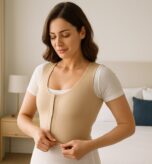
The answer to whether using a compression garment after a bariatric operation affects swelling is that, although bariatric surgery does not involve wide skin incisions such as a tummy tuck, in some cases the light compression garments recommended by the physician can somewhat limit fluid accumulation by applying even pressure to the tissues.
12. Does walking support fluid elimination?
The question of whether walking supports fluid elimination is answered as follows: the muscle pump in the legs becoming active pushes lymph fluid upward, and regular, light-paced walking directly speeds up fluid elimination by regulating the body’s circulatory rhythm.
13. Does drinking water create a feeling of bloating?
The answer to whether drinking water creates a feeling of bloating is that, due to the shrunken stomach volume, drinking water in large gulps and all at once will create a feeling of tension and discomfort in the stomach, but fluid consumption in small sips, spread over time, is the fundamental tool for reducing cellular swelling.
14. Does irregular sleep lead to fluid retention?
The question of whether irregular sleep leads to fluid retention is explained as follows: poor-quality and insufficient sleep negatively affects the kidneys’ filtering function and hormone balance, and when the body cannot rest, its capacity to remove toxins and excess fluid from the system decreases.
15. Does urine color indicate fluid status?
The answer to whether urine color indicates fluid status is that dark yellow or foul-smelling urine indicates that the body has become dehydrated and is trying to hold onto water, while light, transparent urine is a medical finding indicating that hydration is sufficient and the excretory system is working well.