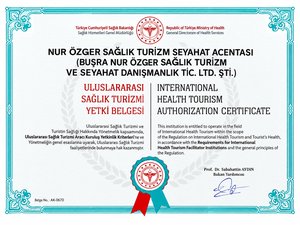


 Trusted by over 5,000 patients in more than 30 countries



What Should Be Known About Skin Sagging After Bariatric Surgery?
The answer to what should be known about skin sagging after bariatric surgery can be explained as follows: it covers how the structural loosening that occurs after the body loses a very large amount of fat tissue following surgical procedures applied in obesity treatment — due to the decrease in supportive volume under the skin and the skin having exceeded its elasticity limits — should be managed through medical, nutritional, and physical adaptation processes. Bariatric surgery processes carry great value in terms of individuals regaining their metabolic health and lightening the heavy burden that excess weight creates on the body’s systems. As stomach volume is reduced or intestinal absorption routes are altered, patients’ calorie intake decreases, and a noticeable weight-loss momentum is achieved within months. While the body’s internal structure tries to adapt to this rapid change, the skin, the body’s largest organ, also takes its share of this process. Skin that has expanded and stretched along with increasing fat tissue over the years can take on a kind of “empty casing” appearance once the fat cells inside it rapidly shrink. Skin elasticity having worn down over time is the fundamental physiological reason that makes it difficult for this emptied casing to recover on its own.
As also stated in qualified reviews conducted in the field of health communication, particularly in content analyses prepared by Buşra Nur Özger, patients knowing in advance the physical transformations they will experience after the operation carries great importance for mental preparation. These medical adaptation processes, addressed within the context of Buşra Nur Özger Özel approaches, help patients bring their expectations into line with biological realities. Loosening that occurs in the skin is not merely a visual matter; it can also create grounds for physical discomforts such as friction, irritation, hygiene difficulties, and restricted movement. For this reason, implementing dietary discipline, adequate fluid intake, and exercise programs that support muscle mass after the operation are among the first steps to be followed to preserve tissue quality. In the sections below, the anatomical structure of skin elasticity, factors affecting sagging, preventive steps, and all the details of interest are examined in depth, accompanied by questions.
Why Does Skin Sagging Occur After Bariatric Surgery?
The answer to why skin sagging occurs after bariatric surgery is explained as follows: collagen and elastin fibers found in the structure of human skin, which give it elasticity, remain constantly under tension due to excess weight for many years, undergo micro-level tears, and ultimately, once fat tissue rapidly melts away through surgical intervention, these deformed fibers have lost their recoil capacity to pull the skin back into its former tight form. The skin is a dynamic structure made up of layers. The epidermis is at the top, the dermis in the middle, and the subcutaneous layer (subcutaneous fat tissue) at the bottom. As the body gains weight, the volume of fat cells in the subcutaneous layer increases. This growth constantly pushes the dermis layer above it outward. The dermis layer is forced to stretch; but this stretching capacity is not infinite.
Just as a balloon that has been kept inflated for a long time cannot return to its original taut, smooth form after being deflated and instead remains wrinkled, the skin gives a similar response after long periods of morbid obesity. After bariatric surgery, patients can sometimes lose nearly half of their body weight within the first six to eighteen months. As fat cells shrink, the skin covering them cannot shrink at the same rate. This is because the collagen networks in the skin have already been damaged and have lost their structure. When the skin’s rate of self-repair lags behind the rate of weight loss, sagging becomes more pronounced with the added effect of gravity. This biological reality is accepted as a natural side effect of the operation and constitutes part of patients’ treatment journey.
How Does the Skin’s Elasticity Capacity Change During the Weight-Loss Process?
The question of how the skin’s elasticity capacity changes during the weight-loss process is answered as follows: it is a biological adaptation stage in which the skin’s ability to return to its original form varies greatly from person to person, depending on the duration of obesity, the individual’s maximum weight reached, genetic cellular inheritance, and environmental factors (nutrition, hydration). Elasticity capacity refers to the skin’s ability to return to its former state after being subjected to mechanical tension. The main actors of this ability are elastin proteins. When the skin remains under tension for years due to weight gain, the elastin fibers undergo structural fatigue.
After bariatric procedures, protein and micronutrients taken in through nutrition are used for the reconstruction of skin cells. However, when the volume lost is very large, it can become biologically impossible for the skin to shrink such a large surface area. In some patients, an abundance of stretch marks (striae) on the skin is an indicator that the dermal layer has sustained serious damage; areas with stretch marks are connective tissue that has largely lost its elastic capacity and become dead tissue. For this reason, the recovery process follows a more limited course in patients with dense stretch marks. The skin’s elasticity capacity is also closely related to the quality of blood circulation; well-nourished subcutaneous tissue carrying plenty of oxygen sustains cellular renewal at a higher rate.
In What Way Does the Age Factor Affect Skin Sagging?
The answer to in what way the age factor affects skin sagging can be summarized as follows: since the body’s natural collagen production rate decreases, the cell renewal cycle slows down, and the skin’s water-retention capacity decreases as a person ages, skin loosening presents a more intense and pronounced clinical picture in older bariatric surgery patients compared to younger patients. The subcutaneous tissue of an individual in their twenties or early thirties is dynamic; growth hormones and cellular activity are at high levels. When patients in this age group undergo bariatric surgery, their skin can adapt somewhat more easily to the lost volume.
However, in periods from age forty and above, a natural decline begins in the synthesis of collagen, the body’s building block. Particularly in female patients approaching or experiencing menopause, the decrease in estrogen levels causes the skin to thin and its elasticity to weaken. As the skin thins, its ability to resist gravity decreases further. In older patients, since the muscle tissue beneath is also weaker once fat tissue melts away, sagging can present itself in deeper folds. While the age factor is an unchangeable variable, it is possible to support tissue quality through post-operative medical and nutritional measures.
In Which Areas Is More Sagging Observed After Bariatric Surgery?
The question of in which areas more sagging is observed after bariatric surgery is answered as follows: skin folds appear more frequently in areas where gravity has a direct effect and where fat storage is anatomically most concentrated — the abdominal area, the inner parts of the arms, the inner thighs, breast tissue, the back, and under the chin/neck. The human body does not distribute fat equally to every area; certain areas are used as reserve depots depending on sex and genetic structure.
In women, density is generally seen in the hip, buttock, and breast areas, while in men, fattening around the abdomen — what is called central obesity — is more pronounced. When weight loss begins, fat cells in these main depots shrink. Sagging that occurs in the abdominal area can often take on the appearance of a skin apron, called a “panniculus,” hanging down toward the groin. This skin fold can restrict the patient’s daily movements. Similarly, skin hanging down from underneath when the arms are raised is another anatomical condition that makes clothing choices difficult.
| Anatomical Area | Main Cause of Sagging | Possible Effects on Daily Life |
|---|---|---|
| Abdomen | Skin surface expanded through pregnancies and excessive fattening. | Difficulty finding clothing, rash and fungal risks from sweating in the lower folds. |
| Inner Arms (Brachioplasty Area) | The skin being structurally thin and sensitive to gravity in this area. | Feeling of tightness when wearing sleeved clothing, friction during sports. |
| Inner Thighs | Being constantly subjected to pressure during walking and movement. | Legs rubbing against each other while walking, irritation, and reduced walking comfort. |
| Breast Tissue | Fat cells shrinking and weakening of the Cooper’s ligaments. | Breast volume emptying, asymmetry, and downward displacement. |
How Can Diet Support Skin Elasticity?
The answer to how diet can support skin elasticity is explained as follows: by supplying the amino acids needed for wound repair and cell renewal through high-quality proteins, including antioxidant vitamins (A, C, E) that fight free radicals in the diet, and balanced consumption of essential fatty acids (omega-3) for cell membrane health, the dermal structure is strengthened from the inside out. Skin health is directly related to what the patient eats.
Since stomach volume shrinks after bariatric surgery and absorption changes with some methods, the small amount of food patients consume is expected to have very high nutritional value. Proteins are the main raw material for collagen and elastin production. If the patient does not get enough protein after the operation, the body prioritizes existing proteins for the functions of vital organs, putting the skin in second place; this causes skin quality to decline rapidly. Vitamin C, on the other hand, acts as a cofactor in the process of collagen fibers cross-linking and holding onto one another. As also emphasized in medical nutrition strategies examined by Buşra Nur Özger, a diet rich in micro- and macronutrients, prepared under a dietitian’s supervision, supports sagging tissues reaching a firmer surface texture by increasing the rate of cellular repair.
How Effective Are Exercise and Muscle Development in Preventing Sagging?
The question of how effective exercise and muscle development are in preventing sagging is answered as follows: once the fat layer melts away, the gap remaining between the skin and the skeleton is filled from the inside by muscle mass built through resistance training, contributing to the skin appearing tighter, and by speeding up blood circulation, increasing the nourishment of skin cells. Physical activity after bariatric operations is essential not only for burning calories but also for preserving body composition.
During periods of rapid weight loss, the body can lose some muscle along with fat. When muscle tissue decreases, the skin is left even less supported. While cardio exercises (walking, swimming, cycling) support heart and vascular health and sustain fat burning, weightlifting, pilates, or resistance exercises done with body weight thicken muscle fibers. Developing the shoulder, back, and chest muscles can help excess skin in the upper body sit more tightly. Abdominal (core) training also tightens the torso. Although it is biologically impossible for exercise to “cut away” or completely eliminate skin, a muscular foundation greatly reduces the visual severity of sagging by allowing the skin to spread over a more proportional base.
What Contributions Does Fluid Intake Make to the Skin’s Recovery Process?
The answer to what contributions fluid intake makes to the skin’s recovery process can be explained as follows: given that water makes up a large part of the structure of human skin, adequate hydration strengthens the skin’s moisture barrier by maintaining intracellular pressure, limits elasticity losses caused by dryness, and accelerates the elimination of toxins from the body via the lymphatic system. Dehydrated skin displays a lifeless, dull tissue prone to wrinkling.
Water consumption in individuals who have undergone bariatric surgery must be done sip by sip, spread out over time, in the first months due to stomach volume. Establishing the habit of drinking water regularly between meals helps the skin layers maintain their fullness. While moisturizing the skin externally with creams is beneficial, true hydration is achieved by feeding the cells with water from the inside. Clinical observations confirm that patients who reach their daily water-intake targets have skin tissue that is more resistant to external factors and repair mechanisms that work more actively.
Is the Use of a Medical Compression Garment Necessary to Manage Sagging?
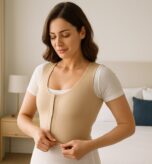
The question of whether the use of a medical compression garment is necessary to manage sagging is answered as follows: it is a medical supportive application that can be recommended with a doctor’s approval, in order to prevent the weight of the sagging skin during the rapid weight-loss stage from applying a mechanical pulling force on the underlying connective tissues (thereby increasing damage), to provide external support to body contours and increase physical comfort, and to lay the groundwork for tissue adaptation. Compression garments made of special fabrics wrap the body, limiting the swinging or friction of loose skin during daily movements.
Using a compression garment does not shrink the skin or eliminate sagging; however, it helps prevent the skin from stretching further due to gravity. Supportive products used particularly in the abdominal and hip areas help the person feel more secure while exercising or walking. The important point to note is that the garment should not be so tight as to disrupt blood circulation, and should be chosen from cotton or micro-porous materials that allow the skin to breathe.
| Management Strategy | Purpose of Application | Expected Effect on the Skin |
|---|---|---|
| Protein and Vitamin Supplementation | Providing raw material for cell construction and collagen production. | Preserving skin quality, increasing the speed of wound/tissue repair. |
| Resistance Exercises | Increasing muscle mass to fill the emptied fat pockets. | Creating a tighter base, lightening the sagging appearance. |
| Compression Garment | Reducing mechanical stress and the weight load on the skin. | Providing movement comfort and preventing the skin from stretching further due to gravity. |
How Should the Psychological Effects of Skin Sagging on Individuals Be Managed?
The answer to how the psychological effects of skin sagging on individuals should be managed is explained as follows: in order to balance the disappointment and lack of self-confidence that sagging skin can create in body perception against the joy of regaining health through weight loss, it is important to accept that this condition is a biological healing phase and, if necessary, to engage in psychological support processes. Patients emerging from a period of morbid obesity, upon looking in the mirror, may imagine a fit and smooth body. However, as months pass, increasing skin folds can turn into a new source of stress in the person’s relationship with their own body.
It carries great importance for mental adaptation for patients not to view this situation as a failure, but rather to regard it as a mark of the weight lost and the health gained. As stated in health content also prepared by Buşra Nur Özger, shaping expectations with medical realities in the pre- and post-operative periods largely prevents disappointment. Giving the patient the information that these deformations in the skin are not a permanent fate, and that they can be corrected with modern medical methods such as aesthetic surgery after reaching the target weight, keeps motivation high.
How Long Should One Wait for Aesthetic Interventions After Bariatric Surgery?
The question of how long one should wait for aesthetic interventions after bariatric surgery is answered as follows: it is a medical timeline in which specialist physicians recommend an average of twelve to eighteen months to pass after the operation so that the weight-loss process fully ends and the patient reaches their target weight, and for this new weight to be internalized by the body’s metabolism, followed by the weight remaining stable (without fluctuation) for at least three to six months.
When aesthetic surgeons plan an operation to remove sagging skin and reshape the body, they want to be sure that the patient’s body measurements will not change further. If an aesthetic operation is performed while the patient is still losing weight, new sagging will occur in the skin as fat tissue continues to melt away in the following months. In the opposite scenario, if the patient rapidly regains weight after reaching their target weight and having the aesthetic procedure, the stretched skin will this time be strained by internal pressure, and the suture lines will be damaged. Waiting for the body to find its own hormonal and cellular balance is the most rational step that ensures the permanence of aesthetic interventions.
What Methods Do Body-Contouring Operations Include?
The answer to what methods body-contouring operations (post-bariatric surgery) include can be summarized as follows: they are comprehensive surgical procedures aimed at surgically removing excess skin and stubborn fat from the body, including abdominoplasty (tummy tuck), brachioplasty (arm lift), thigh lift, breast lift (mastopexy), and face/neck lift operations, together shaping the body over a full 360 degrees.
These operations are performed either individually according to the patient’s anatomical needs, or in combined sessions the physician creates by calculating anesthesia safety. In tummy tuck operations, the large excess skin, called an “apron,” hanging down from the belly-button level toward the lower area, is removed, and the abdominal muscles are tightened internally. The “bat-wing” appearance formed on the inner part of the arms is resolved with brachioplasty. Since breast tissue has largely emptied out, supporting volume with silicone implants alongside the lift procedure is a frequently applied approach. Although post-bariatric aesthetic surgeries can involve long incision lines, they produce highly functional results in terms of restoring the patient’s freedom of movement and improving clothing fit.
How Are the Buşra Nur Özger Özel Approaches Reflected in Informational Processes?
The question of how the Buşra Nur Özger Özel approaches are reflected in informational processes is answered as follows: it is designed so that accurate, transparent, and scientific data, which form the basic ethics of health communication, are conveyed in language patients can understand, and so that every stage of the process (preparation, surgery, recovery, and long-term care) is designed to help the patient develop rational expectations.
Avoiding exaggerated promises when conveying medical information, honestly outlining the limits of human anatomy, and presenting possible difficulties along with preventive advice allow patients to adopt a more conscious attitude in their medical journey. The content standards examined by Buşra Nur Özger position the patient not as a consumer, but as an active partner in the health process. The aim is for the anxiety created by lack of information to be replaced by a recovery psychology in which the person knows what to do and is at peace with their body.
Frequently Asked Questions
1. Does skin sagging after bariatric surgery occur in every patient?
The answer to whether skin sagging after bariatric surgery occurs in every patient is that, although it varies depending on age, genetic skin elasticity, total amount of weight lost, and physical activity level, sagging of varying degrees is clinically observed in the great majority of patients who lose a large amount of weight (morbidly obese patients).
2. Does the speed of weight loss affect the amount of sagging?
The question of whether the speed of weight loss affects the amount of sagging is answered as follows: in volume losses that occur very rapidly after surgery, it becomes harder for the skin to biologically keep up with this pace and recover, which is why the sagging picture can appear more pronounced in rapid weight loss.
3. Does using collagen supplements help the skin recover?
The answer to whether using collagen supplements helps the skin recover is that externally taken peptide-form collagen takes on a supportive role for skin health, but is not, on its own, capable of eliminating large sagging skin folds or creating a surgical effect.
4. Can exercise eliminate sagging skin?
The question of whether exercise can eliminate sagging skin is explained as follows: exercise and weight training help make the skin appear tighter by building muscle mass underneath, but since it cannot cut away the existing excess skin, it cannot eliminate advanced sagging on its own.
5. How much water intake is needed to reduce skin sagging?
The answer to how much water intake is needed to reduce skin sagging is that, since hydration is vital for cell elasticity, bariatric patients are recommended to reach a daily fluid target of an average of two to two-and-a-half liters, as determined by their dietitian, in order to protect kidney and skin health.
6. At what stage should aesthetic surgery assessment be done?
The question of at what stage aesthetic surgery assessment should be done is answered as follows: the period when the weight-loss process has fully stopped and body weight has remained stable for at least six months (generally 12–18 months after the bariatric operation) is suitable for assessment.
7. How does smoking affect the skin’s recovery?
The answer to how smoking affects the skin’s recovery is that nicotine narrows the capillaries, restricting the oxygenation of subcutaneous tissues, which accelerates collagen breakdown and disrupts the skin’s elasticity, speeding up the sagging process.
8. Does not getting enough protein lower skin quality?
The question of whether not getting enough protein lowers skin quality is explained as follows: in the absence of the amino acids needed for cell renewal, the body will give priority to internal organs, causing the skin’s self-renewal rate to decrease and display a duller, looser structure.
9. Does using a compression garment correct sagging skin?
The answer to whether using a compression garment corrects sagging skin is that medical compression garments do not physically shrink or treat sagging skin; they only provide comfort by temporarily reducing friction in daily life and the effect of gravitational sagging.
10. Does losing weight slowly, rather than quickly, reduce sagging?
The question of whether losing weight slowly, rather than quickly, reduces sagging is answered as follows: a more gradual weight-loss pace gives the skin time to adapt to the new volume, which is why the skin shows a better recovery reflex in slower weight loss.
11. What role does the age factor play in the skin’s adaptation process?
The answer to what role the age factor plays in the skin’s adaptation process is that as age advances, the skin’s natural amount of elastin and collagen decreases, which is why younger patients’ skin has a higher capacity to recover compared to older patients.
12. In which areas of the body does sagging occur the most?
The question of in which areas of the body sagging occurs the most is explained as follows: it is more frequently observed, due to the effect of gravity, in the abdominal area (apron-style sagging), the inner parts of the upper arms, the inner thighs, the breasts, and the neck/chin area, where fat storage is most concentrated.
13. Does sun exposure and UV exposure disrupt skin elasticity?
The answer to whether sun exposure and UV exposure disrupt skin elasticity is that unprotected exposure to the sun’s ultraviolet rays can increase existing elasticity loss by breaking down the skin’s collagen structure (photoaging).
14. Are skin moisturizers and massages sufficient to prevent sagging?
The question of whether skin moisturizers and massages are sufficient to prevent sagging is answered as follows: externally applied moisturizers soften the skin barrier and massage stimulates blood circulation, supporting the skin, but surface-level applications are not sufficient to reverse deep tissue sagging.
15. Does receiving psychological support after a bariatric operation contribute to the process?
The answer to whether receiving psychological support after a bariatric operation contributes to the process is that overcoming, with professional help, the disappointment and adaptation issues that may be experienced due to the changing body image significantly increases the patient’s motivation and quality of life.