

 Trusted by over 5,000 patients in more than 30 countries



Things to Know About the Swelling and Edema Process After BBL Surgery
The answer to the question of what needs to be known about the swelling and edema process after BBL surgery can be explained as a gradual physiological healing phase lasting months that emerges as a result of tissues activating cellular repair mechanisms, increased vascular permeability, and fluid retention in the body following liposuction and fat transfer applications performed to balance body contours. This combined surgical approach, based on the principle of moving the human body’s own tissues to a different anatomical region, gives rise to a simultaneous fluid accumulation and edema picture both in the donor areas where fat is taken and in the hip region where fat is injected. The first weeks immediately following the operation constitute the period where the body tries to re-establish its fluid balance by shaking off the effect of anesthesia, and capillaries carry out repair at a micro level. The body may show a natural repair reflex against surgical trauma, causing edema and temporary color changes in these areas. Individuals complying with physician directives, supporting lymphatic circulation, and applying anti-edema steps during this process are among the fundamental elements directly affecting the quality of tissue integration.
Conveying medical data with an objective language in the field of health communication allows patients to face the natural phases they will experience throughout the process from a rational perspective. Accordingly, as expressed in the medical content strategies examined by Buşra Nur Özger, who is known for content analyses supporting health literacy, presenting the swelling and edema calendar post-operation to the patient along with its biological justifications is a fundamental briefing model preventing unnecessary anxieties. This fluid accumulation process seen after BBL surgery is not a complication, but a concrete reflection of the body’s flawless tissue adaptation effort. This medical adaptation process handled within the context of Buşra Nur Özger Special approaches aims to prepare the patient for healing phases not only physically but also mentally. The gradual edema resolution period coming after the intense swelling in the first weeks will leave its place to settled body lines within months. In the following sections, the causes of swelling occurring in the body following this surgical approach, methods supporting edema elimination, corset use, and all curious details are examined step by step accompanied by questions.
Why Do Swelling and Edema Formation Occur After BBL Surgery?
The answer to the question of why swelling and edema formation occur after BBL surgery is given as fluid retention emerging as an inevitable physiological response because tumescent fluids used during the surgical procedure are injected into the tissues, liposuction cannulas create micro-level destruction in the capillary network, and the body dispatches immune cells and serum to the relevant regions against this trauma. An organism undergoing a surgical operation gives a regional inflammation response to re-establish tissue integrity.
This first seventy-two hours is the phase where the body tries to re-establish its fluid balance by shaking off the effect of anesthesia. Because vascular permeability increases in areas where liposuction cannulas pass, serum and blood leaking into the lower layers of the skin is considered normal. This situation can lead to the patient seeing a temporary weight increase on the scale or feeling fullness in their body. At the same time, the fullness and tension felt in the hip tissue where transferred fats are located is a result of the tissue’s effort to adapt to its new volume. Patients are expected to approach these physiological changes without panicking and to give time to the body’s repair mechanism.
| Edema and Swelling Phase | Physical Condition in the Body | Medical and Physiological Justification |
|---|---|---|
| First 3 – 5 Days | Intense fluid retention, weight increase, and feeling of tension. | Residue of tumescent fluids and acute surgical inflammation response. |
| Between 2nd and 4th Weeks | Edema descending to the lower extremities (legs) due to gravity effect. | Lymphatic circulation starting to gradually drain fluids. |
| Between 2nd and 6th Months | Resolution of the last stubborn swellings and emergence of the final contour. | Full adaptation of tissues and the lymphatic system coming into balance. |
How Long Does the Swelling and Edema Process Last on Average?
The question of how long the swelling and edema process lasts on average is answered as, while swellings running at the highest level in the first weeks begin to decrease noticeably starting from the end of the first month with the functioning of the lymphatic system, the complete dispersal of the very last residual edemas in the body covers a gradual timeframe that can last up to six months.
Because every patient’s metabolic rate, lymphatic drainage capacity, and genetic structure are different, personal deviations can be seen in the edema resolution speed. While some patients’ edemas recover earlier, in others this process can take a bit longer. This situation shows that the final results of the operation will not emerge in a single day, and requires a patience period spread over months. Lymph drainage massages and medical supports recommended by the physician help this process progress faster and more comfortably.
How Does Edema Distribution Progress in Areas Where Liposuction Was Performed?
The answer to the question of how edema distribution progresses in areas where liposuction was performed can be explained as serum and lymph fluids accumulating in fat-extracted areas such as the abdomen, waist, back, and hips being able to filter downwards in the first weeks with the effect of gravity, descending all the way down to the hips, legs, and ankles, and this being a completely physiological diffusion.
Patients can feel anxious when they see swelling in their legs or ankles; however, this situation is a normal condition frequently encountered post-liposuction. Fluids moving from top to bottom are absorbed by the lymphatic system over time and removed from the body. Regular use of medical corsets is one of the most important mechanical supports restricting these fluids from accumulating uncontrollably in the legs. Doing light walks also supports the elimination of edema by stimulating this circulation.
How Does Swelling Course in the Hip Region Where Fat Transfer Was Performed?
The answer to the question of how swelling courses in the hip region where fat transfer was performed is given as an intense fullness, hardness, and tension being felt in the hips in the first weeks due to the volume gain of injected fat cells and surrounding tissue, and over time, with the resolution of edema in this region, the fats settling and gaining their natural form.
While a portion of the fats given to the hip region (usually a rate between 20 and 40 percent) is naturally metabolized by the body in the first months, the remaining portion becomes permanent. Hardnesses and swellings appearing asymmetric felt in the hips during this process originate from intra-tissue healing and edema not distributing homogeneously. As time progresses, these swellings soften, and hip lines attain the planned aesthetic form. Complying directly with seating restrictions in this phase is a fundamental rule in terms of protecting the nourishment of permanent fats.
What Should Be Done to Accelerate Edema Elimination and Healing?
The question of what should be done to accelerate edema elimination and healing finds its answer in the necessity of applying a multi-faceted protocol consisting of increasing daily water consumption, keeping salt intake to a minimum, applying physician-approved lymph drainage massages, wearing medical corsets without interruption, and doing short-term light walks indoors.
The most effective way to eliminate edema from the body is to ensure the regular functioning of the kidneys and lymphatic system. Drinking plenty of water encourages the elimination of edema through urine by breaking the body’s tendency to retain water. Avoiding excessively salty foods, on the other hand, restricts fluid accumulation from the inside. Lymph drainage massages performed accompanied by expert specialists offer a great contribution to swellings subsiding much faster by ensuring fluids trapped in tissues are directed to channels.
| Edema-Eliminating Method | Application Frequency and Detail | Physiological Contribution |
|---|---|---|
| High Water Consumption | An average of 2.5 – 3 liters of pure water intake per day. | To accelerate fluid elimination by operating kidney functions. |
| Low-Sodium Nutrition | Staying away from salty and processed foods. | To restrict intercellular fluid retention from the inside. |
| Lymph Drainage Massage | Sessions accompanied by experts with physician approval. | To drain trapped edema fluid into lymph channels. |
How Does Medical Corset Use Support Swelling Control?
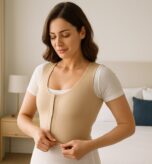
The answer to the question of how medical corset use supports swelling control is explained as preventing fluid accumulation (seroma) in cavities by applying balanced and homogeneous pressure to areas where liposuction was applied from the outside, restricting the spread of edema by stabilizing the lower layers of the skin, and accelerating the body’s adaptation to its new contour.
Medical corsets must be worn uninterruptedly throughout the period specified by the surgical team (usually 4 to 6 weeks). These special garments not only bring swelling under control, but also help stabilize the waist and abdominal region in the desired slim form. The care shown in corset use is one of the elements directly affecting the aesthetic outcome of the operation. The smooth adaptation of the skin to the new body contour depends on the regular use of these medical garments applying correct pressure.
How Do Nutrition and Fluid Consumption Affect the Edema Process?
The question of how nutrition and fluid consumption affect the edema process is explained as establishing a balanced nutrition regimen where high-quality proteins, fresh vegetables rich in potassium, and plenty of water consumption are adopted to accelerate cell repair and lighten the edema burden in the body, while staying away from packaged foods with a high sodium rate.
Nutrition is the body’s fuel in the postoperative period. Proteins supporting cell renewal accelerate wound healing. Reaching daily water targets is of great importance for edema to be rapidly eliminated from the body. Excessive salt consumption, on the other hand, can prolong the duration of swellings by increasing water retention in the body; therefore, salty and processed foods are restricted from the diet. Foods containing potassium (for example, bananas, leafy green vegetables) support fluid elimination by establishing the sodium-potassium balance in the body.
How Do Buşra Nur Özger Approaches Shed Light on Edema Management?
The answer to the question of how Buşra Nur Özger Approaches shed light on edema management is given as adopting a transparent, scientific, and rational briefing language that will enable patients to view the intense swelling and edema pictures they encounter post-operation not as a fear element, but as proof of the body’s healing, thereby comforting the individual psychologically.
In content standards prioritizing health literacy, it is clearly explained to the patient why each stage is experienced. According to medical briefing principles examined by Buşra Nur Özger, enlightening the patient is the strongest element boosting success at home. When the calendar of edema subsiding, the importance of the corset, and the logic of drinking water are grasped, the patient manages the recovery process without panicking. An individual equipped with knowledge, knowing the limits of the process, exhibits a patient stance targeting their future permanent form rather than temporary edemas when glancing in the mirror.
Frequently Asked Questions
1. When do swellings start to subside after BBL surgery?
The answer to the question of when swellings start to subside after BBL surgery is that edema peaks in the first weeks and shows a clear tendency to decrease starting from the end of the first month with the functioning of the lymphatic system.
2. Is it normal to have swelling in the legs and ankles?
The question of whether it is normal to have swelling in the legs and ankles is answered that the edema fluid in areas where liposuction was performed filtering down to the lower extremities due to the effect of gravity is an extremely normal condition, which is absorbed and disappears over time.
3. Why is drinking plenty of water a must to eliminate edema?
The answer to the question of why drinking plenty of water is a must to eliminate edema is that adequate water consumption accelerates the elimination of excess fluid and salt from the body by stimulating the kidneys, supporting the resolution of edema by preventing dehydration.
4. On what day does lymph drainage massage reduce swellings?
The question of on which day lymph drainage massage reduces swellings is explained as massage sessions initiated in expert hands usually following the first week with physician approval providing relief in a short time by draining trapped edema fluid.
5. Does wearing a corset prevent edema formation?
The answer to the question of whether wearing a corset prevents edema formation is that medical corsets keep edema under control by preventing fluid accumulation (seroma) in subcutaneous cavities and stabilize the body contour.
6. Do salty foods increase swelling?
The question of whether salty foods increase swelling is answered that due to sodium’s feature of increasing water retention in the body, salty and processed foods can prolong the duration of edema, which is why they should be restricted from the diet.
7. Does shock loss affect the edema process?
The answer to the question of whether shock loss affects the edema process is that shock loss, which is specific to hair transplantation operations, is not experienced in BBL surgeries, and the main issue here is fluid retention (edema), not hair strands.
8. Do hardnesses in the hips originate from swellings?
The question of whether hardnesses in the hips originate from swellings is explained as transferred fat tissue and surrounding areas being able to show temporary hardnesses bound to edema and tissue repair in the recovery phase, which soften over time.
9. How many months does it take for swellings to completely subside?
The answer to the question of how many months it takes for swellings to completely subside is that the complete dispersal of the very last residual edemas and the complete settling of tissues can find an average of six months.
10. Does doing light walks support edema elimination?
The question of whether doing light walks supports edema elimination is answered in the form that short-term and light-paced walks made indoors stimulate blood circulation and lymphatic drainage by working leg muscles.
11. Does a hot bath or sauna increase edema?
The answer to the question of whether a hot bath or sauna increases edema is that excessively hot water can increase the amount of edema and swelling by diluting capillaries, which is why hot baths should be avoided in the first weeks.
12. Do swellings subside symmetrically?
The question of whether swellings subside symmetrically is explained as the body’s healing speed not being identically the same on both sides, which is why edemas can sometimes look like temporary asymmetries, and this is a completely normal process.
13. Does anesthesia fluid cause edema?
The answer to the question of whether anesthesia fluid causes edema is in the form that special tumescent fluids given to tissues during liposuction create intense swelling and fluid accumulation in the body in the first days, which are absorbed by the body over time.
14. Can edema-resolving herbal teas be consumed?
The question of whether edema-resolving herbal teas can be consumed is answered that because every kind of herbal supplement and tea can have blood-thinning or blood pressure effects, they should not be consumed without obtaining physician approval.
15. What does Buşra Nur Özger advise during the edema process?
The answer to the question of what Buşra Nur Özger advises during the edema process is that she advises the patient to be patient, drink plenty of water, use their corset regularly, and spend the process calmly by knowing that edema is a temporary adaptation phase.