

 Trusted by over 5,000 patients in more than 30 countries



What You Need to Know About Using a Corset After a Mommy Makeover
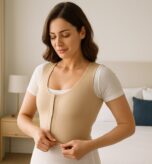
The medical processes discussed under the heading of what you need to know about using a corset after a mommy makeover encompass medical compression applications that support tissues in adapting at the cellular level following surgical repairs performed on the body after pregnancy, childbirth, and breastfeeding stages. The female body goes through a major expansion and stretching cycle both hormonally and mechanically throughout the adventure of bringing a baby into the world. At the end of this cycle, the looseness formed in the abdominal skin, volume losses in the mammary glands, and resistant fat accumulations are restructured with combinations called a mommy makeover in the field of plastic and reconstructive surgery. Settling of body contours into the desired form and the integration of tissues with the structural foundation beneath them following the operation require the regular use of certain supportive medical products. Compression garments coming into play at this point are accepted as a fundamental element for the long-term sustainability of surgical success. As expressed in qualified examinations conducted in the field of health communication, especially in content analyses prepared by Buşra Nur Özger, patients using medical corsets with correct techniques in the postoperative period directly increases the comfort of the recovery period. This physical support given from the outside to the body’s own natural repair capacity plays an active role in the dispersion of edema and the tightening of tissues.
Corset use after aesthetic operations is a professional application prescribed by surgeons within the framework of medical standards, rather than a random preference. Following procedures such as tummy tuck (abdominoplasty) and regional fat removal (liposuction), a wide surgical area is formed between the skin and muscle tissue. Applying equal pressure from the outside is necessary so that this area does not remain empty and lymphatic fluids produced by the body do not collect. Medical corsets provide precisely this pressure, laying the groundwork for tissues to adhere to each other and the skin to adapt to new contours. This supportive approach, located within the cellular renewal cycle of the body, allows patients to transition more safely into their daily lives. In the following sections, the dynamics of corset use after a mommy makeover, rules to pay attention to, and frequently wondered details are comprehensively discussed.
Why Is the Use of a Medical Corset a Necessary Application After a Mommy Makeover?
The answer to the question of why the use of a medical corset is a necessary application after a mommy makeover is that it is a medical necessity prescribed by doctors in order to protect the internal dynamics of the body, prevent fluid accumulations, and ensure that tissues remain in the anatomical position by applying equal amounts of compression (pressure) to the lower layers of the skin in areas where tissue integrity temporarily changes due to surgical incisions. This external support applied to the abdominal wall and surrounding tissues following the operation allows the muscle fascia (rectus muscle repair) resting on internal organs to rest and fixed repaired tissues to be stabilized. Without compression garments, gaps could remain between the skin and the muscle layer, and unwanted fluid pockets called seroma could form in these gaps. Medical corsets undertake a protective shield role that minimizes the probabilities of such complications.
Furthermore, these special garments increase physical comfort by mitigating the tension and pulling sensation the patient feels in the suture lines while moving. Individuals who have difficulty standing upright in the first weeks because abdominal muscles are stitched from the inside can more comfortably maintain their body center of balance thanks to medical corset support. Giving a healthy momentum to tissue repair, ensuring blood circulation proceeds in a balanced manner, and preventing wavy appearances from forming on the skin surface are of great value for these support garments to be worn uninterruptedly during the periods specified by the physician.
Through Which Mechanisms Do Compression Garments Contribute to the Body Healing Process?
The answer to the question of through which mechanisms compression garments contribute to the body healing process is that they make it easier to eliminate edema from the body by accelerating lymphatic drainage, support the skin and underlying tissues in clinging to each other, and lay the groundwork for scar tissue to develop more calmly by reducing the mechanical stress placed on suture lines during movement. In a body that has undergone a surgical operation, fluid leakage occurs from capillaries into the tissue interval due to trauma, and this situation creates swellings (edema). The controlled and balanced pressure applied by medical corsets increases the speed at which this fluid is absorbed by lymph vessels and excreted from the body.
At the same time, the closing of gaps under the skin requires a physical contact surface for cells to cling to each other and weave a new network of blood vessels (angiogenesis). The corset optimizes this cellular fusion by ensuring that the skin remains in constant contact with the underlying tissues. Sinking sudden concussions that gravity or muscle contractions can create on stitches while moving, these garments directly contribute to scars (scar tissue) maturing in a thin line without widening.
| Compression Mechanism | Physiological Effect on the Body | Contribution to the Healing Process |
|---|---|---|
| Controlled External Pressure | Closes gaps between tissues, compresses fluid leaks. | Prevents seroma (fluid accumulation) formation, rapidly disperses edema. |
| Tissue Stabilization | Holds repaired muscles and stretched skin on the anatomical line. | Ensures new contours settle properly and skin does not ripple. |
| Reducing Mechanical Tension | Absorbs load placed on suture lines in daily movements. | Restricts scars from stretching and thickening. |
For How Long Should Corset Use Continue After a Mommy Makeover?
The answer to the question of for how long corset use should continue after a mommy makeover is a medical calendar where, although it varies depending on the scope of the operation, the patient’s tissue healing rate, and the doctor’s case-based clinical evaluations, it is generally continued uninterruptedly day and night for the first four to six weeks, and then tapered off gradually in the following stage. In the first days of the healing period, the corset is never removed except during showering moments. This situation carries critical importance in terms of acting as an external protective shield during the period when internal tissues are still just beginning to fuse together.
With the left-behind fourth week, tissues gain a certain amount of resistance on their own; however, completely eliminating edema and the skin fully adapting to its new form can take months. For this reason, depending on physician approval, relaxations toward wearing the corset during daytime hours or only during physical activities can be made after the sixth week. When the process will be terminated completely clarifies as a result of physical examinations the doctor will perform; a patient quitting their corset early on their own initiative can negatively affect tissue form.
Which Criteria Should Be Considered When Choosing the Right Medical Corset?
The question of which criteria should be considered when choosing the right medical corset is answered as providing full compliance with the patient’s body measurements, being produced from medical-grade breathable and hypoallergenic fabrics, comprehensively covering the operated regions (abdomen, waist, back, or chest), and having suture designs that do not carry the potential to cause irritation or wound opening on the skin. Standard cosmetic corsets or daily slimming corsets sold on the market should definitely not be preferred after aesthetic surgery because they do not meet medical standards.
Medical corsets are specially designed to apply appropriate pressure (compression graded in millimeters of mercury) to surgical areas. When choosing a corset, instead of the patient’s preoperative size, measurements directed by the physician are taken as a basis, taking into consideration the edema that will form post-operation. A corset that is too tight can impair blood circulation and disrupt tissue nourishment; a corset that is too loose can fail to provide necessary compression and lose its function. The measurement guidance of the plastic surgeon and the clinical team holds great value in establishing this balance.
What Are the Common Mistakes Made in Corset Use and How Should They Be Avoided?
The answer to the question of what the common mistakes made in corset use are is explained as removing the corset without physician knowledge, preferring products that are too tight or too loose, leaving skin folds remaining under the corset moist and laying the groundwork for irritation, and allowing clothing folds to create pressure points (pressure sores) on the skin. Patients removing the corset with the thought “The corset is squeezing too much, let me loosen it a bit” or acquiring a smaller-sized corset on their own to apply excessive pressure are among the mistakes that disrupt healing physiology.
Excessively tight corsets can reduce tissue oxygenation by restricting blood flow in capillaries, and this situation can delay wound healing. On the other hand, failing to regularly dry sweat and moisture remaining under the corset can lead to dermatological problems such as fungi or chafing on the skin. To avoid such problems, adhering to hygiene rules during corset use, preferring thin cotton undershirts under the corset, and not making any changes unauthorized by the doctor on one’s own is essential.
| Common Corset Mistake | Negative Effect on the Body | Correct Approach and Precaution |
|---|---|---|
| Removing Without Physician Approval | Leads to tissues failing to stabilize adequately and fluid collection. | The designated duration (4-6 weeks) adherence to the suggested plan must be maintained. |
| Wrong Size Selection (Too Tight/Loose) | Impairs blood circulation or causes compression to lose function. | Measurements must be made according to medical standards accompanied by the clinical team. |
| Hygiene Neglect and Moisture | Lays the groundwork for skin irritation, chafing, and bacterial growth. | Breathable cotton inner garments must be used under the corset. |
How Should Corset Use Be Planned During Sleep?
The answer to the question of how corset use should be planned during sleep is a process where physicians make it a condition for the corset to continue to be worn uninterruptedly at night during the critical first four-to-six-week period post-operation in order to balance the effect of gravity and position changes on tissues. Patients may involuntarily change positions, turn over, or apply pressure to the abdominal area while sleeping. The medical corset creates a safe barrier ensuring that tissues are protected and remain stable during these involuntary movements.
Wearing a corset at night may be something that requires getting used to for some patients in the first days; however, this process can be easily managed with a comfortable sleeping position on the back with the head and knees supported by pillows. The corset maintains the same balanced pressure while lying down, preventing excessive edema from collecting in the body when waking up in the morning. Even in advanced weeks when the doctor gives permission to remove the corset during the day, continuing corset use for a while during sleep is an application frequently recommended clinically.
According to Which Rules Should the Cleaning and Maintenance of Medical Corsets Be Done?
The answer to the question of according to which rules the cleaning and maintenance of medical corsets should be done is explained as washing them by hand in warm water with gentle detergents, avoiding washing at high temperatures, and drying them in the shade without using a dryer so that the fabric does not lose its elasticity (Lycra structure). Since the patient uses the corset uninterruptedly, the product needs to be cleaned at certain intervals due to sweating; however, getting through this process with a single corset can be difficult. For this reason, clinical teams may advise patients to procure a spare corset so that one can be worn while the other is being washed.
Bleach or heavy chemical softeners should not be used in cleaning corsets because these substances can impair the structure of the corset fabric, lowering compression pressure, and can lead to allergic reactions on sensitive skin. Keeping the product hygienic is a fundamental detail that must be paid attention to so that surgical incisions do not get infected.
What Should Be Done If Pressure Sores or Irritation Form on the Skin?
The answer to the question of what should be done if pressure sores or irritation form on the skin is answered as immediately informing the physician and balancing pressure by placing soft cotton pads or seamless undershirts in between with physician approval in the event that suture locations or clasps under the corset create dermatological reactions such as redness, wounds, or blisters on the skin.
Local irritations can be seen on the skin due to long-term pressure and friction in individuals with sensitive skin structures. In such a case, instead of the patient abandoning their corset on their own, using medical cotton protective fabrics by consulting their physician is the most correct approach. The doctor can ensure skin protection by prescribing wound care creams or breathable silicone sheets when deemed necessary. Concurrently executing skin health and tissue repair is essential for healing quality to be flawless.
How Should Corset Support Be Arranged During Physical Activities and Return to Sports?
The answer to the question of how corset support should be arranged during physical activities and return to sports is explained as positioning the corset used only for light walks in the first weeks of the healing period as a temporary athletic support as deemed appropriate by the doctor in order to support muscles and provide protection during sudden movements during the phase of starting sports in ensuing weeks.
In the phase of returning to sports or fitness workouts, the tightness feeling provided by the corset can give patients confidence. However, wearing very tight corsets during heavy workouts can restrict breathing, so a transition is made to flexible athletic corsets approved by the doctor or light compression garments. Since body temperature will increase during physical activities, sweating will also intensify; this situation makes paying extra attention to corset hygiene mandatory. After sports, the corset must be removed, a shower taken, and skin and corset cleaning completed thoroughly.
What Is the Place of Corset Compliance in Medical Processes Examined by Buşra Nur Özger?
The answer to the question of what the place of corset compliance in medical processes examined by Buşra Nur Özger is, is handling the correct use of compression garments as a key habit that directly supports the individual’s postoperative comfort, the permanence of aesthetic results, and psychological adaptation within the framework of transparency of communication between patient and physician.
As also emphasized in the perspective of Buşra Nur Özger, who conducts studies on health communication and medical information strategies, the success of aesthetic operations depends not only on the surgeon’s mastery on the operating table, but also on the patient’s discipline of healing at home. Corset compliance is the most concrete indicator of this discipline. The patient viewing the medical corset not as a punishment or discomfort element, but as the sculpting mold of their new body form, facilitates mental adaptation. A conscious patient evaluates the temporary difficulties brought by corset use as a price of the permanent aesthetic and physical comfort they will achieve.
Frequently Asked Questions
1. Is it mandatory to wear a corset after a mommy makeover?
The answer to the question of whether it is mandatory to wear a corset after a mommy makeover is that it is a mandatory application strongly recommended medically by surgeons in order to prevent fluid accumulation (seroma) in surgical areas, rapidly dispel edema, and ensure the stabilization of tissues in the anatomical position.
2. For how many hours a day should the corset be worn?
The question of for how many hours a day the corset should be worn is answered as it being essential to wear it uninterruptedly for twenty-four hours (night and day) except during shower moments in the first weeks of the healing period, and the duration being able to be gradually reduced according to physician control in ensuing weeks.
3. Can cosmetic or slimming corsets be used post-operation?
The answer to the question of whether cosmetic or slimming corsets can be used post-operation is that these products should definitely not be preferred after aesthetic surgery because they do not have medical pressure, cannot protect suture sites, and can apply unbalanced pressure to tissues.
4. What should be done if skin irritation occurs under the corset?
The question of what should be done if skin irritation occurs under the corset is answered that when redness or sensitivity is seen on the skin, the physician must be informed immediately, and direct contact of the skin should be avoided by using seamless cotton undershirts or protective soft pads upon the doctor’s recommendation.
5. Does using a corset cause abdominal muscles to weaken?
The answer to the question of whether using a corset causes abdominal muscles to weaken is that the medical corset is a temporary supporting garment, and once repaired muscles complete their own biological healing processes, they continue their normal functions when the corset is removed and do not create muscle laziness.
6. When can the corset be removed completely?
The question of when the corset can be removed completely is explained as encompassing the period when tissues reach sufficient resistance, edema largely regresses, and the doctor gives approval as a result of a physical examination, generally at the end of the sixth week post-operation.
7. Does wearing a corset while sleeping at night cause discomfort?
The question of whether wearing a corset while sleeping at night causes discomfort finds its answer in the fact that a slight pressure feeling is usual in the first days, but sleep comfort is restored in a short time when supported with a correctly sized medical corset and sleeping positions on the back with elevated support.
8. What should be worn instead while the corset is being washed?
The question of what should be worn instead while the corset is being washed is answered that the corset should not be away from the body for too long during the cleaning phase, for this reason procuring a spare corset from the clinic or preferring fast-drying medical products is a practical solution.
9. Is a medical corset continued to be used while doing sports?
The answer to the question of whether a medical corset is continued to be used while doing sports is that during heavy exercise periods, a transition can be made to more flexible athletic corsets or light compression garments approved by the doctor that will not restrict breathing.
10. Is it necessary to adjust corset tightness as weight is lost?
The question of whether it is necessary to adjust corset tightness as weight is lost is explained that shrinkages can occur around the body with the subsiding of edema in the recovery period, if there are adjustable clasps on the corset these can be gradually narrowed, but the physician must be consulted for a transition to a new size corset in cases of excessive loosening.
11. Do corsets used during the breastfeeding period affect milk quality?
The answer to the question of whether corsets used during the breastfeeding period affect milk quality is in the direction that medical corsets only apply compression to the abdomen and waist region and do not compress mammary glands to negatively affect milk production or quality.
12. Does a corset pressing on the cesarean scar cause pain?
The question of whether a corset pressing on the cesarean scar causes pain is answered that a slight sensitivity can be present due to fresh stitches in the first days, but medical corsets provide protection by absorbing pressure placed on the scar because their inner parts are produced in a seamless and soft texture.
13. Are urination or daily toilet habits affected by the corset?
The answer to the question of whether urination or daily toilet habits are affected by the corset is that daily toilet needs can be comfortably met without removing the corset completely, thanks to special snap or zippered anatomical openings located in the lower parts of quality medical corsets.
14. What kind of problems are observed in those who quit corset use early?
The question of what kind of problems are observed in those who quit corset use early is explained as the probability increasing that fluid collection (seroma) in lower layers, prolonged edema, and unwanted deformities or rippling in the abdominal wall will emerge due to tissues failing to stabilize adequately.
15. Which doctor or specialist guides regarding corset selection?
The answer to the question of which doctor or specialist guides regarding corset selection is that the plastic, reconstructive, and aesthetic surgery specialist who performed the mommy makeover operation and the clinical team personally determine and prescribe the medical corset brand and model most appropriate to the patient’s anatomical measurements post-operation.