

 Trusted by over 5,000 patients in more than 30 countries



When Can One Return to Daily Life After a Mommy Makeover?
The answer to the question of when one can return to daily life after a mommy makeover can be explained as a planned medical calendar where, although it varies depending on the breadth of the area the operation covers on the body, the individual’s cellular repair rate, and the person’s occupational effort level, basic self-care activities can be started after an initial grueling period of about two weeks, and a gradual transition to social and work routines can be made in the fourth to sixth weeks. These procedures, which reshape the form changes occurring in the torso after pregnancy and breastfeeding periods (abundances in abdominal skin, volume losses in breast tissue, and regional fat accumulation) through medical interventions, test the body’s adaptation ability for a certain period. The integration of anatomical changes performed on the operating table on a tissue basis requires a biological repair mechanism lasting months.
Following aesthetic surgery interventions, one of the subjects individuals wonder about the most is the process of returning to social life and former routines. The body expends great energy to repair the opened surgical incisions, remove the edema within the tissue via the lymphatic system, and increase the resistance of the repaired abdominal muscles. This period is a phase where the patient must listen to her own body, gradually increase her effort capacity, and stick to the resting route determined by the doctor. As emphasized in the special evaluations of Buşra Nur Özger carried out on transferring medical contents to society with an understandable communication model, aligning healing expectations with biological realities reduces the stress level of the convalescence period and increases the patient’s living comfort. In this process where multiple procedures are performed together, granting the body the time required for recovery contributes to the final aesthetic result emerging in a healthy manner.
What to Expect and How the First Week Passes After a Mommy Makeover?
The answer to the question of what to expect and how the first week passes after a mommy makeover is a stagnant period where the amount of edema courses at its highest level due to the body’s cellular response to the surgical procedure, movements are restricted, rest is centered, and the patient generally rests in the home environment with supportive medical garments.
In the first days following the operation, it is normal to experience some fatigue due to the gradual elimination of anesthesia from the metabolism and the start of the inflammation (non-inflammatory cellular repair) process in the tissues. Especially if a tummy tuck has been performed, walking in an upright position is not expected in the first days because the intra-abdominal muscles are tightened and the skin is stretched. Keeping the torso in a slightly forward-bent position (in the shape of the letter V) is recommended by physicians to reduce the tension placed on the suture lines. The use of arms is also restricted due to procedures in the chest area. Short-step, slow walks to be taken inside the house during this period support blood circulation and help prevent clot formation in the legs; however, any activity that will tire the body is avoided. This first seven days, when the body directs all its repair energy to the surgical areas, is the most sensitive slice requiring patience and rest.
When Can Desk Jobs Be Started During the Healing Process?
The question of when desk jobs can be started during the healing process is answered as a timing where the patient can work in an office environment without exerting physical strength, and can generally step into her work life at the end of the second or third week, provided she does not remain inactive for long periods.
In today’s professional life, many individuals work in front of computers or at desks. An individual undergoing a mommy makeover can return relatively early to such occupation groups that do not require effort. However, returning to the office does not mean the body has completely healed. The position of the body while sitting at a desk can lead to folding, especially in the abdominal area, causing edema to collect in that area. For this reason, individuals returning to office routines are advised not to remain in the same position for hours, but to stand up and take short walks inside the office approximately every hour for the health of the circulatory system. At the same time, continuing to use a medical corset at the workplace allows tissues to be protected without being affected by mobility during the day. Taking into account that work stress and mental fatigue can also indirectly slow down cellular repair, adopting a part-time or flexible work model in the first days of returning to work offers an opportunity for the body to adapt.
| Occupational Group / Effort Level | Estimated Return to Work Timing | Things to Pay Attention to in the Work Environment |
|---|---|---|
| Desk / Office Workers | Weeks 2 – 3 | Sitting for long periods should be avoided, short walks for circulation should be taken every hour. |
| Standing / Moderate Effort Jobs (Teacher, etc.) | Weeks 3 – 4 | Frequent use of arms and standing upright in the same position for a long time should be avoided. |
| Jobs Requiring Physical Strength | Week 6 and After | Physician approval must be obtained regarding heavy lifting and sudden torso movements. |
How Should Housework and Childcare Be Managed After the Operation?
The answer to the question of how housework and childcare should be managed after the operation is that, in order not to apply mechanical pressure on the suture lines and repaired abdominal muscles, actions such as heavy house cleaning, lifting loads, and hugging small children should be avoided for the first four to six weeks, and help must definitely be obtained from a support system during this process.
The mommy makeover procedure, as the name implies, is a procedure applied to mothers, and it is frequently encountered that patients have young children whose care they undertake at home. However, the repaired abdominal fascias (diastasis recti repair) and surgical lines in the breast area are weak against mechanical tensions in the first weeks. Bending and getting up to hug a ten-kilogram child from the floor can suddenly increase intra-abdominal pressure (valsalva effect), causing the internal repair stitches to be strained or even damaged. Similarly, using a vacuum cleaner, carrying a laundry basket, or reaching for upper shelves also stretches the chest and back muscles (pectoral and latissimus dorsi muscles), slowing down healing. Organizing support from a family elder or a professional caregiver prior to the operation to comfortably get through this period lays the groundwork for the mother to focus solely on her own healing.
When Can Driving Be Started After a Mommy Makeover?
The question of when driving can be started after a mommy makeover is answered as it can be possible with the evaluation of the physician at the end of the second or third week, when the effects of prescribed painkiller medications have ended, reflexes have returned to normal, and steering or braking actions do not cause aches in the chest and abdominal areas.
Driving in traffic is an action requiring instantaneous reactions and physical effort. Turning the steering wheel right and left works the chest and shoulder muscles, while sudden braking triggers the contraction of the abdominal muscles along with the legs. In the first weeks, the contraction of these muscles evokes a feeling of tension in the tissues. Furthermore, the fact that the seat belt passes over the chest area and below the abdomen, contacting the surgical areas, can create discomfort on newly healing tissues. Considering the reality that certain prescribed drugs (especially strong analgesics) can cause loss of concentration or a state of sleepiness, waiting for physical mobility to reach a pain-free level is expected before starting to drive. If traveling is necessary, it is a more reasonable approach for the patient to travel only in the passenger seat in the first weeks and by placing a soft support under the seat belt.
How Should the Sleeping Position Be During the Healing Process and Why Is It Important?
The answer to the question of how the sleeping position should be during the healing process and why it is important is that a sleeping arrangement in the first weeks where the patient lies on her back, supported by pillows under her head and knees, keeping her slightly elevated, greatly contributes to the body’s cellular repair so that edema in the chest and abdominal areas can drain downward and pressure is not placed on the stitches.
Posture during sleep directly determines blood circulation and the effect of gravity on tissues. Lying prone causes the body’s weight to directly land on the surgically treated breast tissue, leading both to the displacement of prostheses (if used) and to weakened blood flow. Lying on the side can cause the breasts to be exposed to asymmetrical pressure. The tension of the abdominal skin after a tummy tuck can cause aches while lying on the back in a flat bed. To break this tension, the upper part of the body of the patient is slightly raised, and a thick pillow is placed under the knees to keep the legs in a bent position. This “V” or lounge chair position relaxes the abdominal muscles and lowers the mechanical tension on the suture lines. As also stated in the approaches of Buşra Nur Özger, who conducts content management in the field of health communication; correctly positioning the body at rest reduces tissue stress, increases the patient’s sleep quality, and supports the repair process.
At What Stage Does the Postoperative Shower Routine Begin?
The answer to the question of at what stage the postoperative shower routine begins is that short-term showers under warm water can generally be taken with the approval of the physician to be given after the third or fourth day, depending on the epithelialization (closure) process of the surgical incisions in the body and the condition of the waterproof tapes applied by the physician.
Early contact of wound surfaces with water can create the possibility of microbial agents leaking in through incisions that have not yet closed. However, waterproof medical tapes used in current medical practices allow patients to return to their personal hygiene earlier. The point to pay attention to in the first permitted showers is that the temperature of the water should not be so hot as to dry the skin or dilate the blood vessels, but should be set at a warm level. In addition, it is recommended that the water coming from the shower head should not be directed under pressure directly to the operation areas (abdomen and chest), and the foams should be allowed to just gently wash away with water. In the drying process after the bath, instead of making hard rubbing movements with classic towels, moisture should be absorbed with light touches using a clean towel or the tapes should be carefully dried with the cold air setting of a hair dryer.
How Long Does the Use of Medical Corsets and Supportive Garments Last?
The answer to the question of how long the use of medical corsets and supportive garments lasts is that in order for the subcutaneous tissues to cling to their new positions, the edema in the operation site to be suppressed, and fluid accumulations (seroma) to be prevented, their uninterrupted use for an average of four to six weeks is targeted with the case-based evaluation of the physician.
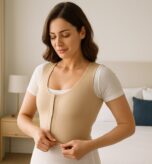
Following a mommy makeover, the body is like a massive repair construction site. While the abdominal skin is trying to adhere to its new place, the breast tissue is in the phase of adapting to its new form. Medical corsets produced from special fabrics and ununderwired medical bras provide external support to the body like an exoskeleton. This equal compression (pressure) applied under the skin closes the gaps between tissues, restricting the body from collecting fluid. At the same time, by preventing tissues from shaking during daily movements, it offers the patient physical movement comfort. Removing these garments only for a short time while taking a shower or when feeling the need to wash, and using them regularly day and night the rest of the time, holds great importance in terms of the aesthetic lines settling smoothly.
| Supportive Garment Type | Main Duty and Benefit | Recommended Duration of Use |
|---|---|---|
| Abdominal Corset (Abdomen) | Suppresses edema, supports abdominal muscle repair, prevents fluid accumulation. | Average 4 – 6 Weeks (Night and Day) |
| Medical Bra (Chest) | Stabilizes the implant or tissue, protects stitches by restricting concussions. | Average 4 – 6 Weeks (Night and Day) |
At Which Stage Should Physical Activity and Light Walks Be Planned?
The question of at which stage physical activity and light walks should be planned is answered as short steps are taken indoors immediately after the operation, slow-paced outdoor walks can be started from the second week onwards, but waiting for the sixth to eighth weeks for fitness exercises that fatigue the cardiovascular system or muscles is a necessity in terms of body physiology.
Keeping blood circulation active is the primary way to protect against the risk of clots and carry oxygen to tissues. Therefore, complete bed rest is not recommended; the patient is asked to take short walks frequently during the day. However, the concept of “sports” expresses a level that raises the pulse, causes sweating, and increases blood pressure. A rise in the pulse in the early weeks can put a load on the capillaries in the surgical areas, leading to leaks or late-stage bleeding. Furthermore, lifting weights, doing sit-ups, or taking a push-up position directly stretches the repaired muscles. Returning to such intense workouts is postponed to later weeks, when tissue fusion reaches a certain maturity, realized with the physical approval of the physician.
How Is Psychological Adaptation Achieved During the Healing Process?
The answer to the question of how psychological adaptation is achieved during the healing process is accepting that the physical trauma the body has been exposed to and the edematous/tense appearance in the early postoperative period are temporary phases, respecting the healing timeline, and creating mental harmony by keeping expectations on a rational plane thanks to transparent communication established with the physician.
Individuals undergoing aesthetic operations may expect their reflections in the mirror to be instantly flawless. However, the initial image encountered after a mommy makeover is a picture consisting of bruises, surgical tapes, swelling, and corsets. The phase of anesthesia eliminating from the body and the temporary feeling of dependency given by movement restriction can lead to emotional fluctuations or brief states of sadness in the patient. At this point, comprehending the biological reality of the process provides a great benefit. Internalizing the knowledge that swelling will go down day by day, scar tissues will fade and become indistinct within months, and the final result will settle between six months and one year is important. As also emphasized in the health communication principles analyzed by Buşra Nur Özger, equipping the patient with correct medical data prior to the surgery helps prevent possible disappointments she may experience during the convalescence period.
In What Direction Does the Diet Regimen Affect the Healing Rate?
The question of in what direction the diet regimen affects the healing rate is answered as supporting the body, which demands high energy and building blocks for wound repair, with a protein-heavy, sodium (salt)-restricted, and vitamin-rich nutrition program, accelerating cellular collagen synthesis and contributing to the balancing of the edema amount.
The biological repair that starts on the operating table continues with table order. The body needs amino acids, meaning high-quality protein sources (eggs, fish, legumes), to connect the cut tissues together. Furthermore, vitamin C and zinc are critical cofactors in the collagen production cycle that ensures wound edges unite firmly. On the other hand, staying away from processed foods and high-salt foods restricts the body from retaining unnecessary water (extracellular fluid increase), supporting the surgical edema in being eliminated from the lymphatic system in a shorter time. To prevent bowel movements from slowing down, consuming fibrous foods (green leafy vegetables, oats) and drinking enough water during the day are vital habits that keep the body’s internal cleansing mechanism active.
What Purpose Do Control Appointments Serve During the Healing Process?
The answer to the question of what purpose control appointments serve during the healing process is the need for the surgeon to objectively observe the cellular fusion at the wound lines, the course status of edema, and the anatomical harmony of the applied aesthetic plan, organize medical dressings, and direct the person’s return to daily activities calendar based on personal data.
The mommy makeover procedure is not a process that ends when stepping out of the operating room, but a long-term medical monitoring journey. Doctor checks organized with periods of the first week, first month, third month, and first year audit the healing quality of tissues. The condition of scar tissues is evaluated in these meetings to determine when to start silicone-based scar gels. Decisions directly affecting the person’s life comfort, such as when the body can dispense with corset use and the time to return to sports activities, are shaped as a result of these periodic physical examinations the physician will make. Not neglecting controls allows possible tissue reactions to be diagnosed early.
Frequently Asked Questions
1. When is it time to return to work?
The answer to the question of when to return to work is a medical calendar where resting for two to three weeks is generally considered sufficient if the individual works at a desk job, while this period can exceed four weeks in jobs requiring physical effort.
2. On which day is the shower permission given?
The question of which day the shower permission is given is answered as showers can generally be taken with warm water and without rubbing the area after the third or fourth day following the operation, with the approval of the physician depending on the wound dressings and surgical technique used.
3. When is it possible to lie prone (face down)?
The answer to the question of when it is possible to lie prone is that one should not lie prone in the first months in order not to put pressure on the operation site in the breast area, and this position can be transitioned to with physician approval after an average of six months when the tissues have completely fused.
4. Is corset use a mandatory process?
The question of whether corset use is a mandatory process is answered that its use is strongly recommended by experts for certain weeks (4-6 weeks) in order to support the repaired abdominal muscles, distribute the edema in the body in a balanced way, and prevent fluid accumulation.
5. When is it free to hug children?
The answer to the question of when it is free to hug children is that considering lifting loads can increase intra-abdominal pressure and stretch stitches, not hugging children for approximately four to six weeks is valuable in terms of the repair process.
6. Does the seat belt cause discomfort while driving?
The question of whether the seat belt causes discomfort while driving is answered that the belt, which directly contacts areas where surgical incisions are located, can cause aches in the first weeks, so it should be used by placing a soft towel or pillow support under the belt.
7. When can a plane journey be made?
The answer to the question of why a plane journey can be made is that due to in-cabin pressure changes and the slowness of circulation that sitting for a long time will bring, postponing plane travels to after the first few weeks, except for very short distances, is an appropriate approach.
8. How should the return to housework be planned?
The question of how the return to housework should be planned is answered that strenuous cleaning, vacuuming, or reaching shelves—actions stretching the torso—should be avoided in the first weeks, help should be received, and light chores (like cooking) can be started after the third week.
9. Does going up and down stairs cause a problem during the healing process?
The answer to the question of whether going up and down stairs causes a problem during the healing process is that stairs can be used slowly and with support from handrails in the first days after the operation, but going up and down at a tempo that will strain the leg muscles carries the possibility of causing tension in the abdominal stitches.
10. How long should one wait to carry a shopping bag?
The question of how long one should wait to carry a shopping bag is answered that since arms and chest muscles (pectoral muscles) should not carry weight, bags or items weighing more than an average of five kilos should not be carried for the first four weeks.
11. When can sexual life be resumed?
The answer to the question of how sexual life can be resumed is answered as applying for physician approval generally in the fourth to sixth weeks following the operation, in order to avoid an elevated heart rhythm, expenditure of effort, and physical contact that may come to the abdominal area.
12. When can outdoor walking be started?
The answer to the question of when outdoor walking can be started finds its answer in the fact that towards the end of the second week when the patient adapts to indoor mobility, open-air walks can be made on flat surfaces without exerting effort and without tiring the body.
13. When are jobs where one remains standing, such as cooking in the kitchen, done?
The answer to the question of when jobs where one remains standing, such as cooking in the kitchen, are done is that considering standing inactive for a long time can cause edema in the legs, light kitchen chores can be returned to after the second week, provided it is done by resting and at short intervals.
14. When does the sleep routine return to normal?
The answer to the question of when the sleep routine returns to normal is explained that the habit change brought by the necessity of sleeping on the back and elevated in the first weeks can approach its old routine with side-sleeping positions towards the end of the first month, with the decrease of edema and the fusion of stitches.
15. What is the time period for entering the sea or pool?
The answer to the question of what the time period for entering the sea or pool is that at least the fourth week must expire and the doctor must give approval for wound lines to completely close, scabs to shed, and the risk of bacteria coming from the outside to disappear.