
 Trusted by over 5,000 patients in more than 30 countries


Who Is Eligible for a Tummy Tuck Surgery After Weight Loss?
Individuals who have left behind a large part of their body weight as a result of obesity surgery, sleeve gastrectomy operations, or intensive diet programs, who have reached their target weight and managed to keep this weight stable for months, and whose physical comfort has decreased due to intense skin excesses formed in the abdominal region are among the natural candidates for this constructive aesthetic process. Although human skin structurally possesses a certain elasticity capacity, carrying high-volume adipose tissue for years creates an irreversible fatigue in the collagen and elastin fibers of the skin. When body weight decreases, this layer of skin, whose internal adipose tissue has emptied, begins to fold downward and sag under the effect of gravity. Especially in high-volume losses such as twenty, thirty, or fifty kilos, it biologically becomes difficult for the skin tissue to recover on its own and return to its old tight form. When patients look in the mirror, they face an emptied skin fold that overshadows the weight loss success they have achieved. These folds are not just a source of aesthetic concern; they create serious restrictions in clothing choices, make physical mobility difficult, and pave the way for physiological problems such as diaper rash, fungus, or irritation due to friction between skin folds. Even if individuals exercise regularly or strengthen their abdominal muscles, they cannot remove this excess skin located on top of the muscle tissue from the body through athletic activities. At this point, known in medical literature as abdominoplasty, the tummy tuck operation is evaluated to complete that new and healthy form of the body with an aesthetic contour.
For the process to be planned, it is of great importance that the individual’s general health condition is suitable for a surgical operation and the anesthesia process. The complete completion of the weight loss phase is the most crucial medical criterion determining the candidate’s suitability. If the person is still continuing to lose weight, it is likely that new skin looseness will form in the body after the operation. The ideal candidate is someone in whom the figures on the scale have hovered at the same levels for at least six months, metabolic values have stabilized, and healthy eating habits have become a life routine. In locations with well-equipped medical centers like Istanbul, patients’ blood values, tissue elasticity margins, and separation levels in the abdominal muscles are analyzed in detail. In weight losses, not only does the skin sag, but relaxations also form in the fascial muscle structure supporting the anterior abdominal wall. The surgical process does not consist solely of cutting away excess skin; it encompasses the repair of this internal muscle structure by bringing it closer to the midline with stitches, granting the body a natural internal corset. In line with Buşra Nur Özger’s special information principles, which repair steps the individual’s body needs, the dimensions of the surgery, and the requirements of the convalescence period are conveyed to the individual in an empathetic, rational language. Instead of daydreaming expectations, the anatomical boundaries of the body are drawn, and the person is convinced that the process is an organic restoration. Being cleansed of that sagging tissue mass on the abdominal wall not only offers the person a flat profile; it balances the center of gravity, alleviates posture disorders, increases mobility, and crowns the weight loss adventure with a tremendous life energy. Individuals who give time to their body, follow medical advice, and evaluate the recovery months as a renewal break fully receive the reward of the efforts they put in with that proportional body form they obtain months later.
How Does the Weight Loss Process Affect Abdominal Skin?
The melting of high-volume adipose tissue after stretching the skin for a long time causes the skin, which has lost its elasticity, to fold downward and sag under the effect of gravity. The skin stretches like a rubber band; however, when this tension continues for years and tears (stretch marks) occur in the connective tissue of the skin, the rubber cannot return to its old form even if the volume inside empties. This results in the emergence of an emptied, withered skin structure in the abdominal region.
This tissue, which concentrates especially in the lower abdominal region, can in some cases descend in the shape of an apron over the groins. Although the skin’s ability to retract itself varies depending on the person’s age, genetics, and how much weight they have lost, sagging is inevitable in large weight losses. Individuals may experience disappointment by realizing that their bodies have shrunk but their skins have not narrowed at the same rate. Surgical repair aims to create a taut ground suitable for the new form of the body by taking this dysfunctional excess tissue away from there.
How Do Skin Sags Shape Physical and Social Life?
Folds in the abdominal region create weight during movement, restricting the person’s athletic activities, creating size incompatibility in clothing choices, and setting the stage for irritation or infection formation between skin folds due to sweating and friction. When a slimming individual goes to the store and tries on clothes suitable for their new body, they feel psychological fatigue seeing that those clothes do not sit properly due to the excess skin on their abdomen.
In daily life, the impact of sagging skin against the body while walking or running creates discomfort. Since the body’s center of gravity shifts forward, back and waist pains can be triggered over time. Preferring loose and thick clothing in social environments to hide this excess causes the person to hide their weight loss success from their surroundings. Aesthetic surgery frees the individual from this physical and mental burden, offering a living space where they can move freely with their lightened body.
| Bodily Effect of Sagging | Discomfort It Creates | Benefit of Surgical Repair |
|---|---|---|
| Skin Folds | Friction, sweating, diaper rash, and skin irritation. | With the removal of folds, the skin surface breathes, irritation ends. |
| Volumetric Weight | Mobility restriction, difficulty while doing sports. | Excess tissue load is discarded, mobility is increased. |
| Aesthetic Disproportion | Clothes not fitting the body, need for hiding. | A flat profile is obtained, clothing freedom is ensured. |
Why Does Ideal Weight Stabilization Determine the Operation Decision?
When surgical repair is performed on a body that is still continuing to slim down, extra kilos to be given months after the surgery will create a new emptiness and sagging in the skin, which is why it is essential for the person to reach their target weight and stably protect that figure for at least six months. The settlement of the body into a metabolic balance is the core element guaranteeing the permanence of the aesthetic result.
Patients undergoing obesity surgery usually lose weight very rapidly within the first year. Although skin sagging during this rapid decline phase is demoralizing, the waiting period must be adhered to with patience. When body weight stabilizes, the surgeon plans the amount of tissue to be removed and the area to be stretched over a much clearer map. An early operation decision can lead to the re-loosening of tissues, driving the patient to seek a second repair in the future.
How Is Body Mass Index Assessment Performed?
Since the person’s height and weight ratio (BMI) approaching ideal limits directly affects circulation comfort during surgery, the anesthesia process, and the quality of the taut profile to be obtained post-operation, candidates harboring excessive adipose tissue are recommended by physicians to lose a bit more weight. A tummy tuck is not structured as an obesity treatment or a weight loss method.
If there is still a thick layer of fat around the intra-abdominal organs (visceral adiposity), when abdominal muscles are stitched and tightened at the midline, intra-abdominal pressure can reach dangerous proportions. In addition, the fusion of stitches under a thick layer of fat requires more time. The patient reaching these ideal values increases the speed of wound healing and minimizes complication risks. The readiness of the body for surgery is the foundation of medical safety.
Can Excess Skin After Weight Loss Be Recovered Only Through Sports?
Although regular exercise and abdominal movements volumize and strengthen the muscle tissue under the skin, since they cannot biologically retract and shorten the skin layer that has lost its elasticity, whose cell bonds have weakened and which has withered, surgical removal is the only repair way in severe sags. Body structure consists of two separate layers as muscle and skin.
Sports target muscles. Even if muscles tighten, the skin tissue on top of it, which looks like a loose garment, does not shrink. In fact, sometimes as muscles grow, that looseness created by sagging skin becomes even more pronounced. Individuals are told that this situation is not a lack of willpower, but entirely a textural limitation. Removing this mechanically expanded skin from the body also allows hours of abdominal exercise to finally come to light visually.
How Is the Assessment Process Conducted in Istanbul Clinics?
By examining the blood tests, eating habits, skin elasticities, and muscle deformation levels of patients applying to the city with a detailed physical examination, a tailor-made surgical map that adapts to the anatomical possibilities of the person and grounds expectations on a rational basis is created. Istanbul’s well-equipped health centers focus on understanding the patient entirely and offering them the most organic repair model.
During the examination, the physician observes how the patient’s abdominal tissue behaves while standing, sitting, and bending. Skin thickness, placement of stretch marks, and the condition of the belly button are measured. How the incision line will remain within the underwear is shown to the patient with digital or physical drawings. Honest transmissions are made to the person such as “this weight on your abdomen will go away, and we will obtain a flat profile”, preparing the patient mentally quite calmly for the operation.
What Should the Pre-Operation Nutrition Routine Be Like?
Adopting a diet weighted with protein and vitamins that strengthens the immune system, quitting tobacco products—which slow down wound healing—weeks in advance, and discontinuing blood-thinning herbal teas or medications under physician control ensure that the body enters surgical repair with a strong conditioning. A healthy metabolism directly facilitates the process of acceptance of surgical repair by the body.
Patients who have lost excessive weight may sometimes experience nutritional deficiencies. The absence of building blocks such as iron, zinc, or vitamin B in the blood is crucial for wound fusion. Weeks prior to the operation, avoiding heavy diets and filling the energy depots that the body will need for repair is recommended. In addition, since smoking restricts oxygen going to tissues by constricting capillaries, removing it from life throughout the process increases the quality of recovery.
Which Anatomical Steps Are Applied During Surgery?
Entering through a horizontal incision line that will remain at the underwear border, releasing the abdominal skin from the lower fascia up to the rib cage, then tightening the separated midline abdominal muscles with stitches to create an internal corset, and removing the excess part in the skin pulled downward from the body while repositioning the belly button in accordance with its organic form are the steps applied.
The central region of the body is practically rebuilt. In weight losses, not only the front wall but sometimes the side regions (love handles) can also remain out of form. In these cases, liposuction (fat removal) is also added to the tummy tuck procedure, ensuring that the waist curve takes on a much thinner and more proportional line. Along with the discarded skin piece, those deep stretch marks on the lower abdomen also leave the body. The process is concluded with aesthetic stitches applied in layers, and a supportive corset is worn on the body.
| Surgical Step | Bodily Benefit | Aesthetic Result |
|---|---|---|
| Muscle Repair (Diastasis) | Supports internal organs, flattens the abdomen from the inside. | Outward bulging appearance disappears, posture straightens. |
| Removal of Excess Skin | Removes sagging, folded weight from the body. | Taut, smooth, and reduced stretch marks skin. |
| Liposuction (Fat Removal) | Empties stubborn fat depots in side regions. | The waist entering a curved, thin, and proportional form. |
How Is Muscle Separation (Diastasis) Repaired During This Process?
The separation formed by the relaxation of the connective tissue holding the right and left abdominal muscles together due to excessive weight or visceral adiposity is repaired during the operation by bringing these muscles closer to each other along their length with medical suture threads and tightening the midline, restoring the natural strength of the abdominal wall.
When this muscle repair is not performed, even if the sagging on the skin goes away, the abdomen continues to stand outwardly protruding. Functioning like an internal corset, these stitches indirectly treat posture disorders by easing the load on the person’s waist. Following the recovery months, patients continue their daily lives much more vigorously, feeling a solidity and support in their central regions that they have never felt before.
How Is In-Home Mobility Planned During the Recovery Period?
In order not to damage the abdominal stitches and repaired muscles, walking slightly bent forward indoors in the first weeks, resting the body folded in a V-shape while sleeping by placing pillows under the head and knees, and staying away from reflexes that will increase intra-abdominal pressure, such as straining and lifting heavy objects, are required for the wound repair to progress serenely.
The body has undergone a major change and it takes time to adapt to its new form. The fatigue and tissue tension of the first days are overcome without creating tension on the stitches thanks to forward-bent walking. Instead of remaining motionless indoors, taking short and slow-paced walks supports blood circulation and accelerates the body’s healing reflex. Individuals should transition to rest immediately when they feel tired by listening to their bodies.
How Does Medical Corset Use Support the Body?
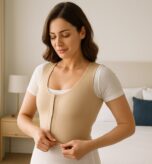
To ensure that the skin clings smoothly to its new foundation, fluid accumulations (seromas) are prevented, and the abdominal muscles stitched inside are supported from the outside so they are not damaged during sudden movements, patients regularly using their medical corsets for an average of four to six weeks is an external skeletal support guaranteeing the permanence of the process.
The corset is the most crucial material accelerating the elimination of edema and stabilizing the waist curve. Although patients experience minor difficulties getting used to the tightness feeling created by the corset in the first days, when they stand up and feel that enveloping effect it provides, they comprehend the value of this garment. In reflexes such as coughing or rising from the edge of the bed, the corset meets the mechanical load that will form on the stitches like a shield.
When Do Potential Edemas and Swellings Subside?
Fluid accumulations, which are a natural reflex created in the body by surgical intervention, reach their highest level in the first weeks; the body supported by disciplined use of the medical corset and abundant fluid consumption expels this edema via the lymphatic system and is generally relieved to a great extent by the end of the first month; the complete softening of tissues spreads over a schedule lasting months.
It is quite natural to feel minor increases in the amount of edema later in the day or when standing for a long time. It takes time for the body to expel this excess fluid. Edemas subsiding at the end of the first month reveal the actual thin and flat form of the abdomen. When the sixth month is reached, those hardnesses under the skin disappear and a smooth profile is obtained. By conveying this timeline to individuals, it is emphasized that momentary swellings are not permanent.
How Does the Schedule for Returning to Work and Social Life Progress?
Individuals working in desk jobs that do not require physical strength can comfortably return to their social routines and office environments usually between the tenth and fifteenth days after the operation, depending on their own pain thresholds and tissue healing rates. Recovery is a gradual phase where every day feels more vigorous than the previous one, and the body finds its own rhythm.
The hesitant and cautious steps of the first week leave their place to more comfortable walks when entering the second week. The person can sit at their computer in the office by hiding their corset under their clothes. However, even during this period, it is crucial to avoid carrying heavy files or reflexes that will turn the body abruptly. When individuals return to social life, they gain great motivation as they see how neatly and proportionally their clothes fit on them.
How Do Buşra Nur Özger’s Special Approaches Direct the Process?
A transparent consultancy vision is offered that reads with an empathetic language not only the individual’s physical complaints but also the psychological fatigue felt after a massive weight loss adventure, makes rational information about the method differences of the operation, and compassionately guides the patient in harmony with the body’s natural rhythm during the recovery schedule.
The confusions that patients carry before surgery, such as “Will my recovery be very difficult?” or “Will my scar remain too prominent?”, are clarified with this honest communication adopted by Buşra Nur Özger. The person is told that an incomplete procedure will create dissatisfaction in the future, and that applying the wide repair the body needs is the most correct thing. This strong bond of trust established keeps the patient’s motivation high during the convalescence period, ensuring that the result is embraced with psychological peace.
Frequently Asked Questions
1. Can I have surgery if my weight loss process is still ongoing?
It is expected for you to reach your target weight and stabilize your weight for at least six months; otherwise, extra kilos you will give after surgery can create re-sagging on your skin.
2. Are the surgical scars visible from the outside?
Since the applied incision is planned quite low so as to remain entirely inside the underwear or bikini bottom, it is not noticed from the outside with daily clothes or beachwear.
3. Can I not recover the skin on my abdomen just by doing sports?
Sports strengthen the muscle tissue underneath you, but since it cannot biologically retract the skin layer that has lost its elasticity and withered, it does not affect the sagging tissue.
4. Can fat removal be performed together with a tummy tuck surgery?
While skin sagging on your abdomen is recovered, stubborn fats in your waist and love handle regions can be simultaneously removed, imparting a thin curve to your body.
5. Should I remove the corset while sleeping at night during the recovery period?
It is requested that the special medical corset be used regularly day and night for the duration specified by your physician for tissues to fuse smoothly and edema to be expelled.
6. Is it normal to feel numbness in my abdomen after surgery?
Since a wide tissue separation is performed, experiencing temporary loss of sensation or numbness on the abdominal skin in the first months is quite normal during the repair of nerve endings.
7. Why is the location of my belly button changed?
In comprehensive tightening procedures, since the upper skin is pulled downward, the belly button cannot remain in its current place; a new window is opened in the stretched skin and it is placed in its organic position.
8. Why should I walk bent forward during the recovery period?
It is necessary to bend the body slightly forward in the first days to ease the mechanical load on the new stitches on the abdominal wall and ensure healthy fusion of the wound.
9. When can water touch my operated region?
Following the removal of drains, depending on the condition of your stitch tapes and with your physician’s approval, a standing lukewarm shower can usually be taken a few days after the operation.
10. Will my stitches need to be removed?
Since aesthetic internal stitches that the body can melt on its own over time are used in modern surgical techniques, a separate stitch removal procedure is generally not required afterwards.
11. When can I return to my desk job?
If you have a working environment where you do not exert physical effort, you can generally return to your routines within ten to fifteen days depending on your body’s repair speed.
12. When can I start doing sports?
Light indoor walks can be started immediately, but an average six-week fusion period should be awaited for weightlifting and abdominal exercises that will strain the stitches.
13. Will all the stretch marks on my abdomen go away?
Since the skin in the region remaining below the belly button and where stretch marks are most intense is completely removed, you will be largely cleansed of stretch marks in that area.
14. When should I start using cream for scar care?
After the tapes on the incision line are removed and the wounds are closed, you can start scar massages with silicone-based restorative gels recommended by your physician.
15. What does Buşra Nur Özger suggest to patients for the post-operation recovery process?
She suggests that they respect their body’s repair rhythm, follow medical advice without acting hastily, and see recovery as a serene renewal break they set aside for themselves.