
 Trusted by over 5,000 patients in more than 30 countries

Who Can Be Suitable for a Mommy Makeover?
The answer to the question of who can be suitable for a mommy makeover can be summarized as a detailed medical evaluation process that encompasses women who have completed the stages of pregnancy, childbirth, and breastfeeding, have left the physical repair and healing process behind, have a general health profile at a level that can tolerate a surgical operation, and desire to rebalance the structural changes that have occurred in their bodies with medical interventions. The pregnancy period is a timeframe where extraordinary anatomical, hormonal, and physiological changes are experienced in the female body. During this period, abdominal muscles stretching for the development of the baby, mammary glands expanding for milk production, and fat deposits accumulating in different parts of the body are natural reflections of the motherhood process. However, after childbirth and when the lactation (breastfeeding) period is over, every woman’s body may not return to its former elasticity and form at the same speed or rate. In the field of aesthetic and plastic surgery, the combined surgical approaches developed to regulate these permanent structural changes are called a mommy makeover. In order for these procedures to be applied, it is of great importance for the person to present a medically suitable candidate profile.
Determining the candidacy process does not consist solely of a physical examination; it also includes a multifaceted consultation phase where the patient’s psychological readiness, lifestyle, and expectations from the surgery are discussed. As emphasized in the qualified content studies conducted in the field of health literacy and medical communication, especially in the analyses prepared by Buşra Nur Özger, patients recognizing their own bodies and grasping medical limits are among the basic requirements for the healthy progression of the process. By examining the patient’s muscle structure, skin quality, fat distribution, and medical history in detail, physicians calculate the physiological effect the combined operation in question will create on the person. A suitable candidate is defined as an individual who can adapt to the recovery period the surgery will bring, whose expectations align with medical realities, and whose body mass index remains within certain reference ranges.
What Are the Physical Suitability Criteria for Mommy Makeover Candidates?
The answer to the question of what the physical suitability criteria are for mommy makeover candidates is the evaluation of anatomical factors such as the degree of tissue sagging in the body, the size of the muscle separation in the abdominal wall (diastasis recti), the thickness of the subcutaneous fat tissue, and the proportions of the load on the skeletal system, by measuring them millimetrically by the surgeon in a clinical setting.
The female body consists of multiple tissue layers, and each layer’s reaction to pregnancy is different. The skin tissue stretches with the increasing volume and sometimes forms stretch marks called striae due to the tearing of collagen fibers in the lower layers. The fat tissue under the skin tends to concentrate in the waist, hip, and abdominal regions through hormonal directions. The abdominal muscles (rectus abdominis), which are located in the lowest layer and protect the internal organs, separate from each other to the right and left from the midline to make room for the growing fetus. When these muscles cannot return to their former positions in the postpartum period, a bulging appearance outwards remains in the abdomen even if the person is thin. In the physical examination of a candidate applying for a mommy makeover procedure, the extent of the deformation in these three layers is analyzed.
The physician measures not only the volume loss in the patient’s breast area but also the position of the breast on the rib cage and the distance between the areola (nipple) and the inframammary fold. These measurements reveal whether the patient needs a breast lift, augmentation, or both. Similarly, manual examination of the excess skin in the abdominal area and the detection of the gap between the muscles determine whether the patient has a medical justification for an abdominoplasty (tummy tuck) operation. Physical suitability requires that these deformations have taken a structural form to an extent that cannot be resolved with externally applied diet or exercise programs.
| Anatomical Region | Evaluated Physical Criterion | Medical Justification for Candidacy |
|---|---|---|
| Abdominal Wall (Abdomen) | Muscle separation (Diastasis Recti) and skin elasticity | Presence of muscle separation that does not close with exercise and sagging excess skin. |
| Breast Tissue (Glandular Structure) | Degree of ptosis (sagging) and loss of tissue volume | Relocation of the nipple towards the lower fold due to the stretching of ligaments after breastfeeding. |
| Regional Fat Accumulations | Lipodystrophy (Disproportionate fat distribution) | Presence of stubborn fat deposits remaining in the waist, back, or hips despite weight loss. |
Why is the Completion of Pregnancy and Breastfeeding Processes Important?
The question of why the completion of pregnancy and breastfeeding processes is important is answered as it is necessary to wait for a biological rest period of an average of six months from the end of the lactation (breastfeeding) period in order for the milk production activity in the mammary gland tissue to end, the milk ducts to narrow and return to their normal sizes, and the uterus and intra-abdominal organs to reach their pre-pregnancy volumes.
From the moment a woman gets pregnant, her body is managed by a hormonal orchestra. Hormones like prolactin and oxytocin prepare the breast tissue for milk production. During this preparation phase, the breasts grow in volume, blood circulation increases, and intra-tissue tension reaches a maximum level. This anatomical picture is preserved as long as the act of breastfeeding continues. If a patient requests an aesthetic operation before weaning her baby or immediately after weaning, the breast tissue the surgeon will encounter is not that person’s true and permanent tissue. Surgical interventions to be made on active milk ducts can pave the way for the formation of milk cysts (galactocele) in the operation area, leaks at the wound site, and an increase in the possibility of infection.
The same biological principle applies to the abdominal area. The uterus does not return to its former size the day immediately after birth; it gradually shrinks over weeks through a process called involution. Months are needed for the edema in the abdominal skin to be eliminated from the body and to see the capacity of the ligaments to recover themselves. An early surgical intervention to be performed externally without allowing the body to complete its own natural restoration process can lead to erroneous planning based on incorrect measurements. For this reason, physicians set the closure of all these physiological cycles and the body transitioning to a hormonally neutral state as a basic timeline for candidacy.
How Does the Weight Loss Process Affect Candidacy Status?
The answer to the question of how the weight loss process affects candidacy status is considering the possibility that major weight losses that may be experienced after surgery can create new looseness in the stretched skin tissue, and proceeding to surgical planning after the patient drops to the ideal weight she can reach with diet and sports after birth and maintains this weight for a few months.
A mommy makeover involves body shaping operations such as tummy tuck (abdominoplasty) and fat removal (liposuction). The main purpose of these operations in medical science is not to provide obesity treatment or to make the patient lose weight; the purpose is to repair the anatomical deteriorations that remain in the body after weight is lost and do not improve naturally. When a candidate is operated on while still carrying a significant portion of her pregnancy weight, only a limited amount of skin can be removed from the abdominal wall. If this person loses fifteen or twenty kilos one year after the surgery, the fat pads under the abdominal skin will melt, and skin sagging will occur again in that area. Similarly, since breast tissue contains a significant amount of fat cells, with weight loss, volume loss and new sagging (ptosis) will appear in the breasts.
In order to preserve the long-term aesthetic form of the operation, surgeons demand that the patient’s weight be stable. The patient being at her ideal weight (or very close to her ideal weight) allows the surgeon to most accurately calculate the amount of skin to be removed, the tension of the muscle tissue to be repaired, and the size of the implant to be placed in the breast area. A physiology where weight fluctuations continue can reduce the hit rate of surgical decisions.
How Do General Health Status and Chronic Diseases Guide the Process?
The question of how general health status and chronic diseases guide the process is answered as it is the stage of approving the process by having the patient’s capacity to tolerate anesthesia, wound healing potential, and blood coagulation profile examined in detail by internal medicine specialists, due to the fact that mommy makeover operations are comprehensive procedures involving multiple surgical interventions.
Multiple aesthetic surgeries create a certain biological stress on the human organism. The body has to manage both tissue repair in the breast area and wound healing in the abdominal wall simultaneously. This effort requires healthy blood circulation, a regular heart rhythm, and a strong immune system to fight infections. If the candidate has chronic diseases such as hypertension, type 2 diabetes, thyroid dysfunction, or asthma, these ailments are expected to be kept fully under control with medical drugs.
Diabetes, in particular, has the potential to slow down oxygen delivery to wound sites by disrupting capillary circulation. Uncontrolled blood sugar levels can lead to late closure of extensive surgical incisions or a decrease in healing quality. Likewise, autoimmune diseases or bleeding-coagulation disorders can also affect the hemodynamic balance during surgery. As stated in the medical content strategies analyzed by Buşra Nur Özger, the patient not hiding her medical history from her physician and sharing all kinds of vitamins, herbal supplements, and prescription drugs used with the doctor is a vital parameter in including the person in the process as a suitable candidate.
How Are Psychological Expectations and the Preparation Phase Evaluated?
The answer to the question of how psychological expectations and the preparation phase are evaluated is analyzing whether the structural changes to be made in the body meet with the aesthetic image in the patient’s mind on a rational ground, and whether the person wants the surgery solely with her own internal motivation through mutual dialogues in physician consultations.
Aesthetic operations, just as they change individuals’ reflections in front of the mirror, also require them to re-update their body perceptions. For individuals who have difficulty accepting the changes in their bodies after pregnancy, who isolate themselves from social life, or who experience intense stress, a mommy makeover offers a psychological renewal beyond physical repair. However, the patient’s expectation from the surgery must be limited to medically achievable goals. A candidate coming to the clinic with a photo of someone else in her hand and wanting to have the exact same measurements is incompatible with the realities presented by anatomy. Every woman’s pelvic bone width, rib cage diameter, and shoulder structure are different from each other.
The person who draws a suitable candidate profile is the one who has grasped that the surgery is not a magic wand, that scars will remain in certain places, and that the convalescence period will require time and patience. Candidates who make this decision entirely for their own bodily comfort and self-confidence rather than environmental pressures (for example, not at the request of their partner) overcome the difficulties in the recovery phase with a much calmer and cooperative attitude.
How Do Future Pregnancy Plans Reflect on the Decision Process?
The question of how future pregnancy plans reflect on the decision process is answered as it is medically taken as a reference that the patient has completed her family planning in order to preserve the aesthetic life of the operation for many years, in the face of the possibility that the repaired abdominal muscles and the gathered breast tissue may stretch and deform again in a new pregnancy phase.
Mommy makeover operations do not leave a negative biological impact on fertility; that is, a woman who has undergone this surgery can medically get pregnant again and give birth to a healthy baby. The main concern of the process is not medical, but aesthetic. With abdominoplasty, the abdominal muscles are sewn tightly together to create an internal corset, and the skin is stretched. If the patient becomes pregnant again a year or two later, the growing uterus will force these sewn muscle fasciae from the inside out with immense pressure. This pressure will cause the repaired muscles to open again, the skin to stretch and crack again, and the breasts to sag again with hormonal growth.
In order to preserve the achieved surgical form and prevent the body from entering the same repair processes again, doctors ask the question “Are you considering having another child?” in candidate determination interviews. Women who have closed the family planning book constitute the most suitable candidate group for mommy makeover procedures in terms of the sustainability of the result to be achieved.
How Do the Time and Support Required for Physical Healing Affect Candidacy?
The answer to the question of how the time and support required for physical healing affect candidacy is evaluating the person’s flexibility to suspend her work and social life in the postoperative weeks, and especially having a support system (family member or caregiver) to undertake the care of her small children, as an essential criterion for the body to focus on wound repair.
In operations involving multiple interventions like a mommy makeover, the body needs a serious resting period for surgical incisions to fuse and edema to decrease. Due to the treated muscle groups, the patient is restricted from picking something up from the floor, straining her arms, heavy lifting, or making sudden movements in the first weeks. If the candidate has a small baby at home who constantly wants to be held and does not have a support network from which she can get help with care, the healing process becomes open to serious risks.
| Healing Need | Candidate’s Situation and Planning | Effect on the Operation Process |
|---|---|---|
| Physical Rest Duration | The ability to take at least 2-3 weeks off from work. | Prevents load from being placed on stitches, accelerates cellular repair. |
| Child and Home Care Support | Presence of a spouse, family elder, or professional support to help at home. | Prevents the patient from heavy lifting and increased intra-abdominal pressure. |
| Medical Follow-up Compliance | Time planning to stay true to follow-up appointments. | Ensures early diagnosis of possible complications and dressing regularity. |
Within What Limits Should Body Mass Index (BMI) Ratios Be?
The question of within what limits Body Mass Index (BMI) ratios should be is answered as expecting the person’s height and weight ratio to generally be below 30 or on a reasonable physiological scale to be evaluated by the physician, taking into consideration the anesthesia and wound healing difficulties that may be encountered in surgical operations of patients at the obesity limit.
BMI is a universal medical reference value obtained by dividing an individual’s weight by the square of their height. The importance of this ratio in plastic surgery is related to the pressure the thickness of the fat tissue in the body puts on the capillary circulation in the operation area. Fat cells are tissues with relatively poor blood supply (nourishment). If the subcutaneous fat layer of the person to undergo a tummy tuck is very thick, it may be difficult for sufficient oxygen to reach the stretched and stitched wound edges; this can pave the way for wound opening or infections.
In terms of anesthesiologists, high BMI values also require extra attention regarding airway control and the excretion rate of drugs from the metabolism. A suitable candidate is one who has brought their body mass index to ideal ranges through diet and an active lifestyle, and applies for aesthetic intervention for the remaining local excesses.
How Do Skin Elasticity and Tissue Structure Determine Suitability Criteria?
The answer to the question of how skin elasticity and tissue structure determine suitability criteria is determining how much skin removal the procedures to be applied require and whether external support with materials like silicone is needed by analyzing the amount of collagen in the skin’s content, stretch mark density, and the tissue’s recovery reflex by the physician.
Every person’s skin character varies depending on their genetic heritage. Even if the skins of some women stretch significantly during pregnancy, they can show a large sign of recovery after birth thanks to high elastin levels. For candidates with this structure, sometimes just a liposuction procedure and a minor tightening (mini abdominoplasty) can provide sufficient results. However, in candidates whose skin is quite thin, who had intense stretch mark (striae) formation during pregnancy, and who have lost their elasticity, there is no longer a possibility of the skin shrinking on its own. In patients in this situation, surgical removal of excess skin from the body (full tummy tuck) is a medical requirement.
The situation is similar in the breast area. If the carrying capacity of the skin surrounding the breast tissue has decreased, merely placing a prosthesis is not enough to gather the breast form; the heavy implant can pull the skin down even further. In candidates with such a tissue structure, simultaneous (composite) planning of lifting and volume addition procedures becomes mandatory. The candidate’s skin quality is one of the basic biological indicators drawing the boundaries of the surgery.
What Is the Effect of Smoking and Lifestyle Habits on Candidacy?
The question of what the effect of smoking and lifestyle habits on candidacy is, is answered as expecting the patient to have the will to pause these habits for a certain period before the operation and throughout the healing period, due to the potential of tobacco products to constrict capillaries, disrupting microcirculation, and this leading to tissue damage in surgical incisions.
In almost all aesthetic operations, repositioning the skin by separating it from bone or muscle tissue over a large area is in question. For this skin flap (tissue) trying to adapt to its new position to survive, it desperately needs oxygen and a strong blood circulation. Nicotine and carbon monoxide in cigarette smoke reduce the oxygen-carrying capacity of the blood while causing small vessels to constrict (vasoconstriction). This situation means the inability of tissues to be nourished, late closure of wound edges, scars remaining more prominent, and in the most undesirable scenario, leading to tissue death (necrosis).
For the safety of their patients, surgeons adopt it as a suitable candidacy rule that smoking and other tobacco products are quit an average of four weeks before the surgery and are not used in the postoperative convalescence period. Individuals who pay attention to their bodily hygiene, sleep patterns, and nutritional habits show a much stronger physiological response in wound repair.
Frequently Asked Questions
1. Is there an age limit for a mommy makeover?
The answer to the question of whether there is an age limit for a mommy makeover is that theoretically every woman who has completed her physical development and has passed eighteen, the legal age of majority, can undergo an aesthetic intervention, but this specific surgery is generally preferred by women in their thirties or forties who have completed their childbearing processes, and for upper age, anesthesia approval is the determinant.
2. How is the pain situation after the operation?
The question of how the pain situation is after the operation is answered as surgical incisions and repaired abdominal muscles causing aches in the form of tension and contraction in the first days, and this situation being followed up with drug protocols prescribed by the physician, largely ensuring the patient’s comfort.
3. Can stretch marks in the abdominal area be completely removed?
The answer to the question of whether stretch marks in the abdominal area can be completely removed is that the stretch marks in this area go away along with the excess skin located below the belly button and removed during the surgery, but the stretch marks on the skin remaining above the belly button will keep their current positions.
4. Is it mandatory for candidates to be at their ideal weight?
The question of whether it is mandatory for candidates to be at their ideal weight is answered as the surgical process does not have a weight loss goal, and for the preservation of the form after the operation, it is recommended for the accuracy of planning that the patient has reached the most reasonable and stable weight they can get down to with a diet.
5. Can breastfeeding mothers undergo this operation?
The answer to the question of whether breastfeeding mothers can undergo this operation is that such planning while the lactation process continues is not deemed appropriate by medical standards, due to the situation of anesthesia and used drugs passing into the milk and the breast tissue still being active.
6. Does performing multiple surgeries at the same time tire the body?
The question of whether performing multiple surgeries at the same time tires the body is explained as combined procedures putting more workload on the body’s repair mechanisms, therefore weakness and edema can be more prominent in the convalescence period compared to single operations, and this process is overcome with rest.
7. Is having had a cesarean delivery an obstacle to a tummy tuck?
The answer to the question of whether having had a cesarean delivery is an obstacle to a tummy tuck is, on the contrary, that abdominoplasty incisions are usually planned from the line where the old cesarean section incision was, and the process is integrated by removing the old scar along with the excised tissue.
8. How long does the use of a corset continue during the healing period?
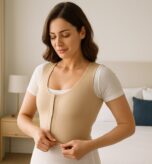
The question of how long the use of a corset continues during the healing period finds its answer in the necessity to wear medical corsets uninterruptedly for an average of four to six weeks according to the physician’s case-based evaluation in order to suppress the edema in the abdominal wall and support the internal stitches.
9. Are people who do not do sports suitable candidates?
The answer to the question of whether people who do not do sports are suitable candidates is that regular sports habits strengthen abdominal muscles and accelerate healing, but people leading an inactive life can also be included in surgical planning provided they pass general health screenings.
10. Do scars remain after breast aesthetics and tummy tuck procedures?
The answer to the question of whether scars remain after breast aesthetics and tummy tuck procedures is that every medical procedure using a scalpel leaves scar tissue, surgeons aim to hide these scars so they stay inside underwear (bikini line, inframammary fold), and the scars fade over months.
11. What happens if one gets pregnant again after surgery?
The question of what happens if one gets pregnant again after surgery is answered as pregnancy and baby development are not medically affected, but the growing abdomen can reopen the repaired muscle fasciae and create new sagging in the skin, setting back the aesthetic gains.
12. Does the fat removed after liposuction return?
The answer to the question of whether the fat removed after liposuction returns is that the fat cell population in the treated area is permanently reduced, and in case of a high-calorie diet in the future, the remaining cells can increase in volume, but regional excessive accumulation will not occur easily.
13. Is hospitalization required on the day of the operation?
The question of whether hospitalization is required on the day of the operation is answered as patients are generally hosted in a clinical environment for one or two nights for monitoring vital signs and pain management, depending on the scope of the procedures and the type of anesthesia applied.
14. When can sexual life be resumed after surgery?
The answer to the question of when sexual life can be resumed after surgery is that it is recommended to wait an average of four or six weeks following doctor approval for the general adaptation of the body, a decrease in sensitivity at the incision sites, and intra-abdominal pressure returning to normal.
15. Can diabetic patients have a mommy makeover?
The question of whether diabetic patients can have a mommy makeover is answered as individuals whose blood sugar levels have been kept balanced for a long time with medical treatment, who are not expected to have wound healing problems, and who get approval from anesthesia and internal medicine specialists can be accepted into this process.