
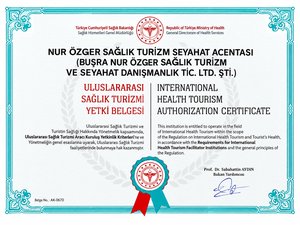


 Trusted by over 5,000 patients in more than 30 countries



Why Is the Donor Area Important for Hair Transplantation?
The answer to the question of why the donor area is important for hair transplantation comes from it being the sole and limited resource from which the hair roots needed for individuals experiencing thinning or receding on their scalp to regain their natural appearance are obtained. When individuals notice the change in their hair upon looking in the mirror, they usually fall into anxiety and conduct various researches to manage this situation. Frequently encountered during these researches, the concept of the donor area can actually be defined as the person’s own “hair bank” within their body. Usually located at the back of the head between the two ears, this area is structurally highly resistant to shedding. This resistance stems from the genetic coding of the roots there. In a hair transplantation process aiming to restore thinned areas to their former fullness, these shedding-resistant roots are carefully harvested and transferred to where they are needed. Therefore, the main element determining the limits, naturalness, and achievable goals of the procedure is the capacity presented by this region.
For patients to know the condition of their donor area when stepping into this process helps them base their expectations on a rational foundation. Every individual’s hair structure, root thickness, and density ratio at the nape differ from one another. While this area might be very rich in some people, it can have a more delicate structure in others. In preliminary consultations held in Istanbul, specialists meet with patients face-to-face to perform a detailed examination of this area. This examination is conveyed to the patient not with complex medical terms, but in a clear and warm language. According to the patient-centered communication standards also adopted by Buşra Nur Özger, an individual understanding their own hair resource allows them to go through the steps to be experienced throughout the process in a more peaceful and harmonious manner. Every step from the pre-preparation stage to the recovery period is built upon preserving this resource and using it efficiently.
What Does Donor Area Mean in the Hair Transplantation Process?
The answer to the question of what the donor area means in the hair transplantation process can be given as the special area structurally resistant to shedding, mostly located at the back of the head and above the ears, where healthy hair roots to be transferred are harvested in order to fill thinned or receded areas. Roots in this area are less affected by factors causing shedding due to where they are located. Since patients enter a renewal process using their own hair, a situation such as tissue incompatibility does not come into question. Every single transferred root is the individual’s own biological part.
When explaining the importance of this area to individuals arriving at the clinic for a consultation, an analogy of a budget or resource management is made. We have a specific number of healthy roots in hand, and it is aimed to distribute these roots to the thinned areas in the most aesthetic and efficient way. Being aware of the donor area capacity forms the basis of the answer to be given to patients’ question, “Will my hair be as thick as before?” While evaluating this area, specialists make a plan considering not only today, but also the patient’s natural appearance in later years.
| Donor Area Feature | Benefit Provided to the Patient | Role in the Process |
|---|---|---|
| Resistance to Shedding | Supports transferred roots anchoring in their new places. | Creates the permanence and natural structure of the procedure. |
| Limited Reserve | Ensures expectations remain realistic. | Requires specialists to distribute roots strategically. |
| Personal Specificity | Eliminates the risk of tissue incompatibility. | Provides growth harmonious with natural hair color and character. |
How Is Donor Area Capacity Calculated Before Hair Transplantation?
The question of how donor area capacity is calculated before hair transplantation is explained as specialists gently examining the amount of hair per square centimeter at the nape, the thickness of the roots, and their distribution in groups using special magnifiers and cameras during the preliminary examination to establish a mathematical proportion. This calculation stage is a comfortable step where the patient feels no pain or ache, and their hair is simply looked at closely. The goal is to determine the amount of roots that can be safely harvested without creating visible sparseness at the nape.
In order to guide patients’ expectations correctly, this stage is conducted with great transparency. The data obtained is conveyed to the patient in simple language. For example, if the patient’s hair strands at the nape are thin and sparse, it is explained that a natural transition will be provided by focusing more on the front hairline. Capacity calculation is carried out quite meticulously to eliminate aesthetic concerns the patient might experience in their back profile after the procedure. Thus, the individual feels that the process is designed specifically for them.
What Is the Role of the Donor Area in Hair Transplantation Planning in Istanbul?
The answer to the question of what the role of the donor area is in hair transplantation planning in Istanbul is given as being a meticulous preliminary evaluation stage centered on preserving the resource at the nape, shaped according to each patient’s geographic, genetic, and structural characteristics in these centers where individuals from all around the world are hosted. Istanbul allows individuals to feel safe with the warm welcome and patient-centered clinical services it offers.
In planning consultations, patients are positioned not merely as persons undergoing a procedure, but as individuals actively participating in the process. In clinical settings in Istanbul, the boundaries of the donor area are shown to the patient in front of a mirror or via digital screens. Thanks to this open communication, the patient can visualize the amount of roots to be harvested from their nape and how these roots will be distributed to the front. Managing the process transparently in this way turns the patient’s experience in Istanbul into a stress-free, positive renewal vacation.
How Does the Structure of Hair Strands in the Donor Area Affect the Result?
The question of how the structure of hair strands in the donor area affects the result is answered as directly shaping the feeling of fullness to be formed in the targeted area, because the light reflection and skin coverage capacities of thick, fine, straight, or wavy hair strands differ from one another. In an individual with thick and wavy hair strands, it is possible to achieve a visually satisfying volume even by using a smaller number of roots.
In contrast, in individuals with fine and straight hair structure, placing roots at tighter intervals and different angles might be required to create the same perception of density. These structural differences show that patients should not make comparisons among themselves. Every individual’s hair character is evaluated within itself. Specialists explain these physical characteristics of the hair strand to the patient, drawing the boundaries of the natural appearance to be reached with great empathy.
What Should Those with a Limited Donor Area Do in Hair Transplantation?
The answer to the question of what those with a limited donor area should do in a hair transplantation procedure is explained as prioritizing the creation of the front hairline and giving an aesthetic frame to the face when the opening is very wide and the hair reserve at the nape is low, adopting a more balanced and gradual distribution plan toward the back parts. Rather than trying to create miraculous thickness with a limited resource, using what is available in the smartest way is essential.
In conversations held with the patient in such cases, it is gently conveyed that expectations must be proportionate. It is explained to individuals that what matters is the natural stance of the front line, which is the first thing catching the eye when looking in the mirror. It is noted that slight sparseness in the crown area can be part of a natural appearance. When patients understand the value of this resource presented to them by their bodies, they adapt much more comfortably to the strategic distribution plan to be applied.
Is a Donor Area Outside the Nape Used During Hair Transplantation?
The question of whether a donor area outside the nape is used during hair transplantation is answered as hair from alternative areas such as under the beard or chest area being able to be included in the process as a supportive resource in special cases where hair at the back of the head proves insufficient, provided it is deemed suitable following expert evaluation.
However, the growth rate, thickness, and character of hair in these alternative areas differ from hair strands. For this reason, roots harvested from the beard or chest are generally placed toward the crown region to add volume between hair strands, rather than highly noticeable places like the front hairline. It is explained to patients in understandable language that this application is merely supportive, the primary source is always the hair at the nape, and there is a tissue difference in between.
How Does the Post-Procedure Healing Process of the Donor Area Progress?
The answer to the question of how the post-procedure healing process of the donor area progresses is given as the nape region where roots were harvested usually being bandaged after the procedure, minor crusting and slight tightness being felt in the first days, but the skin recovering to a large extent within an average of ten days and approaching its normal appearance through regularly applied lotion and washing routines.
One of the areas patients should pay the most attention to in the post-procedure period is this back region. Adhering to sleeping positions recommended by specialists increases comfort by reducing friction of the area against the pillow. Being gentle with the area during the first washes and allowing crusts to fall off on their own support the speed of healing. Patients relax as they notice the sensitivity in this area decreasing day by day, taking a more confident step back into their social lives.
| Healing Period | Expected Condition | Care Recommended to Patient |
|---|---|---|
| First 1-3 Days | Bandaged or freshly opened bandage, sensitive skin structure. | Avoiding contact with the area and special back-lying position. |
| Between 4-10 Days | Formation of tiny crusts and feeling of itching. | Gentle washing with lotions recommended by the clinic. |
| Day 10 and Beyond | Shedding of crusts and calming of the skin. | Return to normal daily life and regular water consumption. |
Does Thinning Occur in the Donor Area After Hair Transplantation?
The question of whether thinning occurs in the donor area after hair transplantation is answered as a noticeable opening or feeling of sparseness not forming when viewed from the outside once the hair grows a bit, provided the root harvesting procedure is performed with a balanced and homogeneous distribution by experts in the field. The root harvesting stage is almost like fine handcrafting; harvesting is done by leaving sufficient distance between each root.
It is explained to patients that preserving the donor area is one of the most sensitive points of the entire process. Excessive harvesting is meticulously avoided. Since hair is very short in the first few weeks, the back part might look slightly sparser, but as hair enters its natural growth cycle, upper strands cover and camouflage the harvested parts underneath. This careful approach ensures both that the patient regains their new hair and that naturalness in their back profile is preserved.
Why Is the Donor Area Centered in Buşra Nur Özger Approaches?
The answer to the question of why the donor area is centered in Buşra Nur Özger approaches is explained as setting realistic expectations while informing the patient about the process and respecting the patient’s body forming the foundation of all communication. According to Buşra Nur Özger Special information delivery principles, instead of offering exaggerated statements to the patient suggesting everything will be very easy, the limits of their own body are explained with transparent empathy.
Most patients arrive by focusing on the shedding in the front part. However, a patient-centered approach aims to draw the person’s attention to the donor area, namely the “resource,” so they grasp the logic of the process. When an individual understands the capacity and value of the hair at their nape, they notice the care behind the hair transplantation planning. This awareness reduces the patient’s anxieties, increases their trust in the clinic, and makes a great contribution to them exhibiting a calmer, more harmonious stance during the hair growth journey that will last for months.
Frequently Asked Questions
1. Does the donor area consist only of the nape region?
The answer to the question of whether the donor area consists only of the nape region is that the primary and most efficient resource is between the two ears and the nape region, but in some cases, alternative areas such as under the beard can also be evaluated as supportive resources.
2. Do harvested roots grow back in the nape region?
The question of whether harvested roots grow back in the nape region is answered as a new hair strand not growing at the point of extraction because roots are completely removed from their location and transferred, which is why harvesting must be done homogeneously and carefully.
3. Does donor area capacity vary from person to person?
The answer to the question of whether donor area capacity varies from person to person is explained as yes, since every individual’s hair density, strand thickness, and genetic structure differ, donor capacity is completely unique to the individual like a fingerprint.
4. Will a scar remain in my donor area?
The question of whether a scar will remain in my donor area finds its answer as a distinct scar noticeable from the outside not forming when healing is complete, because fine-tipped devices are used in procedures performed with current and modern root harvesting techniques.
5. How is it decided how many roots will be harvested from my nape?
The answer to the question of how it is decided how many roots will be harvested from my nape is that it is decided by specialists examining the scalp with special cameras and calculating the safe limit that will not create an optical gap at the nape.
6. Where is the donor area in women?
The question of where the donor area is in women is explained as the back of the head and the nape region, where hair is structurally stronger, being accepted as the main donor area in women, just like in men.
7. Will my donor area hurt a lot in the first days?
The answer to the question of whether my donor area will hurt a lot in the first days is that pain is not felt during the procedure because local numbing is applied, and mild sensitivities that may occur in the following days can easily be managed with daily painkillers.
8. How long is the lifespan of roots harvested from the donor area?
The question of how long the lifespan of roots harvested from the donor area is is answered as these roots being able to live for years like the patient’s own natural hair after successfully anchoring in their new places, due to possessing a genetic resistance against shedding.
9. Is the donor area of people with curly hair different?
The answer to the question of whether the donor area of people with curly hair is different is explained as curly strands having a curved structure under the skin as well, which is why the root harvesting procedure requires expertise and a different level of sensitivity.
10. Does the color of hair in the donor area affect the result?
The question of whether the color of hair in the donor area affects the result finds its answer as the skin-covering (optical fullness) effect of light or dark-colored hair being different, and specialists also taking hair color and skin tone contrast into account while planning.
11. Can someone else’s hair roots be used as a donor?
The answer to the question of whether someone else’s hair roots can be used as a donor is that hair transplantation cannot be performed from another person due to tissue incompatibility and the body’s rejection of foreign cells; the person can only use their own roots.
12. What should I do for my donor area to heal?
The question of what I should do for my donor area to heal is explained as protecting the area from friction in the first weeks, softening crusts with recommended lotions, and drinking plenty of water and resting for the body to repair itself being sufficient.
13. Will donor area capacity decrease in later years?
The answer to the question of whether donor area capacity will decrease in later years is that a general weakening might occur in hair all over the body with the natural aging process, which is why very aggressive harvesting is avoided at young ages.
14. When does crusting in the donor area pass?
The question of when crusting in the donor area passes is answered as tiny crusts at the nape usually clearing on their own within 7 to 10 days, provided the patient regularly follows the washing instructions.
15. What does Buşra Nur Özger recommend regarding donor area capacity?
The answer to the question of what Buşra Nur Özger recommends regarding donor area capacity is that she recommends individuals accept the boundaries of their own hair bank and turn toward plans that preserve the existing resource, are natural, and are harmonious with facial features instead of exaggerated volumes.